
Devi Talab Mandir
Devi Talab Mandir, located in Jalandhar, Punjab, India, is a significant Hindu temple dedicated to Goddess Durga. It is recognized as one of the 51 Shakta pithas and attracts thousands of pilgrims annually, drawing visitors with its religious importance and unique features like a model of the Amarnath Temple and an ancient sacred pond.
Key Facts
- ›Dedicated to Goddess Durga.
- ›Considered one of the 51 Shakta pithas.
- ›Features a model of the Amarnath Temple.
- ›Includes an ancient, religiously significant tank.
- ›Adorned with intricate gold work.
- ›Adjacent to an old temple dedicated to Goddess Kali.

Durga, Kali, Shiva
One of the 51 Shakta Pithas, Religious Significance of the Ancient Tank, Pilgrimage Site
Gold
Tank
About Devi Talab Mandir
Devi Talab Mandir is a prominent Hindu temple situated in Jalandhar, Punjab, India, dedicated to the worship of Goddess Durga. It is widely recognized as one of the 51 Shakta pithas, places of immense religious importance for devotees of Shakti, the divine feminine energy.
Religious Significance and Attractions
The temple draws thousands of pilgrims annually, eager to seek blessings from Goddess Durga. A notable feature within the complex is a model of the Amarnath Temple, which is dedicated to Lord Shiva, offering a spiritual connection to another revered pilgrimage site. Adjacent to the main shrine stands an older temple dedicated to Goddess Kali. The presence of an ancient tank within the temple grounds is also a significant draw, holding considerable religious importance for Hindu devotees.
Architectural and Decorative Features
Devi Talab Mandir is distinguished by its elaborate gold work, which adorns both the interior and exterior of the temple. This intricate artistry contributes to the temple's visual splendor and sacred atmosphere. The complex also houses various other points of interest, including a pond, a food canteen, a charitable hospital, and halls suitable for religious gatherings and cultural events, such as the Hari Vallabh Sangeet Sanmelan.
Source: Wikipedia ↗
Frequently Asked Questions
What is the primary deity worshipped at Devi Talab Mandir?
The primary deity worshipped at Devi Talab Mandir is Goddess Durga. The temple is devoted to her and is a significant site for her devotees.
What is the religious significance of Devi Talab Mandir?
Devi Talab Mandir is regarded as one of the 51 Shakta pithas, which are considered highly sacred sites for Shakti worship in Hinduism. It also features an ancient tank that holds great religious significance for Hindu devotees.
Are there any other notable shrines within the Devi Talab Mandir complex?
Yes, the temple complex includes a model of the Amarnath Temple dedicated to Lord Shiva, and an old temple dedicated to Goddess Kali is located adjacent to the main Mandir.
What are some of the architectural or decorative highlights of the temple?
The temple is known for its intricate gold work, which is present both inside the temple and on its exterior, adding to its grandeur.
Is Devi Talab Mandir a popular pilgrimage destination?
Yes, Devi Talab Mandir is visited by thousands of pilgrims every year, indicating its status as an important pilgrimage site.
Related Temples (Hindu)

Taraknath Temple
The Taraknath Temple, located in Tarakeswar, West Bengal, India, is a significant Hindu pilgrimage site dedicated to Lord Shiva, worshiped here as Tarakanatha. Constructed in 1729, it features a distinct Bengal architectural style with an 'atchala' structure and an adjacent 'natmandir'. The temple is renowned for its belief that a dip in the nearby Dudhpukur tank fulfills prayers and is considered one of the 64 Jyotirlingas.

Tanot Mata Temple
The Tanot Mata Temple is a significant Hindu shrine located in the Jaisalmer district of Rajasthan, India, near the Pakistan border. Revered as a form of Goddess Hinglaj Mata, the temple is famously associated with the Indian victories in the Indo-Pakistani Wars of 1965 and 1971, with local folklore attributing the successful outcomes to divine intervention. The Border Security Force of India now manages the temple complex, which also includes a victory tower and a war museum.
Thriprayar Temple
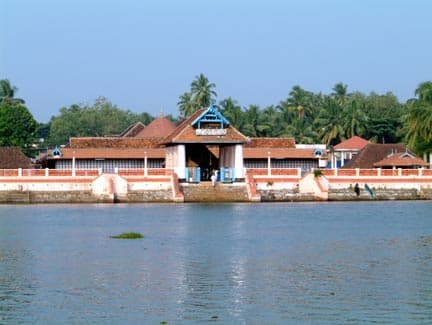
The Thriprayar Temple, also known as the Shree Ramaswami Temple, is a significant Hindu temple located in Triprayar, Thrissur district, Kerala, India. It is dedicated to Lord Rama, the seventh incarnation of Vishnu, who is depicted with four arms holding a conch, discus, bow, and garland. The temple's origin story involves the idol being worshipped by Krishna in Dwarka, later immersed in the sea, and eventually found by fishermen.