
Devi Jagadambi Temple
10th-12th centuries·India
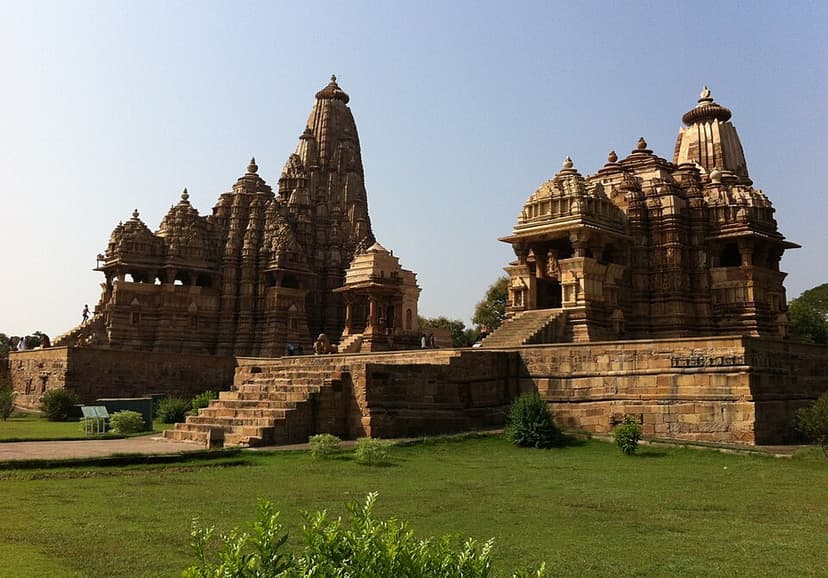
The Devi Jagadambi Temple, also known as the Jagadambika Temple, is one of approximately 25 temples located in Khajuraho, Madhya Pradesh, India. Renowned for its exquisite architecture, art, and historical significance, it is part of the Khajuraho group of monuments recognized as a UNESCO World Heritage Site. The temple is dedicated to Jagadambika, a Hindu goddess associated with devi, and features three bands of intricate carvings.
Key Facts
- ›Part of the Khajuraho group of monuments, a UNESCO World Heritage Site.
- ›Built by the Chandela dynasty between the 10th and 12th centuries.
- ›Named after Jagadambika, a Hindu goddess related to devi.
- ›Features three bands of carvings around its exterior.
- ›Houses an enormous image of the Goddess (Parvati) in its sanctum.
- ›Rediscovered by a British surveyor in the 1830s.

Jagadambika, Parvati
Outstanding Architecture, Artistic Importance, Historical Importance, Unesco World Heritage Site
Chandela Dynasty
Khajuraho Dance Festival, Navaratri, Durga Puja, Ram Navami, Dussehra
Chandela Dynasty Rulers
Three Bands of Carvings
About Devi Jagadambi Temple
The Devi Jagadambi Temple, also referred to as the Jagadambika Temple, is a significant religious structure situated in Khajuraho, Madhya Pradesh, India. It is part of a larger complex of approximately 25 temples that collectively form the Khajuraho Group of Monuments, recognized globally as a UNESCO World Heritage Site for their exceptional architecture, art, and historical value. The temples were predominantly erected by the rulers of the Chandela dynasty between the 10th and 12th centuries.
History and Construction
The Devi Jagadambi Temple exemplifies the architectural achievements of the Chandela period. The construction of the Khajuraho temples, including this one, occurred during the reign of various Chandela kings, with many of the surviving structures completed between 970 and 1030 CE. The temple is named after Jagadambika, a Hindu goddess closely associated with the divine feminine (devi). Its exterior is distinguished by three bands of intricate carvings, and within the sanctum, a large image of the Goddess, identified as Parvati, is enshrined.
Historical Context and Rediscovery
Khajuraho, and its temples, were in active use until the 13th century when the region was seized by the Delhi Sultanate. While some temples faced desecration and neglect over subsequent centuries due to various invasions and changing political landscapes, the remoteness of Khajuraho provided a degree of protection. The temples were largely overgrown by vegetation until the 1830s, when a British surveyor, T.S. Burt, was guided to them by local Hindus, leading to their rediscovery by the wider world. Following this rediscovery, Alexander Cunningham reported that the temples were still secretly used by yogis, and significant Hindu pilgrimages occurred during Shivaratri.
Source: Wikipedia ↗
Frequently Asked Questions
What is the Devi Jagadambi Temple known for?
The Devi Jagadambi Temple is celebrated for its outstanding architecture, art, and historical importance, contributing to the UNESCO World Heritage status of the Khajuraho group of monuments. It is particularly noted for its finely decorated exterior with three bands of carvings.
Who built the Devi Jagadambi Temple?
The temple was constructed by the rulers of the Chandela dynasty. Building activity for the Khajuraho temples began shortly after the dynasty's rise to power and continued for several centuries.
When was the Devi Jagadambi Temple built?
The temples at Khajuraho, including the Devi Jagadambi Temple, were built between the 10th and 12th centuries. Inscriptions suggest many of the surviving temples were completed between 970 and 1030 CE.
What deity is worshipped at the Devi Jagadambi Temple?
The temple is named after and dedicated to Jagadambika, a Hindu goddess related to devi. An enormous image of the Goddess, identified as Parvati, resides in the sanctum.
Is the Devi Jagadambi Temple an active place of worship?
Historical accounts indicate that the Khajuraho temples were in active use through the end of the 12th century. After a period of neglect, they were rediscovered and later saw thousands of Hindus arriving for pilgrimage during Shivaratri.
What festivals are celebrated at the Devi Jagadambi Temple?
Festivals celebrated at or associated with the temples in Khajuraho include the Khajuraho dance festival, Navaratri, Durga Puja, Ram Navami, and Dussehra.
Related Temples (Hindu)

Chennakeshava Temple, Belur
The Chennakeshava Temple, located in Belur, Karnataka, is a 12th-century Hindu temple dedicated to Vishnu. Commissioned by King Vishnuvardhana, the temple is renowned for its intricate architecture, detailed sculptures, and narrative friezes depicting scenes from Hindu epics and daily life. It stands as a significant pilgrimage site and a testament to the artistic and theological achievements of the Hoysala Empire.
Khajuraho Group of Monuments
The Khajuraho Group of Monuments is a collection of Hindu and Jain temples located in Madhya Pradesh, India, renowned for their Nagara-style architecture and intricate sculptures, including notable erotic carvings. Primarily constructed by the Chandela dynasty between the 9th and 11th centuries, these temples showcase a blend of religious acceptance and artistic expression, reflecting aspects of medieval Indian life and Hindu philosophy.

Konark Sun Temple
The Konark Sun Temple, a 13th-century Hindu temple in Odisha, India, is dedicated to the Sun god Surya. Designed as a colossal chariot with immense stone wheels and horses, it represents the zenith of Kalingan architecture and artistic achievement. Though much of the temple now lies in ruins, its surviving structures are celebrated for their intricate carvings, depicting religious themes, daily life, and erotic scenes.