
Dah Parvatiya
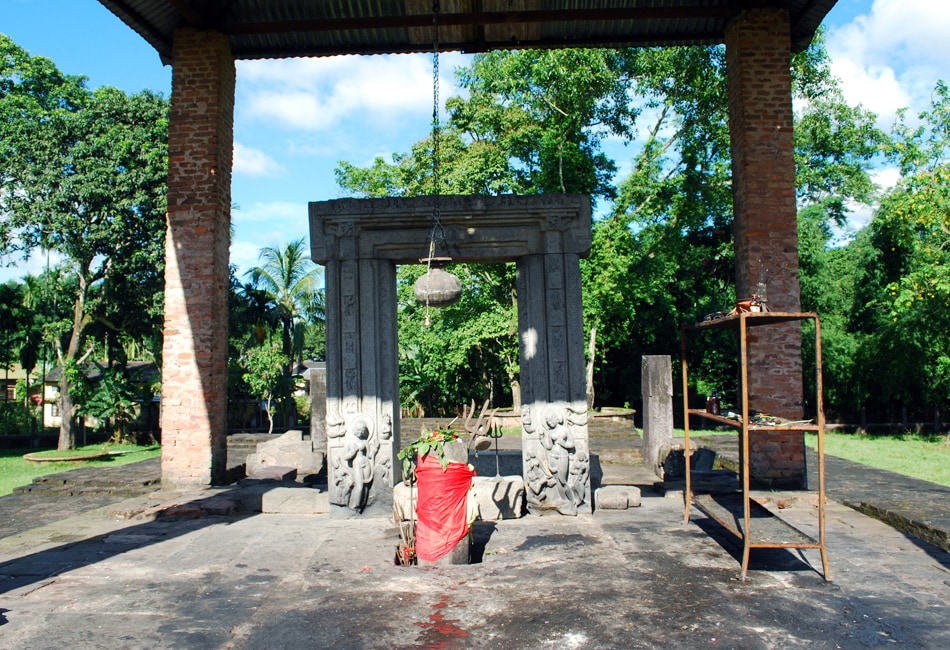
Dah Parvatiya is a significant archaeological site in Assam, India, featuring remnants of an ancient temple complex dating back to the 5th or 6th century. Excavations have revealed a stone door frame with intricate carvings, believed to be from the Gupta period, alongside terracotta plaques and structural foundations. Over these ancient ruins, a brick Shiva temple was later constructed during the Ahom period.
Key Facts
- ›The site contains architectural remnants of a 6th-century temple and an earlier brick Shiva temple from the Ahom period.
- ›Archaeological excavations in 1924 unearthed a stone door frame with extensive carvings from the 5th or 6th century.
- ›The carvings on the door frame, including depictions of the goddesses Ganga and Yamuna, are stylistically similar to Gupta period art and Hellenistic art.
- ›The temple complex's features include a sanctum sanctorum, a circumambulatory passage, and a mandapa (hall).
- ›The site is under the jurisdiction of the Archaeological Survey of India and protected under the Ancient Monuments and Archaeological Sites and Remains Act, 1958.
Shiva
- Archaeological Site With Remnants of Ancient Temple Architecture
- Example of Gupta Period Art In Northeast India
- Important Discovery For Understanding Early Medieval Art and Architecture In Assam
Gupta Period
Stone, Brick
Ganga and Yamuna Figures, Flying Geese, Lakulisa Figure, Surya Figure, Ganadwar
About Dah Parvatiya
Dah Parvatiya is an archaeological site located near Tezpur in Assam, India, significant for its remnants of ancient Hindu temples. The site is noted for architectural ruins dating primarily from the 5th or 6th century, with evidence of a later brick temple from the Ahom period constructed over the older foundations.
Archaeological Discoveries
Archaeological excavations conducted at Dah Parvatiya have uncovered substantial structural features and artifacts. The most prominent find is a remarkably preserved stone door frame from the 5th or 6th century, exhibiting intricate carvings that showcase the artistic styles of the Gupta period. These carvings include depictions of the river goddesses Ganga and Yamuna, flying geese, and other decorative motifs that bear resemblance to both North Indian Gupta art and Hellenistic styles. Terracotta plaques with human figures have also been unearthed.
Temple Structure and History
The excavated foundations reveal the base of a garbhagriha (sanctum sanctorum) and a mandapa (hall), suggesting a well-planned temple complex. The original temple is inferred to have been constructed with bricks, characteristic of the period, with stone used for door frames and sills. Later, during the Ahom period, a Shiva temple was erected using bricks directly upon the ruins of the ancient temple. This Ahom temple was destroyed in the Assam Earthquake of 1897, which subsequently exposed more of the earlier Gupta-period remnants, particularly the stone door frame.
Artistic and Architectural Significance
The artistic style of the Dah Parvatiya carvings is considered a significant example of early sculptural art in Assam. The depiction of goddesses on door frames was a prevalent feature in medieval temples, and the elaborate decorative elements, including floral patterns, creeper designs, and anthropomorphic figures, provide valuable insights into the region's artistic traditions and influences from other parts of India. The site's importance is recognized under the Ancient Monuments and Archaeological Sites and Remains Act, 1958, with the Archaeological Survey of India overseeing its preservation.
Source: Wikipedia ↗
Frequently Asked Questions
What are the main historical periods represented at Dah Parvatiya?
Dah Parvatiya features remnants from two main historical periods. The primary focus is on an ancient temple complex from the 5th or 6th century, believed to be from the Gupta period. Additionally, there are ruins of a brick Shiva temple built during the later Ahom period.
What is the most significant artifact found at Dah Parvatiya?
The most significant find at Dah Parvatiya is a stone door frame dating back to the 5th or 6th century. This artifact is adorned with extensive carvings, including depictions of the river goddesses Ganga and Yamuna, which are considered fine examples of early sculptural art in Assam.
What architectural features have been uncovered at Dah Parvatiya?
Excavations have revealed the foundation of the ancient temple, including a roughly square sanctum sanctorum (garbhagriha) with a circumambulatory passage. A colonnaded hall, interpreted as a mandapa, and a smaller front hall (mukhamantapa) have also been identified. A stone altar (Vedi) was found within the sanctum.
What is the historical context of the carvings at Dah Parvatiya?
The carvings, particularly those on the door frame, are stylistically linked to the Gupta period art of North India, with similarities noted in temples like Bhumra and Nachha Kuthara. The depictions of goddesses also show resemblances to Greek and Hellenistic art, and decorative elements share similarities with temples in Orissa.
What happened to the temple during the Ahom period?
During the Ahom period, a new Shiva temple was constructed using bricks, built directly over the foundations of the ancient Gupta-period temple. This Ahom temple was later destroyed in the Assam Earthquake of 1897, which incidentally exposed more of the ancient temple's remains.
Related Temples (Hindu)

Badami cave temples
The Badami cave temples are a significant complex of rock-cut caves located in Badami, Karnataka, India, renowned for their early examples of Indian rock-cut architecture, particularly the Badami Chalukya style. Dating back to the 6th century, these temples showcase a blend of Hindu, Jain, and possibly Buddhist influences, and are crucial for understanding the evolution of temple architecture in the Deccan region.
Pashupatinath Temple, Mandsaur
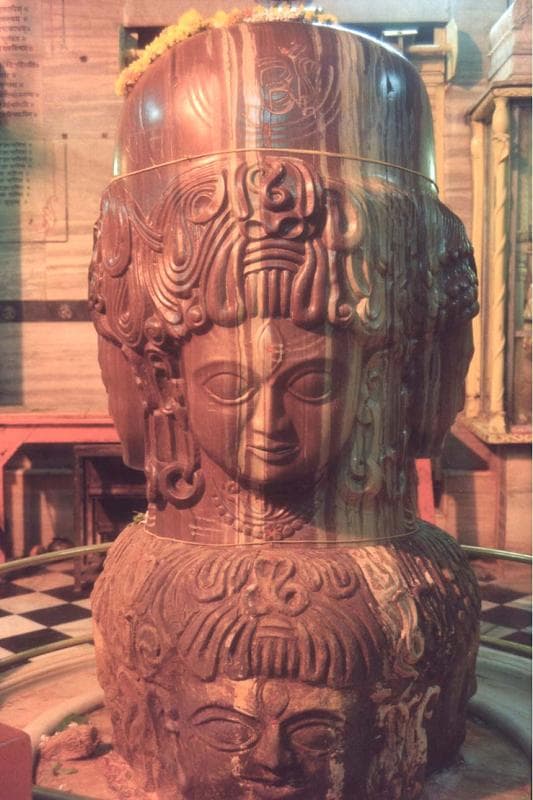
The Pashupatinath Temple in Mandsaur, Madhya Pradesh, India, is a significant Hindu temple dedicated to Lord Shiva, belonging to the Pashupatinath tradition within Shaivism. It is renowned for its rare eight-faced Shiva Linga, with the temple's sculpture dated to the 5th or 6th century CE, reflecting the artistic and cultural vibrancy of the Gupta Empire era.

Sharda Devi Temple Maihar satna
The Sharda Devi Temple in Maihar, Madhya Pradesh, is a significant Shakti Peeth dedicated to the goddess Sharda. According to legend, it is the site where the necklace of the goddess Sati fell. The temple is situated atop the Trikut hill and is a major pilgrimage destination, particularly during the Navratri festivals.