
Chilkoor Balaji Temple
Chilkur Balaji Temple is an ancient Hindu temple dedicated to Lord Balaji, located on the banks of Osman Sagar in Telangana. It is known for its unique practice of not accepting monetary donations and for its strong stance against government control, earning it the nickname 'Visa' Balaji due to the high number of devotees who visit seeking visa-related blessings.
Key Facts
- ›The temple is dedicated to Lord Balaji.
- ›It is situated on the banks of Osman Sagar in Rangareddy District, Telangana.
- ›The temple was built during the time of Madanna and Akkanna, uncles of Bhakta Ramadas.
- ›Chilkur Balaji Temple does not accept money from devotees and has no VIP privileges.
- ›Devotees make vows during 11 circumambulations and walk 108 times around the sanctum sanctorum upon wish fulfillment.
- ›It is popularly known as 'Visa' Balaji due to many devotees visiting for visa-related blessings.

Balaji
Religious Pilgrimage, Unique Temple Practices, Association With Visa Blessings
Madanna, Akkanna
Osman Sagar
About Chilkoor Balaji Temple
Chilkur Balaji Temple
Chilkur Balaji Temple is an ancient Hindu temple located on the banks of Osman Sagar in the Rangareddy District of Telangana, India. It is dedicated to Lord Balaji, a form of Lord Venkateswara, and is recognized as one of the older temples in the region.
Historical Context
The temple's construction is attributed to the period of Madanna and Akkanna, who were notable figures and uncles of the famous devotee Bhakta Ramadas. This historical patronage situates the temple within a significant era of religious and architectural development in the region.
Unique Practices and Significance
Chilkur Balaji Temple is distinguished by its unique approach to temple administration and devotee interaction. It notably does not accept monetary donations through any 'hundi' (donation box) and refrains from offering any special privileges or 'green channels' to VIPs. This commitment to egalitarian worship places it among a select few Hindu temples with similar practices, such as the Jalaram temple in Virpur, Gujarat, and Ramanuj Kot in Jodhpur, Rajasthan. The temple has also historically asserted its right to remain free from government control.
Devotee Vows and Rituals
A significant aspect of visiting Chilkur Balaji Temple involves specific devotional rituals. During their visit, devotees typically perform 11 circumambulations (pradakshinas) of the inner shrine while offering prayers and making vows. Upon the fulfillment of their wishes, devotees are expected to return and complete 108 circumambulations around the sanctum sanctorum as a gesture of gratitude. The temple is widely known as 'Visa' Balaji due to the large number of devotees who visit seeking blessings for visa-related matters, making it a prominent pilgrimage site for such intentions.
Accessibility
Chilkur Balaji Temple is accessible via public transportation. Regular bus services operate from the Mehidipatnam Bus Stand, with route number 288D providing frequent service every 10 to 15 minutes.
Source: Wikipedia ↗
Frequently Asked Questions
Who is the deity worshipped at Chilkur Balaji Temple?
The primary deity worshipped at Chilkur Balaji Temple is Lord Balaji, a form of Lord Venkateswara. The temple is named after Balaji and is a significant site for devotees seeking his blessings.
What makes Chilkur Balaji Temple unique among Hindu temples?
Chilkur Balaji Temple is unique because it does not accept any monetary donations through hundis and offers no special privileges or green channels for VIPs. This practice aligns it with specific temples like the Jalaram temple in Virpur, Gujarat, and Ramanuj Kot in Jodhpur, Rajasthan.
Why is Chilkur Balaji Temple often called 'Visa' Balaji?
The temple is popularly referred to as 'Visa' Balaji because a majority of the wishes sought by devotees are related to obtaining visas. Many believe that Lord Balaji at this temple can bless them with success in their visa applications.
What are the circumambulation rituals at Chilkur Balaji Temple?
During a visit, devotees typically perform 11 circumambulations of the inner shrine while praying and making vows. Once their wishes are fulfilled, they are expected to complete 108 circumambulations around the sanctum sanctorum as a sign of gratitude.
When was Chilkur Balaji Temple built?
Chilkur Balaji Temple is an ancient temple. Historical accounts suggest it was built during the period of Madanna and Akkanna, who were the uncles of the renowned devotee Bhakta Ramadas.
How can one reach Chilkur Balaji Temple?
The temple is accessible by public transport. Buses are available from Mehidipatnam Bus Stand, with bus number 288D operating frequently every 10 to 15 minutes.
Related Temples (Hindu)

Taraknath Temple
The Taraknath Temple, located in Tarakeswar, West Bengal, India, is a significant Hindu pilgrimage site dedicated to Lord Shiva, worshiped here as Tarakanatha. Constructed in 1729, it features a distinct Bengal architectural style with an 'atchala' structure and an adjacent 'natmandir'. The temple is renowned for its belief that a dip in the nearby Dudhpukur tank fulfills prayers and is considered one of the 64 Jyotirlingas.

Tanot Mata Temple
The Tanot Mata Temple is a significant Hindu shrine located in the Jaisalmer district of Rajasthan, India, near the Pakistan border. Revered as a form of Goddess Hinglaj Mata, the temple is famously associated with the Indian victories in the Indo-Pakistani Wars of 1965 and 1971, with local folklore attributing the successful outcomes to divine intervention. The Border Security Force of India now manages the temple complex, which also includes a victory tower and a war museum.
Thriprayar Temple
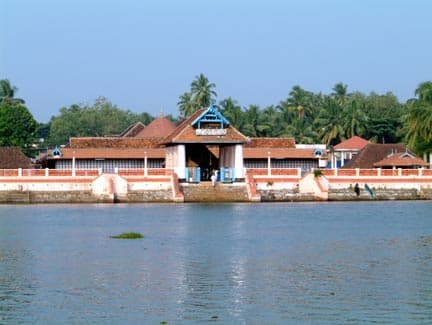
The Thriprayar Temple, also known as the Shree Ramaswami Temple, is a significant Hindu temple located in Triprayar, Thrissur district, Kerala, India. It is dedicated to Lord Rama, the seventh incarnation of Vishnu, who is depicted with four arms holding a conch, discus, bow, and garland. The temple's origin story involves the idol being worshipped by Krishna in Dwarka, later immersed in the sea, and eventually found by fishermen.