
Chaurasi Temple
Valabhi-Shikhara·7th century·India
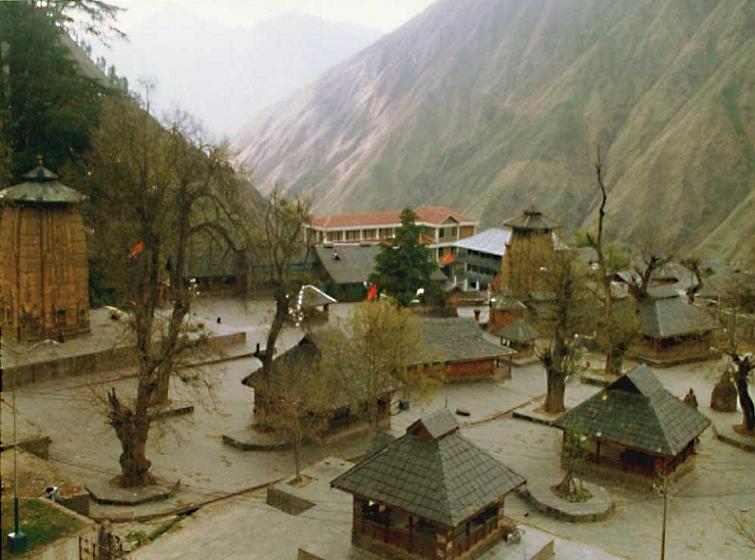
The Chaurasi Temple is a significant Hindu temple complex located in Bharmour, Himachal Pradesh, India, featuring 84 shrines. Built around the 7th century by Raja Meru Verman, it is dedicated to Lord Shiva and Goddess Shakti, holding immense religious importance for pilgrims visiting Manimahesh Lake.
Key Facts
- ›The complex comprises 84 large and small shrines.
- ›It was built approximately in the 7th century by Raja Meru Verman.
- ›The temple complex is dedicated to the worship of Lord Shiva and Goddess Shakti.
- ›It is named 'Chaurasi' after the 84 yogis (siddhas) who meditated there.
- ›The Manimahesh temple, dedicated to Lord Shiva, is a central and revered shrine.
- ›A temple dedicated to Lord Vishnu in his Narsimha avatar is also present.
Shiva, Shakti, Vishnu
- Religious Importance For Pilgrims To Manimahesh Lake
- Commemorates 84 Yogis
- Dedication To Shiva and Shakti Linked To Manimahesh Kailash Peak
Varman Dynasty
Raja Meru Verman
Manimahesh Lake
About Chaurasi Temple
The Chaurasi Temple is a significant Hindu temple complex situated in the heart of Bharmour town, within the Chamba district of Himachal Pradesh, India. The complex is renowned for its collection of 84 shrines, a feature that gives it its name as 'Chaurasi,' the Hindi word for eighty-four. This extensive collection of temples underscores its immense religious importance, particularly for pilgrims undertaking the journey to the sacred Manimahesh Lake.
History and Construction
Historical accounts indicate that the Chaurasi Temple complex was established approximately in the 7th century. Its construction is attributed to Raja Meru Verman of Bharmour. The king commissioned these shrines in honor of 84 yogis, known as siddhas, who had journeyed from Kurukshetra and meditated at this location while en route to Manimahesh Lake. Legend has it that these yogis blessed the king, who had previously been without an heir, with ten sons and a daughter named Champavati.
Religious Significance and Architecture
The Chaurasi Temple complex is dedicated to the worship of Lord Shiva and Goddess Shakti, reflecting the belief that Manimahesh Kailash Peak, visible from the region, is their divine abode. The presence of the Manimahesh temple, dedicated to Lord Shiva, is particularly revered by Hindus. The complex also features a temple dedicated to Lord Vishnu in his Narsimha avatar. Architecturally, the complex showcases the distinct Valabhi-Shikhara style, most notably in the central Manimahesh temple. While the original structures date back to the 7th century, many of the temples have undergone repairs and renovations in subsequent periods, preserving their sanctity and form for devotees.
Source: Wikipedia ↗
Frequently Asked Questions
What is the significance of the number 84 at the Chaurasi Temple?
The temple complex is named 'Chaurasi,' the Hindi word for eighty-four, because it features 84 shrines. This number is significant as it commemorates the 84 yogis (siddhas) who meditated in the area.
Who built the Chaurasi Temple complex?
The Chaurasi Temple complex was built by Raja Meru Verman of Bharmour. He commissioned its construction in honor of the 84 yogis who had meditated there.
What deities are primarily worshipped at Chaurasi Temple?
The entire area and its temples are dedicated to the worship of God Shiva and Goddess Shakti. This devotion is linked to the belief that Manimahesh Kailash Peak is their abode.
When was the Chaurasi Temple complex constructed?
The Chaurasi Temple Complex was built approximately in the 7th century. While the original construction dates to this period, many of its temples have undergone repairs in later periods.
Why is the Chaurasi Temple considered important for pilgrims?
The temple holds immense religious importance, especially for those undertaking the pilgrimage to Manimahesh Lake. It is believed that the pilgrimage is incomplete without paying respects at these shrines, particularly the Dharmeshvar Mahadev Temple.
Related Temples (Hindu)

Mundeshwari Temple
The Mundeshwari Devi Temple, located on the Mundeshwari Hills in Bihar, India, is an ancient Hindu temple dedicated to Goddess Durga and Lord Shiva. It is recognized by the Archaeological Survey of India as a protected monument and is claimed by some scholars to be the oldest functional Hindu temple in the world, with evidence suggesting continuous worship since at least the 6th-7th century CE.

Uttaresvara Siva Temple
The Uttaresvara Siva Temple is a 12th-century Hindu temple dedicated to Lord Shiva, located in Bhubaneswar, Odisha, India. While its original structure from the 7th century has undergone renovations, it remains a significant site featuring various deities and architectural elements. The temple is part of a larger precinct that includes other shrines and a sacred tank.

Vaitheeswaran Koil
Vaitheeswaran Koil is a significant Hindu temple in Tamil Nadu, India, dedicated to Lord Shiva, who is worshipped as Vaidyanathar, the "God of Healing." The temple is renowned for its belief that prayers and rituals performed here can cure diseases, and it is also recognized as one of the nine Navagraha temples, associated with the planet Mars (Angaraka).