
Chaturshringi Temple
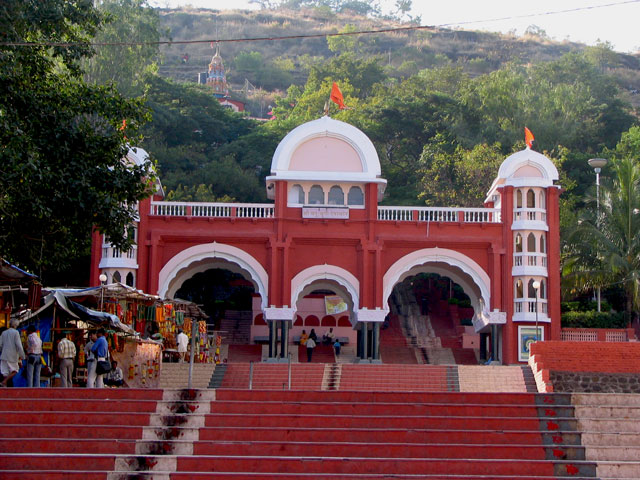
The Chaturshringi Temple is a prominent Hindu temple located on the slope of a hill in Pune, Maharashtra, India. Dedicated to Goddess Chattushringi, also known as Goddess Ambareshwari, it is considered the presiding deity of the city. The temple is a significant pilgrimage site, especially during the Navratri festival, and is managed by the Chattushringi Devasthan Trustees.
Key Facts
- ›The temple is situated on the slope of a hill in Pune, Maharashtra, India.
- ›Its presiding deity is Goddess Chattushringi, also referred to as Goddess Ambareshwari.
- ›A legend states the goddess appeared in a merchant's dream, instructing him to find her natural statue on a mountain near Pune.
- ›The temple complex includes shrines to Goddess Durga and Lord Ganesh, as well as eight miniature idols of Ashtavinayaka.
- ›Thousands of devotees gather annually for a fair held at the foothills during Navratri.
- ›The temple has over 200 steps leading to the shrine of Goddess Chattushringi.
Goddess Chattushringi, Goddess Ambareshwari, Goddess Durga, Lord Ganesh
Religious Pilgrimage Site, Presiding Deity of Pune, Site of Annual Navratri Fair
Maratha Empire
Navratri
Durlabhsheth Pitambardas Mahajan
Natural Statue of the Goddess
About Chaturshringi Temple
The Chaturshringi Temple, also spelled Chattushrungi Temple, is a significant Hindu place of worship located in Pune, Maharashtra, India. Perched on the slope of a hill on Senapati Bapat Road, the temple is dedicated to Goddess Chattushringi, who is also known as Goddess Ambareshwari and is considered the presiding deity of Pune city.
Legend and Construction
The temple's origins are tied to a legend involving a wealthy merchant named Durlabhsheth Pitambardas Mahajan. A devoted follower of Goddess Saptashrungi Devi, he was distressed when his age prevented him from making his regular pilgrimages. According to tradition, the Goddess appeared in his dream and instructed him to travel to a mountain northwest of Pune and dig. There, he discovered a natural, self-manifested statue of the goddess (swayambhu devi), leading to the construction of the original temple. The current temple is a result of renovations and upkeep over time.
Temple Complex and Worship
To reach the main shrine of Goddess Chattushringi, visitors must ascend over 200 steps. The temple complex is not solely dedicated to the primary deity; it also houses shrines for Goddess Durga and Lord Ganesh. Additionally, eight miniature idols of the Ashtavinayaka deities are found within the premises, spread across four distinct hillocks. The Chaturshringi Temple is managed by the Chattushringi Devasthan Trustees.
Significance and Festivals
The Chaturshringi Temple is a vital pilgrimage destination, particularly during the Navratri festival. Each year, a large fair is organized at the foothills of the temple on the eve of Navratri, attracting thousands of devotees who gather to pay homage to Goddess Chattushringi. The temple's presence and the annual festival underscore its importance as a center of faith and cultural activity in Pune.
Source: Wikipedia ↗
Frequently Asked Questions
Where is the Chaturshringi Temple located?
The Chaturshringi Temple is located in the city of Pune, in the state of Maharashtra, India. It is situated on the slope of a hill on Senapati Bapat Road.
What is the legend behind the Chaturshringi Temple?
The legend states that a devout merchant, unable to travel to Goddess Saptashrungi Devi due to old age, prayed fervently. The Goddess appeared in his dream, instructing him to find her natural statue on a mountain northwest of Pune. Upon digging, he discovered a 'swayambhu devi' (self-manifested goddess), leading to the temple's construction.
Who is the main deity worshipped at Chaturshringi Temple?
The presiding deity of the temple is Goddess Chattushringi, who is also known as Goddess Ambareshwari. She is revered as the presiding deity of the city of Pune.
What other deities are present in the temple complex?
In addition to Goddess Chattushringi, the temple premises house shrines for Goddess Durga and Lord Ganesh. The complex also features eight miniature idols of Ashtavinayaka, located on four separate hillocks.
When is the most significant festival celebrated at the temple?
The most significant annual event is the fair held at the foothills of the temple on the eve of Navratri. This occasion draws thousands of devotees who come to worship Goddess Chattushringi.
Related Temples (Hindu)

Taraknath Temple
The Taraknath Temple, located in Tarakeswar, West Bengal, India, is a significant Hindu pilgrimage site dedicated to Lord Shiva, worshiped here as Tarakanatha. Constructed in 1729, it features a distinct Bengal architectural style with an 'atchala' structure and an adjacent 'natmandir'. The temple is renowned for its belief that a dip in the nearby Dudhpukur tank fulfills prayers and is considered one of the 64 Jyotirlingas.

Tanot Mata Temple
The Tanot Mata Temple is a significant Hindu shrine located in the Jaisalmer district of Rajasthan, India, near the Pakistan border. Revered as a form of Goddess Hinglaj Mata, the temple is famously associated with the Indian victories in the Indo-Pakistani Wars of 1965 and 1971, with local folklore attributing the successful outcomes to divine intervention. The Border Security Force of India now manages the temple complex, which also includes a victory tower and a war museum.
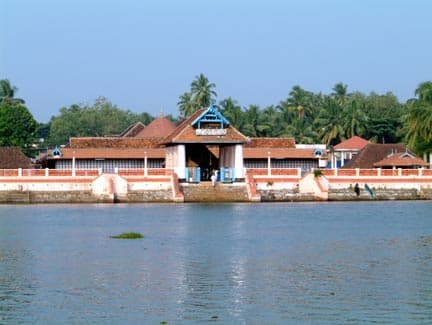
Thriprayar Temple
The Thriprayar Temple, also known as the Shree Ramaswami Temple, is a significant Hindu temple located in Triprayar, Thrissur district, Kerala, India. It is dedicated to Lord Rama, the seventh incarnation of Vishnu, who is depicted with four arms holding a conch, discus, bow, and garland. The temple's origin story involves the idol being worshipped by Krishna in Dwarka, later immersed in the sea, and eventually found by fishermen.