
Bindudham
Bindudham, also known as Binduwasni Mandir, is an ancient Hindu temple located atop Binduwasni hill in Jharkhand, India. Dedicated to the Tridevi (Maha Durga, Maha Lakshmi, and Maha Saraswati) in the form of a Shakta Pitha, the temple's name signifies its connection to the divine point of creation. Revitalized by Swami Hariharanand Giri, the temple is a significant pilgrimage site, especially during the Chetra Navratri festival.
Key Facts
- ›Dedicated to Maha Durga, Maha Lakshmi, and Maha Saraswati as a Shakta Pitha.
- ›Located on top of Binduwasni hill in Sahibganj District, Jharkhand, India.
- ›The main temple features a statue of Surya (Sun God) in a seven-horsed rath.
- ›A 35-foot statue of Hanuman with sacred footprints is also present on the hill.
- ›The temple's name, Bindudham, relates to the concept of Bindu as the point of creation and unity.
- ›The Chetra Navratri Durga puja is the primary festival, featuring a nine-day Maha Yajna.
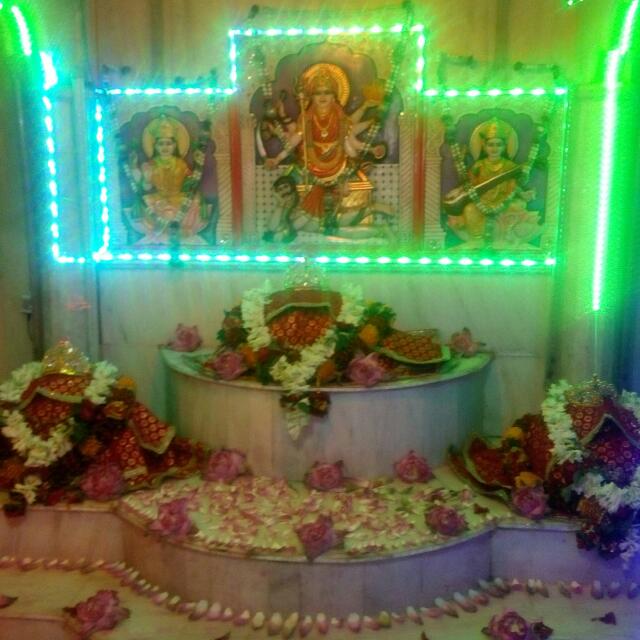
Maha Durga, Maha Lakshmi, Maha Saraswati, Tridevi, Adi Parashakti
Shakta Pitha, Pilgrimage Site, Historical Temple
Chetra Navratri Durga Puja, Maha Yajna, Ram-Navami, Govardhan Puja, Rani Sati Pujan, Guru Purnima, Khatu Shyam Pujan
Swami Hariharanand Giri
Statue of Surya, Statue of Hanuman
About Bindudham
Bindudham, also identified as Binduwasni Mandir, is an ancient Hindu temple situated atop Binduwasni hill in the Sahibganj District of Jharkhand, India. The temple is dedicated to the Tridevi – Maha Durga (in the form of Kali), Maha Lakshmi, and Maha Saraswati – revered as a Shakta Pitha. The name Bindudham itself carries significant metaphysical meaning, relating to the concept of 'Bindu' as the point of origin for creation and the ultimate unity, symbolizing Adi Parashakti in her primordial form.
History and Revitalization
While an ancient site, Bindudham experienced a period of decline in popularity over time. Its historical significance was recognized by Swami Hariharanand Giri, widely known as Pahari Baba, who dedicated efforts to restore the temple's prominence. Through his work and guidance, Bindudham regained its former prosperity and heritage, re-establishing its importance as a religious center.
The temple's connection to the story of Goddess Sati is central to its identity as a Shakta Pitha. Tradition holds that three sacred drops of Sati's blood are enshrined here, leading to her veneration as Maa Binduwasni.
Location and Features
Bindudham is strategically located at the summit of Binduwasni hill, a part of the Rajmahal hills formed during the Jurassic Period. The nearest railway station, Barharwa Junction, is approximately two kilometers away. The main temple houses a statue of the Hindu god Surya (Sun God), depicted in a chariot pulled by seven horses. Ascending the hill reveals a notable 35-foot-tall statue of Hanuman, where devotees can observe his sacred footprints.
Worship and Festivals
The primary religious observance at Bindudham is the Chetra Navratri Durga puja, celebrated during the first nine days of the Hindu month of Chaitra (March–April). This period is marked by a nine-day Maha Yajna, drawing large numbers of devotees, especially on Ram-Navami. Beyond this main festival, Bindudham also observes other significant Hindu worship occasions, including Govardhan Puja, Rani Sati Pujan, Guru Purnima, and Khatu Shyam Pujan, alongside regional cultural activities.
Source: Wikipedia ↗
Frequently Asked Questions
What is the significance of the name Bindudham?
Bindudham means 'place of Bindu,' referring to the metaphysical concept of Bindu as the point where creation begins. It is considered a place of Adi Parashakti (Divine Mother) in the form of a Bindu, symbolizing unity and the unmanifested state of the cosmos.
What deities are primarily worshipped at Bindudham?
Bindudham is dedicated to the Tridevi: Maha Durga (Kali), Maha Lakshmi, and Maha Saraswati. These goddesses are worshipped in the form of a Shakta Pitha, representing the divine feminine energy.
What is the main festival celebrated at Bindudham?
The main festival at Bindudham is the Chetra Navratri Durga puja, which occurs during the first nine days of the Hindu month of Chaitra (March–April). A nine-day Maha Yajna is organized during this time, attracting many devotees.
What historical figure is credited with revitalizing Bindudham?
Swami Hariharanand Giri, popularly known as Pahari Baba, is credited with realizing the ancient temple's importance and revitalizing Bindudham. His work and direction helped the temple regain its prosperity and heritage.
What other significant statues are found at Bindudham?
Besides the main deity representations, the temple complex includes a statue of the Hindu god Surya (Sun God) in a seven-horsed rath. Additionally, a large 35-foot statue of Hanuman stands on Binduwasni hill, where his sacred footprints are visible.
Related Temples (Hindu)

Taraknath Temple
The Taraknath Temple, located in Tarakeswar, West Bengal, India, is a significant Hindu pilgrimage site dedicated to Lord Shiva, worshiped here as Tarakanatha. Constructed in 1729, it features a distinct Bengal architectural style with an 'atchala' structure and an adjacent 'natmandir'. The temple is renowned for its belief that a dip in the nearby Dudhpukur tank fulfills prayers and is considered one of the 64 Jyotirlingas.

Tanot Mata Temple
The Tanot Mata Temple is a significant Hindu shrine located in the Jaisalmer district of Rajasthan, India, near the Pakistan border. Revered as a form of Goddess Hinglaj Mata, the temple is famously associated with the Indian victories in the Indo-Pakistani Wars of 1965 and 1971, with local folklore attributing the successful outcomes to divine intervention. The Border Security Force of India now manages the temple complex, which also includes a victory tower and a war museum.
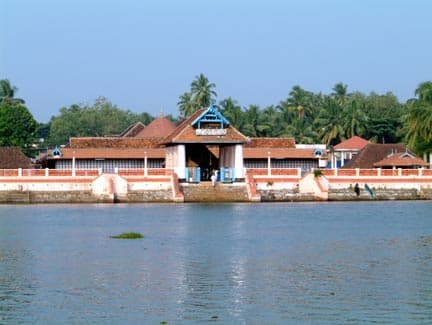
Thriprayar Temple
The Thriprayar Temple, also known as the Shree Ramaswami Temple, is a significant Hindu temple located in Triprayar, Thrissur district, Kerala, India. It is dedicated to Lord Rama, the seventh incarnation of Vishnu, who is depicted with four arms holding a conch, discus, bow, and garland. The temple's origin story involves the idol being worshipped by Krishna in Dwarka, later immersed in the sea, and eventually found by fishermen.