
Bhoramdeo Temple
Gurur type·7th-12th centuries·India
The Bhoramdeo Temple, located in Chhattisgarh, India, is a significant Hindu temple complex dedicated to Lord Shiva. It is renowned for its unique architectural style, which bears resemblances to the Khajuraho and Konark Sun temples, and features prominent erotic sculptures, earning it the moniker "Khajuraho of Chhattisgarh."
Key Facts
- ›The temple complex is situated at the foot of the Maikal range of hills in Chhattisgarh, India.
- ›The main Bhoramdeo temple, built of stone, is dated to the 11th century, predating the Khajuraho temples.
- ›Its architectural style is known as the Gurur type, distinct from the north Indian Nagara style.
- ›The temple is famous for its exterior and interior walls adorned with sensuous sculptures depicting Kama Sutra postures.
- ›The complex includes other structures like the brick Istaliq temple (2nd-3rd centuries) and the Madwa Mahal (1349 CE).

Shiva
- Architectural Style Similar To Khajuraho and Konark Sun Temple
- Features Prominent Erotic Sculptures
- Historical Importance Linked To Naga Kings and Tantrism
- Cultural and Religious Significance For Local Gond Tribals
Naga Dynasty, Faninagvansh Dynasty, Kalachuri Period
Stone, Brick
Laxman Dev Rai, Gopal Dev, Naga Kings of Chakrakota, Ramchandra Deo
- Erotic Sculptures
- Sculptures of Hindu Deities
- Images of Ten Avatars of Vishnu
- Images of Shiva and Ganesha
- Sculpted Images of Ganga and Yamuna
- Bass Reliefs of Elephants and Mythical Figures
- Sati Pillars With Couples In Amorous Postures
Man-Made Lake
About Bhoramdeo Temple
The Bhoramdeo Temple is a significant Hindu temple complex located in the Indian state of Chhattisgarh, dedicated to Lord Shiva. Situated at the foot of the forested Maikal range of hills, the complex is renowned for its distinctive architecture and the presence of numerous erotic sculptures, which have led to its popular sobriquet, the "Khajuraho of Chhattisgarh." The main stone temple is dated to the 11th century, making it older than the famous Khajuraho Group of temples.
Historical Context and Architecture
The temple complex boasts a rich history, with its construction spanning between the 7th and 12th centuries. It is attributed to the Naga kings of Chakrakota, who practiced tantrism. The architectural style of the main Bhoramdeo temple is described as the Gurur type, differing from the north Indian Nagara style, and is characterized by its unique receding tiers on the temple tower. The temple features a plinth with carved Hindu deities, a central mandapa (hall), and a sanctum sanctorum housing the Shiva Linga. The exterior and interior walls are adorned with intricate carvings, including sensuous sculptures depicting Kama Sutra postures, which are believed to reflect the social, cultural, and religious milieu of the time.
Associated Structures and Significance
Beyond the main Bhoramdeo temple, the complex includes several other important structures. The earliest is the Istaliq temple, a brick temple believed to have been built between the 2nd and 3rd centuries. The Madwa Mahal, constructed in 1349, is noted for its Shiva Linga and erotic sculptures reflecting the tantric culture of the Naga kings. The Chherki Mahal, an east-facing brick and stone structure, is also part of the complex. The temple is significant not only for its architectural and artistic merit but also as a center of faith for the local Gond tribals who worship Lord Shiva as Bhoramdeo. The complex is being developed as a pilgrimage and heritage tourism destination.
Source: Wikipedia ↗
Frequently Asked Questions
What is the primary deity worshipped at Bhoramdeo Temple?
The Bhoramdeo Temple is primarily dedicated to Lord Shiva. The name 'Bhoramdeo' itself is derived from the Gond tribals' worship of Lord Shiva, whom they called Bhoramdeo. The main deity enshrined is a Shiva Linga.
What is the architectural style of the Bhoramdeo Temple?
The main Bhoramdeo temple exhibits an architectural style known as the Gurur type, which is distinct from the typical north Indian Nagara style. Its structural uniqueness is noted in the receding tiers of its tower. The Chherki Mahal, another structure in the complex, falls under the early Nagara idiom.
When was the Bhoramdeo Temple constructed?
The construction of the Bhoramdeo temple complex is dated between the 7th and 12th centuries. The main stone temple is specifically dated to the 11th century, while the earliest brick temple, the Istaliq temple, is believed to have been built between the 2nd and 3rd centuries.
What is the significance of the erotic sculptures at Bhoramdeo Temple?
The temple is renowned for its numerous erotic sculptures on the exterior and interior walls, which represent Kama Sutra postures. These sculptures are believed to reflect the then prevailing social, cultural, architectural, and religious ethos of the region, possibly linked to tantric practices.
Are there other notable temples within the Bhoramdeo complex?
Yes, the Bhoramdeo complex includes other significant structures. The Madwa Mahal, built in 1349, is known for its Shiva Linga and erotic sculptures. The Istaliq temple, an early brick structure, and the Chherki Mahal, a brick and stone shrine, are also part of the complex.
What historical dynasties are associated with the Bhoramdeo Temple?
The temple complex is credited to the Naga kings of Chakrakota who practiced tantrism. The main temple was built by Laxman Dev Rai & Gopal Dev of the Faninagvansh Dynasty. The Madwa Mahal was built during the reign of Ramchandra Deo of the Naga dynasty.
Related Temples (Hindu)

Taraknath Temple
The Taraknath Temple, located in Tarakeswar, West Bengal, India, is a significant Hindu pilgrimage site dedicated to Lord Shiva, worshiped here as Tarakanatha. Constructed in 1729, it features a distinct Bengal architectural style with an 'atchala' structure and an adjacent 'natmandir'. The temple is renowned for its belief that a dip in the nearby Dudhpukur tank fulfills prayers and is considered one of the 64 Jyotirlingas.

Tanot Mata Temple
The Tanot Mata Temple is a significant Hindu shrine located in the Jaisalmer district of Rajasthan, India, near the Pakistan border. Revered as a form of Goddess Hinglaj Mata, the temple is famously associated with the Indian victories in the Indo-Pakistani Wars of 1965 and 1971, with local folklore attributing the successful outcomes to divine intervention. The Border Security Force of India now manages the temple complex, which also includes a victory tower and a war museum.
Thriprayar Temple
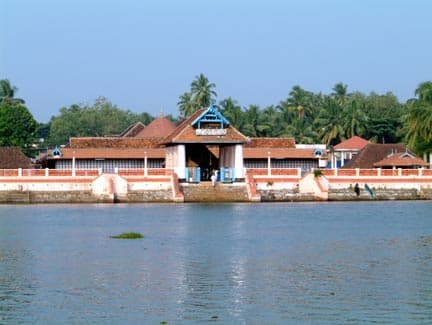
The Thriprayar Temple, also known as the Shree Ramaswami Temple, is a significant Hindu temple located in Triprayar, Thrissur district, Kerala, India. It is dedicated to Lord Rama, the seventh incarnation of Vishnu, who is depicted with four arms holding a conch, discus, bow, and garland. The temple's origin story involves the idol being worshipped by Krishna in Dwarka, later immersed in the sea, and eventually found by fishermen.