
Basukinath Temple, Dumka
Basukinath Temple, also known as Baba Basukinath Dham, is a significant Hindu temple dedicated to Shiva, located in Dumka district, Jharkhand, India. It is a key pilgrimage destination in eastern India, often visited by devotees following their journey to Baidyanath Dham.
Key Facts
- ›Dedicated to Lord Shiva.
- ›Located in Basukinath town, Dumka district, Jharkhand, India.
- ›Forms part of a spiritual circuit with Deoghar's Baidyanath Dham.
- ›The complex houses a total of 30 shrines.
- ›Hosts major festivals like Shravani Mela and Maha Shivaratri.
- ›It is an important pilgrimage site in eastern India.

Shiva
Important Pilgrimage Site In Eastern India, Part of A Spiritual Circuit With Deoghar
Shravani Mela, Maha Shivaratri
About Basukinath Temple, Dumka
Basukinath Temple, also known as Baba Basukinath Dham, is a prominent Hindu temple dedicated to Lord Shiva, situated in the town of Basukinath within the Dumka district of Jharkhand, India. It holds significant importance as a pilgrimage destination in eastern India and is intrinsically linked to the spiritual circuit that includes the renowned Baidyanath Dham in Deoghar.
Religious Significance and Pilgrimage
Pilgrims undertaking a spiritual journey to Baidyanath Dham in Deoghar often extend their travels to Basukinath, located approximately 45 kilometers away, to pay their respects and offer prayers at this temple. The confluence of these two sites forms a vital part of the religious itinerary for many devotees in the region.
Temple Complex and Festivals
The Basukinath complex is expansive, featuring a total of 30 shrines dedicated to various deities. The temple is a focal point for major annual religious celebrations, most notably the Shravani Mela and Maha Shivaratri. These festivals attract vast numbers of devotees, underscoring the temple's role as a vibrant center of worship and spiritual activity.
Source: Wikipedia ↗
Frequently Asked Questions
Where is Basukinath Temple located?
Basukinath Temple, also known as Baba Basukinath Dham, is located in the town of Basukinath, within the Dumka district of the Indian state of Jharkhand.
What deity is worshipped at Basukinath Temple?
The temple is primarily dedicated to Lord Shiva.
What is the significance of Basukinath Temple in eastern India?
It is an important pilgrimage site in eastern India and is part of a spiritual circuit that includes Deoghar's Baidyanath Dham. Pilgrims often extend their journey to Basukinath after visiting Baidyanath Dham to offer prayers.
What major festivals are celebrated at Basukinath Temple?
The temple hosts major annual festivals, including the Shravani Mela and Maha Shivaratri, which draw large numbers of devotees.
How large is the Basukinath Temple complex?
The Basukinath complex is notable for containing a total of 30 individual shrines within its premises.
Related Temples (Hindu)

Taraknath Temple
The Taraknath Temple, located in Tarakeswar, West Bengal, India, is a significant Hindu pilgrimage site dedicated to Lord Shiva, worshiped here as Tarakanatha. Constructed in 1729, it features a distinct Bengal architectural style with an 'atchala' structure and an adjacent 'natmandir'. The temple is renowned for its belief that a dip in the nearby Dudhpukur tank fulfills prayers and is considered one of the 64 Jyotirlingas.

Tanot Mata Temple
The Tanot Mata Temple is a significant Hindu shrine located in the Jaisalmer district of Rajasthan, India, near the Pakistan border. Revered as a form of Goddess Hinglaj Mata, the temple is famously associated with the Indian victories in the Indo-Pakistani Wars of 1965 and 1971, with local folklore attributing the successful outcomes to divine intervention. The Border Security Force of India now manages the temple complex, which also includes a victory tower and a war museum.
Thriprayar Temple
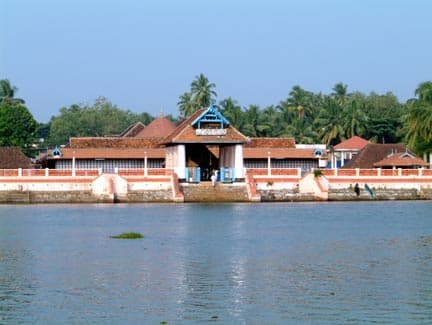
The Thriprayar Temple, also known as the Shree Ramaswami Temple, is a significant Hindu temple located in Triprayar, Thrissur district, Kerala, India. It is dedicated to Lord Rama, the seventh incarnation of Vishnu, who is depicted with four arms holding a conch, discus, bow, and garland. The temple's origin story involves the idol being worshipped by Krishna in Dwarka, later immersed in the sea, and eventually found by fishermen.