
Bargabhima Temple
The Bargabhima Temple, also known as Vibhash Shakti Peeth, is an ancient Hindu temple located in Tamluk, Purba Medinipur district, West Bengal. Dedicated to the goddess Sati (in her form as Kali), it is considered one of the 51 Shakti Peethas and is situated by the Roopnarayana River. The temple has a rich history, mentioned in the Mahabharata and playing a significant role in local culture and the freedom struggle.
Key Facts
- ›It is one of the 51 Shakti Peethas, believed to be the site where Sati's left ankle fell.
- ›The temple is dedicated to Goddess Sati, worshipped here as Kali.
- ›It is situated by the Roopnarayana River in Tamluk, Purba Medinipur district, West Bengal.
- ›The temple has been declared a Heritage Site by the West Bengal Government.
- ›It is known for its unique practice of offering non-vegetarian prasad, with a cooked Snakehead murrel being mandatory.
- ›Famous revolutionary Khudiram Bosu used to visit the temple for puja.

Sati, Kali
Shakti Peeth, Historical Site Mentioned In Mahabharata, Heritage Site Declared By West Bengal Govt., Site For Oaths By Freedom Fighters, Blend of Bengali Hindu and Buddhist Culture
Durga Puja, Bengali New Year, Kali Puja
Tamluk Raj Family
River Roopnarayana
About Bargabhima Temple
The Bargabhima Temple, also recognized as Vibhash Shakti Peeth and Bhimakali Mandir, is an ancient Hindu temple located in Tamluk, within the Purba Medinipur district of West Bengal, India. It is dedicated to the goddess Sati, venerated here in her form as Kali, and holds significant importance as one of the 51 Shakti Peethas, believed to be the site where Sati's left ankle fell. The temple is situated by the banks of the River Roopnarayana.
History and Significance
Historical accounts place the temple's origins in antiquity, with mentions in the epic Mahabharata where the region is said to have been acquired by Bhima. While local traditions attribute the temple's construction to the Tamluk Raj family, the current edifice is a reconstruction from a later period, following the Islamic occupation of Bengal in the Middle Ages. The temple is noted for its unique cultural synthesis, reflecting a blend of Bengali Hindu and Buddhist traditions. Its spiritual sanctity has also made it a site of patriotic significance; many freedom fighters from the Midnapore district reportedly took oaths here to dedicate themselves to armed revolution for their motherland's freedom. The renowned revolutionary Khudiram Bosu was a frequent visitor who performed puja at the temple.
Religious Practices and Festivals
As a prominent Shakti temple, Bargabhima is a site of active worship. A distinctive practice observed here is the offering of non-vegetarian prasad, with a cooked Snakehead murrel (sol mach) being a mandatory item for Devi Bargabhima. While the ritualistic animal sacrifice (bali) has been abolished, it is still observed once a year. Major festivals celebrated at the temple include Durga Puja, Bengali New Year, and Kali Puja. The West Bengal government has recognized the temple's historical and cultural value by declaring it a Heritage Site.
Source: Wikipedia ↗
Frequently Asked Questions
What is the significance of the Bargabhima Temple?
The Bargabhima Temple is significant as one of the 51 Shakti Peethas, a sacred site in Hinduism where a part of Goddess Sati's body is believed to have fallen. It is also historically important, mentioned in the Mahabharata and serving as a place where freedom fighters took oaths during India's struggle for independence.
What deity is worshipped at the Bargabhima Temple?
The primary deity worshipped at the Bargabhima Temple is Goddess Sati, who is venerated in her form as Kali. The temple is specifically referred to as a Kali temple in historical accounts.
What is unique about the prasad offered at Bargabhima Temple?
Unlike many Shakti temples, prasad at Bargabhima Temple is traditionally non-vegetarian. A cooked Snakehead murrel (sol mach) is a mandatory offering for Devi Bargabhima.
What is the historical background of the Bargabhima Temple?
The temple site is mentioned in the Mahabharata as a place acquired by Bhima. While local stories attribute its construction to the Tamluk Raj family, the current structure is not very old, having been rebuilt after the Islamic occupation of Bengal. It also represents a blend of Bengali Hindu and Buddhist cultures.
Is the Bargabhima Temple a place of active worship?
Yes, the Bargabhima Temple is an active place of worship. Prasad is prepared daily for Devi Bargabhima, and festivals like Durga Puja, Bengali New Year, and Kali Puja are celebrated there.
Related Temples (Hindu)

Taraknath Temple
The Taraknath Temple, located in Tarakeswar, West Bengal, India, is a significant Hindu pilgrimage site dedicated to Lord Shiva, worshiped here as Tarakanatha. Constructed in 1729, it features a distinct Bengal architectural style with an 'atchala' structure and an adjacent 'natmandir'. The temple is renowned for its belief that a dip in the nearby Dudhpukur tank fulfills prayers and is considered one of the 64 Jyotirlingas.

Tanot Mata Temple
The Tanot Mata Temple is a significant Hindu shrine located in the Jaisalmer district of Rajasthan, India, near the Pakistan border. Revered as a form of Goddess Hinglaj Mata, the temple is famously associated with the Indian victories in the Indo-Pakistani Wars of 1965 and 1971, with local folklore attributing the successful outcomes to divine intervention. The Border Security Force of India now manages the temple complex, which also includes a victory tower and a war museum.
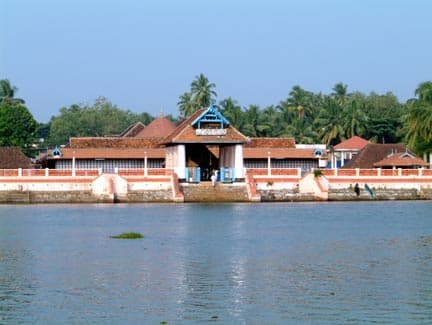
Thriprayar Temple
The Thriprayar Temple, also known as the Shree Ramaswami Temple, is a significant Hindu temple located in Triprayar, Thrissur district, Kerala, India. It is dedicated to Lord Rama, the seventh incarnation of Vishnu, who is depicted with four arms holding a conch, discus, bow, and garland. The temple's origin story involves the idol being worshipped by Krishna in Dwarka, later immersed in the sea, and eventually found by fishermen.