
Banni Mata Temple
The Banni Mata Temple, also known as Mahakali Banni Mata Temple, is an ancient Hindu temple located in the Chamba District of Himachal Pradesh, India. Dedicated to Goddess Kali, the temple is situated at a high altitude amidst deep forests at the foot of the Pir Panjal Range and is a significant site for local shepherds and pilgrims.
Key Facts
- ›Located at an altitude of 2,600 meters (8,500 ft) in the Chamba Valley.
- ›Dedicated to Goddess Kali, a prominent deity in Hinduism.
- ›Also referred to as Shakti Devi Temple.
- ›Named 'Banni' due to the abundance of Ban (Oak) trees in the vicinity.
- ›An annual fair is organized in the Bhadrapad month of the Hindu calendar, attracting numerous devotees.

Kali
Religious Pilgrimage Site, Important For Local Shepherds, Center For Kali Puja Rituals
Kali Puja
About Banni Mata Temple
The Banni Mata Temple, also recognized as the Mahakali Banni Mata Temple or Shakti Devi Temple, is an ancient Hindu place of worship situated in the Chamba District of Himachal Pradesh, India. Nestled at an elevation of 2,600 meters (8,500 ft) at the foot of the Pir Panjal Range within the Chamba Valley, the temple is enveloped by dense forests.
Religious Significance and Worship
The temple is dedicated to Goddess Kali, a formidable and revered deity in Hinduism. It holds significant importance in the Bharmour region, particularly for shepherds who traverse the Kali Chho pass. For generations, these shepherds have visited the temple to seek the goddess's blessings for their safety during their journeys. Pilgrims from across Himachal Pradesh and beyond make their way to the Banni Mata Temple to offer their devotions, with the belief that Goddess Kali fulfills wishes and grants children to childless couples.
Festivals and Rituals
An annual fair is a prominent event at the temple, typically held in August during the Bhadrapad month of the Hindu calendar. This fair draws a large number of devotees. A notable aspect of the fair, in the tradition of Kali Puja, involves rituals where goats' heads are severed, and the temple Shaman, known locally as a Chela, is said to drink the blood of the sacrificed animals, demonstrating a perceived direct communion with the goddess. Offerings of liquor are also common, with the Chela partaking from each bottle.
Accessibility and Pilgrimage
In recent times, the pilgrimage to Banni Mata Temple has become more accessible. A road now leads to Tundah, reducing the remaining walk to the temple to just 4 kilometers. Further road development is planned, which is expected to eliminate the need for extensive trekking to reach the temple. Despite these improvements, the routes leading further up to Lyundi and Charola continue to attract thousands of pilgrims.
Source: Wikipedia ↗
Frequently Asked Questions
Where is the Banni Mata Temple located?
The Banni Mata Temple is situated in the Chamba District of Himachal Pradesh, in north India. It is located at a height of 2,600 meters (8,500 ft) at the base of the Pir Panjal Range, surrounded by deep forests.
Who is the primary deity worshipped at Banni Mata Temple?
The primary deity worshipped at the Banni Mata Temple is Devi Kali, a significant goddess figure in Hinduism. The temple is also known as Mahakali Banni Mata Temple and Shakti Devi Temple.
What is the significance of Banni Mata Temple for shepherds?
The temple holds great importance for shepherds in the Bharmour region. They visit the temple to seek blessings from Goddess Kali for a safe passage across the Kali Chho pass when traveling to Lahaul, a tradition that has continued for ages.
What notable events or practices occur at Banni Mata Temple?
An annual fair is organized at the temple around August, in the Bhadrapad month. This fair involves rituals in the style of Kali Puja, including the offering of goats' heads. The temple Shaman, known as Chela, is believed to drink the blood of the severed goats, symbolizing a direct communion with the goddess.
How has the pilgrimage to Banni Mata Temple changed recently?
In recent times, the pilgrimage has become more accessible due to the construction of a road that approaches Tundah, leaving only a 4 km walk to the temple. Further road development is proposed, which will significantly reduce the trekking distance.
Related Temples (Hindu)

Taraknath Temple
The Taraknath Temple, located in Tarakeswar, West Bengal, India, is a significant Hindu pilgrimage site dedicated to Lord Shiva, worshiped here as Tarakanatha. Constructed in 1729, it features a distinct Bengal architectural style with an 'atchala' structure and an adjacent 'natmandir'. The temple is renowned for its belief that a dip in the nearby Dudhpukur tank fulfills prayers and is considered one of the 64 Jyotirlingas.

Tanot Mata Temple
The Tanot Mata Temple is a significant Hindu shrine located in the Jaisalmer district of Rajasthan, India, near the Pakistan border. Revered as a form of Goddess Hinglaj Mata, the temple is famously associated with the Indian victories in the Indo-Pakistani Wars of 1965 and 1971, with local folklore attributing the successful outcomes to divine intervention. The Border Security Force of India now manages the temple complex, which also includes a victory tower and a war museum.
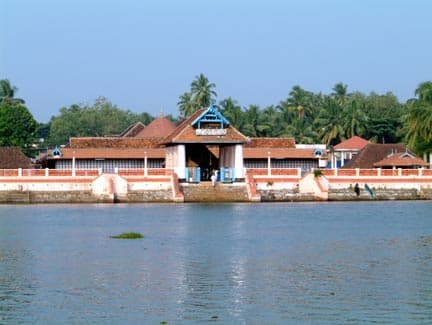
Thriprayar Temple
The Thriprayar Temple, also known as the Shree Ramaswami Temple, is a significant Hindu temple located in Triprayar, Thrissur district, Kerala, India. It is dedicated to Lord Rama, the seventh incarnation of Vishnu, who is depicted with four arms holding a conch, discus, bow, and garland. The temple's origin story involves the idol being worshipped by Krishna in Dwarka, later immersed in the sea, and eventually found by fishermen.