
Bambleshwari Temple
The Bambleshwari Temple is a prominent Hindu temple situated atop a 1600-foot hilltop in Dongargarh, Chhattisgarh, India. Revered by millions, it is particularly significant during the Navratri festivals of Kavar and Chaitra, when devotees light Jyoti Kalash. The temple complex also includes a smaller shrine at ground level and is known for its ropeway, the only one in Chhattisgarh.
Key Facts
- ›The temple is located on a 1600-foot hilltop in Dongargarh, Chhattisgarh, India.
- ›It is one of two Bambleshwari temples, with a 'Badi Bambleshwari' on the hill and a 'Chhotti Bambleshwari' at ground level.
- ›Millions of devotees visit during the Navratris of Kavar (Dussehra) and Chaitra (Ram Navami).
- ›A tradition of lighting Jyoti Kalash is observed during Navratris.
- ›The temple is reached via 1000 steps or a popular ropeway, the only one in Chhattisgarh.
- ›Legend attributes the temple's origin to King Veersen approximately 2200 years ago.

Devi Bamleshwari, Shiva, Parvati
- Major Pilgrimage Site During Navratri Festivals
- Unique Ropeway Attraction
- Historical and Legendary Origins
Veersen Dynasty
Navratri, Dussehra, Ram Navami
King Veersen, King Vikramaditya
About Bambleshwari Temple
The Bambleshwari Temple is a significant Hindu pilgrimage site located in Dongargarh, within the Rajnandgaon district of Chhattisgarh, India. Perched atop a hill standing at 1600 feet, the temple is locally known as 'Badi Bambleshwari' to distinguish it from a smaller shrine, 'Chhotti Bambleshwari,' situated about half a kilometer away at ground level.
Legend and History
According to local legends, the temple's origins date back approximately 2200 years. It is said that King Veersen, who ruled the area, was childless. Following the advice of his royal priests, he performed prayers to Lord Shiva and Parvati, which resulted in the queen giving birth to a son. King Veersen attributed this blessing to the deities and consequently commissioned the construction of the temple. Another legend recounts how King Vikramaditya once intended to commit suicide at the site but was dissuaded by Devi Bamleshwari herself.
Religious Significance and Pilgrimage
The Bambleshwari Temple draws immense devotion from millions of people across Chhattisgarh. Its spiritual importance is particularly amplified during the Navratri festivals, specifically the Kavar Navratri, which coincides with Dusshera, and the Chaitra Navratri, associated with Ram Navami. During these auspicious periods, devotees undertake journeys to the shrine, and a traditional practice of lighting 'Jyoti Kalash' (sacred lamps) is observed.
Accessibility and Attractions
Reaching the temple involves ascending approximately 1000 steps from the base of the hill. Adding to the site's appeal is a popular ropeway, which serves as the sole such facility in the entire state of Chhattisgarh, offering a convenient and scenic way for visitors to reach the hilltop shrine. Dongargarh itself is a well-connected town, accessible via road and rail, and is located near major cities like Raipur and Rajnandgaon.
Source: Wikipedia ↗
Frequently Asked Questions
Where is the Bambleshwari Temple located?
The Bambleshwari Temple is located in Dongargarh, in the Rajnandgaon district of Chhattisgarh, India. It is situated on a hilltop that stands at an elevation of 1600 feet.
What is the significance of the Bambleshwari Temple during Navratri?
The temple is highly revered by millions of people in Chhattisgarh, especially during the Navratris of Kavar (associated with Dusshera) and Chaitra (associated with Ram Navami). Devotees flock to the shrine during these times, and there is a tradition of lighting Jyoti Kalash.
Are there multiple Bambleshwari temples?
Yes, there are two main temples. The larger and more prominent one, referred to as 'Badi Bambleshwari,' is located on the hilltop. A smaller shrine, 'Chhotti Bambleshwari,' is situated about half a kilometer away at ground level.
How can one reach the Bambleshwari Temple on the hilltop?
There are two primary ways to reach the temple at the summit. Visitors can ascend the 1000 steps that lead to the shrine, or they can utilize the popular ropeway, which is a significant attraction and the only one of its kind in Chhattisgarh.
What is the legend behind the Bambleshwari Temple?
According to legend, around 2200 years ago, King Veersen, who was childless, constructed the temple after performing pujas to Lord Shiva and Parvati, leading to the birth of his son. Another legend states that King Vikramaditya once intended to commit suicide at the temple but was stopped by Devi Bamleshwari.
Related Temples (Hindu)
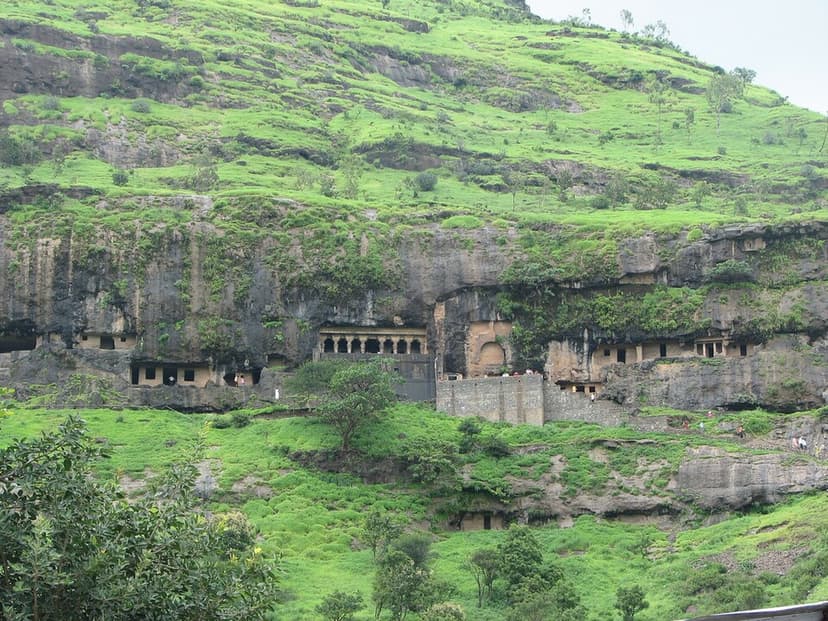
Girijatmaj Temple of Lenyadri
The Girijatmaj Temple of Lenyadri is a rock-cut Hindu temple dedicated to Ganesha, located within a complex of ancient Buddhist caves in Maharashtra, India. Originally a Buddhist vihara, Cave 7 was later adapted for Ganesha worship and is now recognized as one of the prominent Ashtavinayak shrines.

Taraknath Temple
The Taraknath Temple, located in Tarakeswar, West Bengal, India, is a significant Hindu pilgrimage site dedicated to Lord Shiva, worshiped here as Tarakanatha. Constructed in 1729, it features a distinct Bengal architectural style with an 'atchala' structure and an adjacent 'natmandir'. The temple is renowned for its belief that a dip in the nearby Dudhpukur tank fulfills prayers and is considered one of the 64 Jyotirlingas.

Tanot Mata Temple
The Tanot Mata Temple is a significant Hindu shrine located in the Jaisalmer district of Rajasthan, India, near the Pakistan border. Revered as a form of Goddess Hinglaj Mata, the temple is famously associated with the Indian victories in the Indo-Pakistani Wars of 1965 and 1971, with local folklore attributing the successful outcomes to divine intervention. The Border Security Force of India now manages the temple complex, which also includes a victory tower and a war museum.