
Girijatmaj Temple of Lenyadri
Rock-cut (Buddhist Vihara adapted for Hindu worship)·3rd century·India
The Girijatmaj Temple of Lenyadri is a rock-cut Hindu temple dedicated to Ganesha, located within a complex of ancient Buddhist caves in Maharashtra, India. Originally a Buddhist vihara, Cave 7 was later adapted for Ganesha worship and is now recognized as one of the prominent Ashtavinayak shrines.
Key Facts
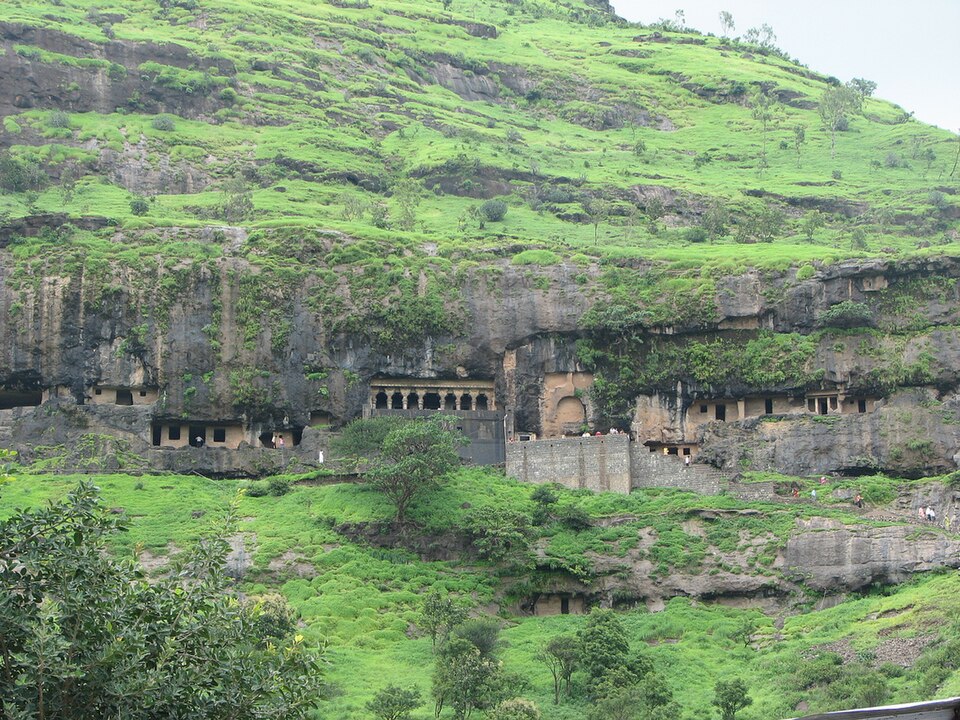
- ›The temple is carved into a natural cliff face, part of a larger series of about 30 rock-cut caves.
- ›It is one of the eight prominent Ganesha shrines known as Ashtavinayak.
- ›The primary deity is Ganesha, in the form of Girijatmaja, meaning 'son of Girija' (Parvati).
- ›The cave was originally a Buddhist Vihara (monk's dwelling) dating between the 1st and 3rd century AD.
- ›The temple complex is managed by the Archaeological Survey of India, with a priest overseeing worship activities.
- ›Major festivals celebrated include Ganesh Jayanti and Ganesh Chaturthi.
Ganesha
- One of the Ashtavinayak Shrines
- Site of Ganesha's Legendary Birth
- Unique Blend of Buddhist and Hindu Rock-Cut Architecture
Ganesh Jayanti, Ganesh Chaturthi
Rock, Stone, Plaster, Paintings
- Ganesha Icon
- Traces of Paintings Depicting Ganesha's Childhood and Hindu Deities
River Kukadi
About Girijatmaj Temple of Lenyadri
The Girijatmaj Temple of Lenyadri is a significant Hindu temple dedicated to Lord Ganesha, uniquely situated within a series of ancient rock-cut Buddhist caves. Located near Junnar in the Pune district of Maharashtra, India, it is one of the revered Ashtavinayak shrines, a group of eight prominent Ganesha temples in Western Maharashtra.
Historical Context and Architecture
The Lenyadri caves, numbering around 30, are carved into a natural cliff and date between the 1st and 3rd century AD. Originally, they served as Buddhist viharas (dwellings for monks) and chaitya-grihas (chapels). Cave 7, the site of the Ganesha temple, was a Buddhist vihara. At an unrecorded later date, two central cells within this cave were adapted for the worship of Ganesha, leading to its transformation into a Hindu shrine.
The architecture of Cave 7 is characteristic of Buddhist rock-cut structures, featuring an unpillared hall with numerous cells, a pillared veranda, and decorative pillars. During its conversion to a Hindu temple, the entrances were widened, and wooden doors were added. Traces of plaster and paintings, possibly dating to the 19th century, adorn the hall, depicting scenes from Ganesha's life and other Hindu deities.
Religious Significance and Legend
Referred to as Girijatmaja, the Ganesha idol is believed to be "svayambhu" (self-existent) and is sculpted directly onto the cave wall. The name Girijatmaja means "son of Girija" (Parvati), referring to the legend that Goddess Parvati performed penance at this site to beget Ganesha as her son. According to the Ganesha Purana, Ganesha was born here to Parvati on the day celebrated as Ganesh Chaturthi. The temple's location on a mountain and within Buddhist caves makes it distinctive among the Ashtavinayak sites.
Worship and Administration
The Lenyadri caves, including the Ganesha temple, are under the control of the Archaeological Survey of India. Worship activities are overseen by a priest. The temple celebrates major festivals such as Ganesh Jayanti and Ganesh Chaturthi, attracting numerous pilgrims. The caves are approached via a series of stone steps, with local tradition suggesting these steps represent the sensual pleasures that Ganesha has overcome.
Source: Wikipedia ↗
Frequently Asked Questions
What is the history of the Girijatmaj Temple of Lenyadri?
The caves at Lenyadri date between the 1st and 3rd century AD and were originally Buddhist in design. Cave 7, a Buddhist vihara, was later adapted for Hindu worship, with two of its central cells being appropriated for the worship of Ganesha.
Why is the Girijatmaj Temple considered significant?
It is one of the eight prominent Ganesha shrines collectively known as the Ashtavinayak. In regional mythology, it is believed to be the cave where Goddess Parvati desired to have Ganesha as her son and where he was born.
What is the architectural style of the Girijatmaj Temple?
The temple is a rock-cut excavation, originally designed as a Buddhist Vihara. It features an unpillared hall with cells, a pillared veranda, and decorative pillars with animal motifs. The conversion to a Hindu temple involved widening entrances and adding wooden doors.
What is the meaning of the name Lenyadri?
Lenyadri is derived from Marathi 'Lena' meaning 'cave' and Sanskrit 'adri' meaning 'mountain' or 'stone', thus translating to 'mountain cave'. The name is also mentioned in the Hindu scripture Ganesha Purana.
What is the legend behind Ganesha's birth at Lenyadri?
According to the Ganesha Purana, Goddess Parvati performed austerities at Lenyadri for twelve years to have Ganesha as her son. Pleased by her penance, Ganesha blessed her, and was born to her on the auspicious day of Ganesh Chaturthi.
Can visitors see the original Ganesha idol?
The Ganesha image, known as Girijatmaja, is sculpted directly on the stone wall of the cave and is covered with sindoor. It is believed to be 'svayambhu' (self-existent). A brass-plated wooden armor that once covered the icon is no longer present.
Related Temples (Hindu)

Bambleshwari Temple
The Bambleshwari Temple is a prominent Hindu temple situated atop a 1600-foot hilltop in Dongargarh, Chhattisgarh, India. Revered by millions, it is particularly significant during the Navratri festivals of Kavar and Chaitra, when devotees light Jyoti Kalash. The temple complex also includes a smaller shrine at ground level and is known for its ropeway, the only one in Chhattisgarh.

Thiruchendur Murugan Temple
The Thiruchendur Murugan Temple, situated in the Thoothukudi district of Tamil Nadu, is a prominent Hindu temple dedicated to Lord Murugan. It is recognized as one of the Six Abodes of Murugan and holds significant mythological importance, recounting Murugan's victory over the asura Surapadman.

Kapila Theertham
Kapila Theertham is a Shaivite temple located at the foot of the Tirumala hills in Andhra Pradesh, India. The temple is dedicated to Lord Shiva, referred to as Kapileswara, and is believed to have been installed by Sage Kapila. It is situated at the entrance of a mountain cave, with a temple tank fed by a mountain stream, and holds significant religious importance for pilgrims.