
Bakreswar Temple
Bakreswar Temple is a significant Hindu temple located in the village of Bakreshwar, West Bengal, India. It is dedicated to Lord Shiva and is also recognized as one of the 51 Shakti Pithas, a sacred site dedicated to Adi Shakti. The temple is situated beside the Bakreswar River and is a major pilgrimage destination for Hindus.
Key Facts
- ›The temple is dedicated to Lord Shiva, worshipped here as Bakreshwar.
- ›It is considered one of the 51 Shakti Pithas, sites dedicated to Adi Shakti.
- ›The village of Bakreshwar is known for its ten hot springs, including Agni Kunda and Dudh Kunda.
- ›The name 'Bakreshwar' derives from 'Bakra' (bent/curved) and 'Ishwar' (God), referring to Lord Shiva.
- ›Mythologically, the site is associated with Ashtavakra Muni, who performed penance and was blessed by Lord Shiva here.
- ›The Bakreswar River flows alongside the village, adding to its natural beauty.

Shiva, Adi Shakti
Shakti Pitha, Pilgrimage Site
Ashtavakra Muni
Bakreswar River
About Bakreswar Temple
Bakreshwar Temple is a significant Hindu pilgrimage site located in the village of Bakreshwar, within the Birbhum district of West Bengal, India. The temple is primarily dedicated to Lord Shiva, who is worshipped here in the form of Bakreshwar. The name itself, derived from 'Bakra' (bent or curved) and 'Ishwar' (God), is linked to mythological accounts of sage Ashtavakra Muni performing penance and receiving blessings from Shiva at this location.
Beyond its Shaivite significance, Bakreshwar is also revered as one of the 51 Shakti Pithas, sacred sites dedicated to Adi Shakti, the primordial cosmic energy. This dual importance makes it a crucial destination for devotees of both Shiva and Shakti.
The village of Bakreshwar is geologically notable for its ten natural hot springs, including prominent ones like Paphara Ganga, Baitarini Ganga, and Agni Kunda. These springs are imbued with religious sanctity and are a draw for visitors. The Bakreswar River flows alongside the village, adding to its serene and spiritual ambiance. In addition to the main Bakreshwar Temple, the complex includes other shrines such as the Ma Bhavatarini Mandir, Mahisasur Mardini Temple, and Bhairabnath Temple, reflecting a broader devotional landscape.
Source: Wikipedia ↗
Frequently Asked Questions
What is the significance of Bakreswar Temple?
Bakreswar Temple holds dual significance as a shrine to Lord Shiva and as one of the 51 Shakti Pithas dedicated to Adi Shakti. This makes it a crucial pilgrimage site for Hindus seeking blessings from both deities.
What is the mythological origin of the name Bakreshwar?
The name Bakreshwar originates from 'Bakra' meaning bent or curved, and 'Ishwar' meaning God. Legend states that sage Ashtavakra Muni, who had eight bodily cripples, performed penance here and was blessed by Lord Shiva, leading to the name.
What are the natural attractions at Bakreshwar?
Bakreshwar is renowned for its ten natural hot springs, which are considered to have religious and geological significance. These springs include Paphara Ganga, Baitarini Ganga, and Agni Kunda, among others.
What other temples are located in Bakreshwar?
Besides the main Bakreshwar Temple, the village is home to other significant shrines. These include the Ma Bhavatarini Mandir, Mahisasur Mardini Temple, and Bhairabnath Temple, catering to various devotional practices.
Related Temples (Hindu)

Taraknath Temple
The Taraknath Temple, located in Tarakeswar, West Bengal, India, is a significant Hindu pilgrimage site dedicated to Lord Shiva, worshiped here as Tarakanatha. Constructed in 1729, it features a distinct Bengal architectural style with an 'atchala' structure and an adjacent 'natmandir'. The temple is renowned for its belief that a dip in the nearby Dudhpukur tank fulfills prayers and is considered one of the 64 Jyotirlingas.

Tanot Mata Temple
The Tanot Mata Temple is a significant Hindu shrine located in the Jaisalmer district of Rajasthan, India, near the Pakistan border. Revered as a form of Goddess Hinglaj Mata, the temple is famously associated with the Indian victories in the Indo-Pakistani Wars of 1965 and 1971, with local folklore attributing the successful outcomes to divine intervention. The Border Security Force of India now manages the temple complex, which also includes a victory tower and a war museum.
Thriprayar Temple
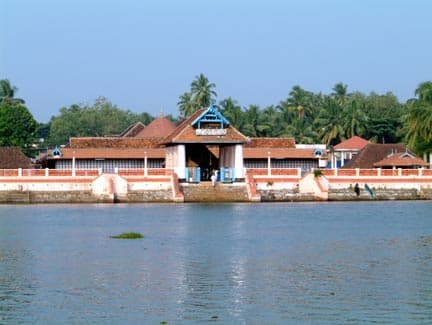
The Thriprayar Temple, also known as the Shree Ramaswami Temple, is a significant Hindu temple located in Triprayar, Thrissur district, Kerala, India. It is dedicated to Lord Rama, the seventh incarnation of Vishnu, who is depicted with four arms holding a conch, discus, bow, and garland. The temple's origin story involves the idol being worshipped by Krishna in Dwarka, later immersed in the sea, and eventually found by fishermen.