
Badrinath Temple
Badrinath Temple, also known as Badarinarayana Temple, is a significant Hindu temple dedicated to Lord Vishnu, located in the Garhwal Himalayas of Uttarakhand, India. It is one of the most revered pilgrimage sites, forming part of the Char Dham pilgrimage circuit and is open for only six months a year due to harsh Himalayan weather.
Key Facts
- ›Dedicated to Vishnu, worshipped as Badrinath.
- ›Located at an altitude of 3,133 meters in the Garhwal Himalayas.
- ›Part of the Char Dham pilgrimage circuit.
- ›Temple is open for six months annually due to extreme weather.
- ›Features a 1 ft black granite deity of Vishnu as Badrinarayan.
- ›Mentioned in ancient texts like Vishnu Purana and Skanda Purana.

Vishnu, Badrinarayan
- One of the 108 Divya Desams Sacred To Vaishnavism
- Part of the Char Dham Pilgrimage Sites
- Considered A Self-Manifested Deity of Vishnu
- Important Pilgrimage Centre For Hindus
Parmar Dynasty, Garhwal Kingdom
Mata Murti Ka Mela, Badri Kedar Festival
Black Stone, Granite, Shaligram
Adi Shankara, Kanak Pal
- Deity of Badrinarayan Holding Panchajanya Shankha and Sudarshana Chakra
- Images of Kubera, Narada, Uddhava, Nara and Narayana
- Images of Lakshmi, Garuda, and Navadurga
- Shrines Dedicated To Lakshmi Narasimhar and Saints
Alaknanda River, Tapt Kund, Narad Kund, Surya Kund
About Badrinath Temple
Badrinath Temple, also known as Badarinarayana Temple, is a prominent Hindu temple situated in the Garhwal Himalayas in the Chamoli district of Uttarakhand, India. Dedicated to Lord Vishnu, it is worshipped here as Badrinath. The temple is a significant pilgrimage destination, recognized as one of the 108 Divya Desams sacred to Vaishnavism and a crucial site within the Char Dham pilgrimage circuit. Due to the harsh Himalayan climate, the temple remains open to devotees for only six months annually, typically from late April to early November.
Location and Architecture
The temple is located at an altitude of 3,133 meters (10,279 ft) above sea level, nestled along the banks of the Alaknanda River. The architectural style features a sanctum with a conical roof topped by a gilt gold cupola, a worship hall, and an assembly hall. The stone façade includes arched windows, and a broad stairway leads to the main entrance. The walls and pillars of the halls are decorated with intricate carvings. The main shrine houses a 1-foot tall black granite deity of Badrinarayan, depicted in a Yogamudra posture, holding a conch and a discus.
History and Legend
Badrinath was established as a pilgrimage site by Adi Shankara in the ninth century. Local traditions and ancient texts like the Vishnu Purana and Skanda Purana mention the temple and its origins. Legend has it that Vishnu meditated here, protected by his consort Lakshmi in the form of a Badri tree. The temple has undergone several renovations and rebuilds over centuries, notably after damage from earthquakes and avalanches, with contributions from rulers of the Garhwal Kingdom and the King of Jaipur.
Religious Significance and Practices
The temple is considered one of the holiest Hindu sites and is one of the Panch Badri, a group of five temples dedicated to Vishnu. Pilgrims often bathe in the nearby Tapt Kund hot springs before visiting the shrine. Major religious activities include daily morning and evening pujas, with the recitation of Vedic scripts. Festivals such as Mata Murti Ka Mela and the Badri Kedar festival are celebrated here. The temple's closure for winter is marked by lighting a lamp, the Akhanda Jyothi, which is intended to burn for the six months of closure.
Administration
The Badrinath Temple is administered by a committee nominated by the State Government of Uttarakhand, as outlined in the Shri Badarinath and Shri Kedarnath Mandir Act. The head priest, known as the Rawal, is traditionally a Nambudiri Brahmin from Kerala, a practice believed to have been initiated by Adi Shankara. The temple follows ancient Tantra Vidhi practices, which are more common in South India.
Source: Wikipedia ↗
Frequently Asked Questions
What is Badrinath Temple dedicated to?
Badrinath Temple is dedicated to Lord Vishnu, who is worshipped in the form of Badrinarayan. The presiding deity is a 1-foot tall black granite image of Vishnu.
Where is Badrinath Temple located?
The temple is situated in the town of Badrinath in the Chamoli district of Uttarakhand, India, within the Garhwal Himalayas, along the banks of the Alaknanda River.
Why is Badrinath Temple open only for six months?
Due to the extreme weather conditions in the Himalayas, the temple is open to pilgrims for only six months each year, typically from late April to early November.
What is the significance of Badrinath Temple in Hinduism?
Badrinath Temple is one of the 108 Divya Desams sacred to Vaishnavism and is considered one of the holiest Hindu Char Dham pilgrimage sites. It is also believed to house a self-manifested deity of Vishnu.
What are the main structures within the Badrinath Temple complex?
The temple complex comprises three main structures: the Garbhagriha (sanctum), the Darshan Mandapa (worship hall), and the Sabha Mandapa (assembly hall).
What is the significance of the Tapt Kund near Badrinath Temple?
The Tapt Kund is a group of hot sulphur springs located just below the temple, considered medicinal by many pilgrims. It is a customary requirement for pilgrims to bathe in these springs before visiting the temple.
Related Temples (Hindu)

Tanot Mata Temple
The Tanot Mata Temple is a significant Hindu shrine located in the Jaisalmer district of Rajasthan, India, near the Pakistan border. Revered as a form of Goddess Hinglaj Mata, the temple is famously associated with the Indian victories in the Indo-Pakistani Wars of 1965 and 1971, with local folklore attributing the successful outcomes to divine intervention. The Border Security Force of India now manages the temple complex, which also includes a victory tower and a war museum.

Kumararama
The Kumararama Temple, also known as Bhimarama or Chalukya Kumararama Bhimeswara Temple, is a significant Hindu temple dedicated to Lord Shiva, located in Samalkota, Andhra Pradesh. It is one of the five Pancharama Kshetras and is renowned for its unique limestone Shiva Lingam, which is 16 feet tall and pierces through the roof to the second floor.
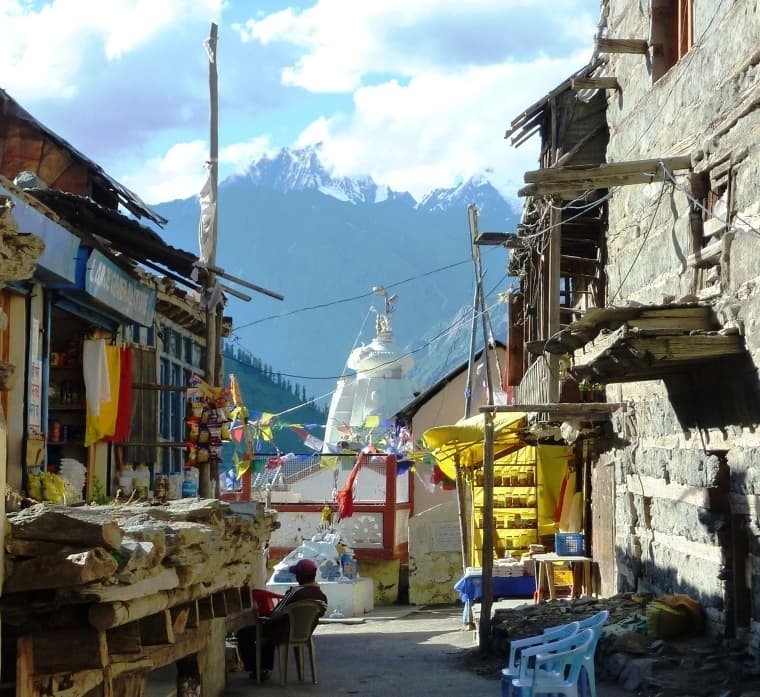
Triloknath Temple
The Triloknath Temple, located in Himachal Pradesh, India, is a significant religious site revered by both Tibetan Buddhists and Hindus. Originally believed to be a Buddhist vihara, it now houses a marble statue of Avalokiteshvara, worshipped as Shiva by Hindus and as Avalokiteshvara by Buddhists. The temple's architecture and history suggest a blend of influences, with its columns dating to the 9th century CE.