
Amritaghateswarar-Abirami Temple
Chola dynasty·9th century·India
The Amritaghateswarar-Abirami Temple, located in Thirukkadaiyur, Tamil Nadu, is a significant Hindu temple dedicated to Lord Shiva and Goddess Parvati. It is renowned for its association with the legend of Shiva saving the young devotee Markandeya from death and the tale of the saint Abirami Pattar. The temple is a revered site for longevity rituals and is celebrated in ancient Tamil Saiva literature.
Key Facts
- ›The temple is dedicated to Shiva as Amritaghateswarar and Parvati as Abhirami.
- ›It is associated with the legend of Shiva saving Markandeya from Yama, the god of death.
- ›Worship at this temple is believed to grant longevity, particularly for couples reaching ages sixty or eighty-one.
- ›The present masonry structure dates back to the Chola dynasty in the 9th century, with later expansions by the Thanjavur Nayaks.
- ›The temple complex covers 10 acres and features an 11-story eastern gopuram measuring 46 meters in height.
- ›It is classified as a Paadal Petra Sthalam, mentioned in the 7th-century Tamil Saiva canonical work Tevaram.

Shiva, Parvati, Vishnu, Lakshmi
Legend of Shiva Saving Markandeya, Legend of Abhirami Pattar, Longevity Rituals, Mentioned In Tevaram, One of the Ashta Veeratanam Temples
Chola Dynasty, Thanjavur Nayaks
Brahmotsavam, Shankha-Abhisheka, Navaratri, Aadi Pooram, Sashtiaptha Poorthi, Sadhabishegam, Amavasai, Kiruthigai, Pournami, Sathurthi
Masonry, Brick, Stone, Mortar
Chola Dynasty, Thanjavur Nayaks
- Images Depicting Temple Legends On the Rajagopuram
- Bronze Image of Kalasamharamurthy
- Images of Durga, Dakshinamurthy, and Chandikesa
- Five Sets of Stone Sculptures Belonging To the Chola Period
Amrita Pushkarini, Kaala Theertham, Maarkandeya Theertham
About Amritaghateswarar-Abirami Temple
The Amritaghateswarar-Abirami Temple, situated in Thirukkadaiyur, Tamil Nadu, is a significant Hindu temple dedicated to Lord Shiva in his manifestation as Amritaghateswarar and Goddess Parvati as Abhirami. The temple also houses a shrine for Lord Vishnu as Amrithanarayana and Goddess Lakshmi as Amrithavalli. It is particularly renowned for its association with the legend of Shiva saving his young devotee Markandeya from the clutches of Yama, the god of death, and the story of the devoted saint Abirami Pattar.
Revered in the 7th-century Tamil Saiva canonical work, the Tevaram, the temple is classified as a Paadal Petra Sthalam, one of the 276 Shiva temples mentioned in the Saiva canon. The present masonry structure was built during the Chola dynasty in the 9th century, with subsequent expansions attributed to the Thanjavur Nayaks. The temple complex is extensive, covering 10 acres, and features an impressive 11-story eastern gateway tower (gopuram) that stands 46 meters tall. It hosts six daily rituals and twelve annual festivals throughout the year.
Legend and Religious Significance
The temple's name, Amritaghateswarar, originates from the legend where Lord Shiva is said to have poured ambrosia from a pot over the Shiva Lingam, bestowing immortality. The temple is also one of the eight Ashta Veeratanam temples, commemorating Shiva's victories. A central belief associated with the temple is that worship here grants longevity, especially to couples celebrating their 60th (Sashtiaptha poorthi) and 81st (Sadhabishegam) birthdays. The temple is also famous for the legend of Abhirami Pattar, a devoted saint who composed the 'Abhirami Andaadi' and whose faith is celebrated annually.
Architectural Features
Occupying approximately 10 acres, the temple complex is characterized by its vast area, multiple courtyards, imposing towers, and spacious halls. The architecture reflects the style of the Chola period, with additions and modifications made by later dynasties. Notable features include the seven-tiered rajagopuram, the central shrine housing the Amritaghateswarar Lingam, and a separate shrine for Kalasamharamurthy, the form of Shiva that saved Markandeya. The temple also has three sacred tanks: Amrita Pushkarini, Kaala Theertham, and Maarkandeya Theertham.
Source: Wikipedia ↗
Frequently Asked Questions
What is the significance of the name Amritaghateswarar-Abirami Temple?
The name Amritaghateswarar translates to 'Lord that leads to immortality' and refers to Shiva's role in the legend of the ambrosia pot. Abhirami is the name of the presiding goddess, Parvati, and is derived from the legend of the saint Abirami Pattar.
What is the legend behind the temple's association with longevity?
According to legend, Lord Shiva intervened to save his young devotee Markandeya from Yama, the god of death. This act of subduing death makes the presiding deity, Mrityunjaya, a symbol of conquering death, leading to the belief that worship here grants longevity.
Who was Abhirami Pattar and what is his connection to the temple?
Abhirami Pattar was a devout follower of Goddess Abhirami who lived in the 16th century. He is famous for composing the 'Abhirami Andaadi,' a hymn of praise, when he mistakenly declared a new moon day as a full moon day and was facing execution. The goddess is said to have appeared and turned the night into a full moon to save him.
What are the architectural features of the Amritaghateswarar-Abirami Temple?
The temple complex spans 10 acres and features two gateway towers (gopurams), with the eastern tower being the tallest at 11 stories and 46 meters. The architecture reflects the style of the Chola dynasty, with later expansions by the Thanjavur Nayaks, and includes multiple shrines and spacious mandapas.
What are the daily rituals and festivals observed at the temple?
The temple conducts six daily rituals from early morning to late night. It also celebrates twelve yearly festivals, including the annual Brahmotsavam in April-May, Shankha-abhisheka in November-December, Navaratri, and Aadi Pooram, which celebrates the goddess's attainment of womanhood.
What is the historical significance of the Amritaghateswarar-Abirami Temple?
The temple is documented in the 7th-century Tamil Saiva canonical work Tevaram, classifying it as a Paadal Petra Sthalam. Inscriptions from the Medieval Cholas, including those from the reigns of Rajaraja I and Rajendra Chola, indicate its importance and donations made for its upkeep and festivals since at least the 10th or 11th century.
Related Temples (Hindu)

Tanot Mata Temple
The Tanot Mata Temple is a significant Hindu shrine located in the Jaisalmer district of Rajasthan, India, near the Pakistan border. Revered as a form of Goddess Hinglaj Mata, the temple is famously associated with the Indian victories in the Indo-Pakistani Wars of 1965 and 1971, with local folklore attributing the successful outcomes to divine intervention. The Border Security Force of India now manages the temple complex, which also includes a victory tower and a war museum.

Kumararama
The Kumararama Temple, also known as Bhimarama or Chalukya Kumararama Bhimeswara Temple, is a significant Hindu temple dedicated to Lord Shiva, located in Samalkota, Andhra Pradesh. It is one of the five Pancharama Kshetras and is renowned for its unique limestone Shiva Lingam, which is 16 feet tall and pierces through the roof to the second floor.
Triloknath Temple
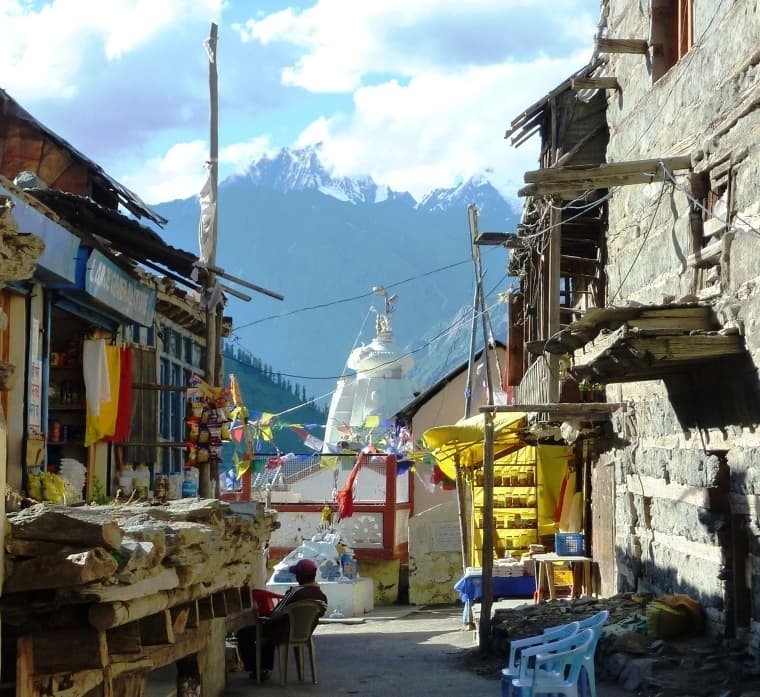
The Triloknath Temple, located in Himachal Pradesh, India, is a significant religious site revered by both Tibetan Buddhists and Hindus. Originally believed to be a Buddhist vihara, it now houses a marble statue of Avalokiteshvara, worshipped as Shiva by Hindus and as Avalokiteshvara by Buddhists. The temple's architecture and history suggest a blend of influences, with its columns dating to the 9th century CE.