
Alampur Navabrahma Temples
The Alampur Navabrahma Temples are a group of nine early Hindu temples constructed between the 7th and 9th centuries by the Badami Chalukyas. Located in Telangana, India, near the confluence of the Tungabhadra and Krishna rivers, these temples are noted for their North Indian Nagara style architecture, intricate carvings, and historical significance as a precursor to later temple styles.
Key Facts
- ›The temples are dedicated to Lord Shiva, despite being called Nava-Brahma temples.
- ›They exhibit early North Indian Nagara style architecture, primarily using cut rock.
- ›The temples feature simple square plans, intricate carvings, and friezes depicting Hindu legends and fables.
- ›They were built by the Badami Chalukya rulers, reflecting their patronage of distinct architectural styles.
- ›The site was later impacted by Islamic invasions, with some structures built using temple ruins.
- ›The Archaeological Survey of India has undertaken restoration efforts for the damaged temples.

Shiva
- Exemplify Early North Indian Nagara Style Architecture
- Influenced Later Kakatiya Hindu Temples
- Contain Early Examples of Narrative Friezes From Hindu Texts
Badami Chalukyas
Shivaratri
Cut Rock
Pulakesi I, Lokaditya Ela Arasa
Nataraja, Lingobhava, Dakshinamurti, Saptamatrikas, Panchatantra Fables, Vamana-Trivikrama Legend, Mithuna Scenes, Dikpalas, Ganga and Yamuna Goddesses, Durga In Mhishasura-Mardini Form, Lajja-Gauri, Nandi Statue With Shiva and Parvati
Tungabhadra River, Krishna River
About Alampur Navabrahma Temples
The Alampur Navabrahma Temples
The Alampur Navabrahma Temples, situated in Alampuram, Telangana, India, represent a significant cluster of early Hindu temples dating from the 7th to 9th centuries. Constructed by the rulers of the Badami Chalukya dynasty, these nine temples are renowned for their early examples of North Indian Nagara style architecture, utilizing cut rock as their primary building material. They stand near the confluence of the sacred Tungabhadra and Krishna rivers, a location historically important for pilgrimage.
Architectural and Religious Significance
The temples are characterized by their simple square plans and east-facing orientations, crowned with Rekha-nagara style curvilinear shikara towers. They are celebrated for their intricate carvings that depict themes from Shaivism, Vaishnavism, and Shaktism, alongside early friezes that narrate stories from Hindu texts like the Panchatantra. The Svarga Brahma temple, in particular, is noted for its elaborate ornamentation and sculptural depictions, including dancing Shiva (Nataraja) and scenes of everyday life. The architectural style of the Alampur temples was influential, leaving a notable impact on the later Kakatiya Hindu temples.
Historical Context and Preservation
Early inscriptions found at the site indicate the presence of a Shaiva matha (monastery) in the 8th century, though its remains have not survived. The temples faced considerable damage and defacement due to Islamic invasions from the 14th century onwards. During the 15th to 17th centuries, parts of the complex were altered or built over with Islamic structures, including a fort and mosque, often using materials from the original temple ruins. Following extensive damage, the Archaeological Survey of India has undertaken restoration and relocation efforts, particularly for temples threatened by the Srisailam Dam project. The Bala Brahma temple continues to be an active site of worship, with festivals like Shivaratri celebrated annually.
Source: Wikipedia ↗
Frequently Asked Questions
What is the architectural style of the Alampur Navabrahma Temples?
The Alampur Navabrahma Temples are primarily built in the early North Indian Nagara style. They also show influences of Karnata Dravida and Vesara styles native to Karnataka, resembling the architecture found in Pattadakal and Aihole.
What deities are worshipped at the Alampur Navabrahma Temples?
Although known as Nava-Brahma temples, they are dedicated to Lord Shiva. The intricate carvings and friezes within the temples also depict themes from Vaishnavism and Shaktism.
When were the Alampur Navabrahma Temples constructed?
The temples were built between the 7th and 9th centuries by the Badami Chalukya rulers. Specific inscriptions suggest construction began as early as the 7th century CE.
What historical events have affected the Alampur Navabrahma Temples?
The temples were significantly damaged and defaced following Islamic invasions from the 14th century onwards. Later, during the 15th to 17th centuries, an Islamic fort, mosque, and graveyard were constructed using materials from the ruined temples.
Are the Alampur Navabrahma Temples still active places of worship?
The Bala Brahma temple within the complex is an active house of Hindu worship in contemporary times. However, worship in temples immediately adjacent to the Sultanate-era additions was abandoned due to their proximity.
What is the significance of the friezes found in these temples?
The temples contain early examples of friezes that narrate legends from Hindu texts. Notably, the Svarga Brahma temple features friezes depicting four fables from the Panchatantra, each with a Sanskrit inscription summarizing its moral.
Related Temples (Hindu)
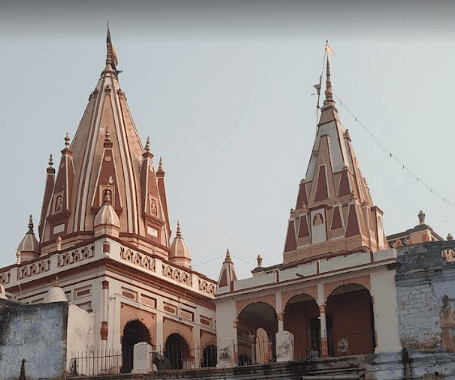
Budhanath Temple, Bhagalpur
The Budhanath Temple, also known as Vriddheshwarnath or Baba Bal Vridheshwarnath Temple, is a significant Hindu temple dedicated to Lord Shiva, located on the banks of the Uttarvahini Ganga in Bhagalpur, India. It is believed to be one of the 108 Nath temples mentioned in the Shiva Purana and is celebrated for its spiritual ambiance and as a focal point for regional cultural identity.

Mundeshwari Temple
The Mundeshwari Devi Temple, located on the Mundeshwari Hills in Bihar, India, is an ancient Hindu temple dedicated to Goddess Durga and Lord Shiva. It is recognized by the Archaeological Survey of India as a protected monument and is claimed by some scholars to be the oldest functional Hindu temple in the world, with evidence suggesting continuous worship since at least the 6th-7th century CE.

Mahamaya Temple
The Mahamaya Temple, located in Ratanpur, Chhattisgarh, India, is a significant Hindu temple dedicated to Goddess Durga and Mahalaksmi. It is recognized as one of the 52 Shakti Peethas and holds historical importance, with parts of the complex dating back to the 12th-13th centuries and a later structure built in 1492 CE.