
Aadi Himani Chamunda
Aadi Himani Chamunda is a Hindu temple dedicated to Shri Chamunda Devi, located in the Kangra Valley of Himachal Pradesh, India. Situated atop a hilltop, it is a significant pilgrimage site known for its natural beauty and challenging trek, attracting devotees particularly outside the winter months.
Key Facts
- ›The temple is dedicated to Shri Chamunda Devi, a fearsome aspect of the Divine Mother.
- ›It is located in Chandar Bhan, Jia, in the Kangra Valley of Himachal Pradesh, India.
- ›The temple is situated at an elevation of 3185 meters on a hilltop.
- ›Reaching the temple involves a trek of approximately 13 kilometers from the nearest motorable road.
- ›The temple was in a derelict state until 1992 and has since undergone restoration.
- ›Devotees visit throughout the year, except during winter.

Shri Chamunda Devi
Pilgrimage Destination, Natural Beauty, Trekking Site
Mr. P. D. Saini
About Aadi Himani Chamunda
Aadi Himani Chamunda Temple
Aadi Himani Chamunda is a significant Hindu temple dedicated to Shri Chamunda Devi, located in the picturesque Kangra Valley of Himachal Pradesh, India. Nestled in the Himalayas, it sits atop a hilltop in Chandar Bhan, Jia, offering breathtaking natural beauty and serving as a notable destination for trekkers and pilgrims alike.
History and Restoration
The temple is believed to be at least as old as the nearby ruins of the palace of Raja Chandar Bhan Chand Katoch, which dates back to 1660. For many years, the temple lay in a derelict state until 1992. A substantial restoration effort was undertaken, driven by the dedication and labor of Mr. P. D. Saini, a retired Class 1 officer, who devoted 20 years to its revival with the help of a group of devotees. Even after the government assumed administration, he continued to contribute to the temple's improvement. In 2014, a recently constructed temple was destroyed by a fierce fire, and it is currently undergoing reconstruction with the support of devotees and the Temple Trust.
Location and Trekking
Situated at an altitude of 3185 meters, Aadi Himani Chamunda Temple is located on a hilltop northeast of the existing Shri Chamunda Devi Mandir in the Kangra District. Reaching the temple requires a challenging trek of approximately 13 kilometers from Jadrangal Village, which is on the Dharamshala Palampur state highway. The nearest motorable road is at Kand Kardiana village, about 13 kilometers away. The trek typically takes 6-7 hours and requires moderate expertise, making it a destination for those seeking both spiritual solace and adventure. Devotees usually visit between the spring and autumn, avoiding the harsh winter conditions.
Deity and Worship
The temple is dedicated to Shri Chamunda Devi, a formidable manifestation of Devi, the Divine Mother, and one of the seven Matrikas. Her name derives from her victory over the demons Chand and Mund. She is closely associated with other fierce goddesses such as Kali and Durga. Historically, her worship involved practices such as ritual animal sacrifices, offerings of wine, and in ancient times, even human sacrifices, reflecting her origins as a tribal goddess assimilated into Hinduism. Her fierce aspect is sometimes linked to her association with Vedic deities like Rudra and Agni.
Source: Wikipedia ↗
Frequently Asked Questions
What is the significance of Aadi Himani Chamunda?
Aadi Himani Chamunda is a Hindu temple dedicated to Shri Chamunda Devi, a fierce form of the Divine Mother. It is a significant pilgrimage site located in the scenic Kangra Valley, known for its natural beauty and the challenging trek required to reach it.
How do I get to the Aadi Himani Chamunda temple?
The temple is located on a hilltop and requires a trek of about 13 kilometers from Jadrangal Village, which is accessible from the Dharamshala Palampur state highway. The trek takes approximately 6-7 hours and requires moderate expertise.
When is the best time to visit Aadi Himani Chamunda?
Devotees visit the sacred shrine throughout the year, with the exception of the winter months. The temple is not accessible during winter due to weather conditions.
What is the history of the Aadi Himani Chamunda temple?
The temple stands near the ruins of a palace dating back to at least 1660. It was derelict until 1992 when restoration efforts began, largely spearheaded by Mr. P. D. Saini and a group of devotees. The temple has faced challenges, including a fierce fire in 2014 that destroyed a recently built structure, leading to ongoing reconstruction.
Who is Shri Chamunda Devi?
Shri Chamunda Devi, also known as Chamundi, is a fearsome aspect of Devi, the Hindu Divine Mother, and one of the seven Matrikas. She is known for her association with the killing of demons Chand and Mund and is closely linked with goddesses like Kali and Durga.
Related Temples (Hindu)

Taraknath Temple
The Taraknath Temple, located in Tarakeswar, West Bengal, India, is a significant Hindu pilgrimage site dedicated to Lord Shiva, worshiped here as Tarakanatha. Constructed in 1729, it features a distinct Bengal architectural style with an 'atchala' structure and an adjacent 'natmandir'. The temple is renowned for its belief that a dip in the nearby Dudhpukur tank fulfills prayers and is considered one of the 64 Jyotirlingas.

Tanot Mata Temple
The Tanot Mata Temple is a significant Hindu shrine located in the Jaisalmer district of Rajasthan, India, near the Pakistan border. Revered as a form of Goddess Hinglaj Mata, the temple is famously associated with the Indian victories in the Indo-Pakistani Wars of 1965 and 1971, with local folklore attributing the successful outcomes to divine intervention. The Border Security Force of India now manages the temple complex, which also includes a victory tower and a war museum.
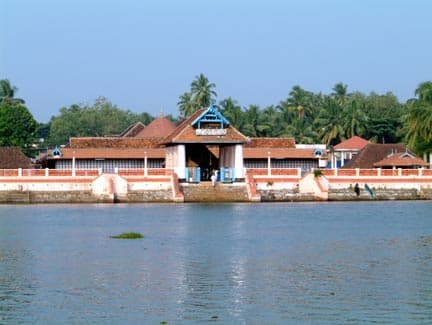
Thriprayar Temple
The Thriprayar Temple, also known as the Shree Ramaswami Temple, is a significant Hindu temple located in Triprayar, Thrissur district, Kerala, India. It is dedicated to Lord Rama, the seventh incarnation of Vishnu, who is depicted with four arms holding a conch, discus, bow, and garland. The temple's origin story involves the idol being worshipped by Krishna in Dwarka, later immersed in the sea, and eventually found by fishermen.