
Theodore the Black
Theodore the Black was a Russian prince who served as ruler of Smolensk and Yaroslavl. He is remembered as a saint of the Russian Orthodox Church, canonized for the depth of his deathbed repentance. Theodore played a significant role in the complex political landscape of 13th-century Rus', including service within the Golden Horde.
Key Facts
- ›His father was Prince Rostislav Mstislavovich of Smolensk.
- ›He was married to Maria Vasilievna (possibly Anastasia), daughter of Prince Vasily of Yaroslavl.
- ›Theodore served Khan Mengu-Timur of the Golden Horde, leading campaigns and holding positions.
- ›He later married the daughter of Mengu-Timur, who was baptized as Anna.
- ›Theodore inherited the Principality of Smolensk and ruled Yaroslavl.
- ›He became a monk in his final years and died in Yaroslavl.
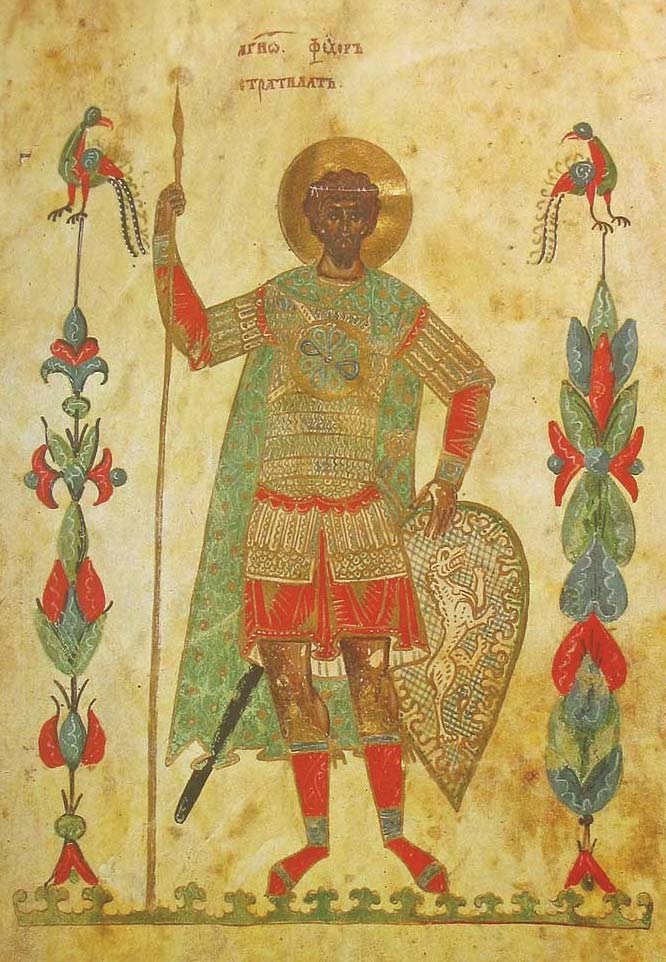
Fyodor Rostislavich, Fyodor Chermny, Theodore the Beautiful
About Theodore the Black
Theodore the Black (c. 1230s – 1299), also known by his Russian name Fyodor Rostislavich and the epithets Fyodor Chermny or Theodore the Beautiful, was a significant figure in 13th-century Rus'. He served as a prince and ruler of the principalities of Smolensk and Yaroslavl. He is additionally recognized as a saint within the Russian Orthodox Church, venerated for the depth of his repentance.
Life and Historical Context
Born into a princely family, Theodore's early life saw him inherit the Duchy of Mozhaysk. His first marriage was to Maria Vasilievna, daughter of the Prince of Yaroslavl, which brought him into the orbit of Yaroslavl's power, though his mother-in-law, Princess Xenia, initially held considerable influence. Dissatisfied with his standing, Theodore later ventured to Sarai, the capital of the Golden Horde, around 1266. There, he entered the service of Khan Mengu-Timur, becoming a loyal commander and participating in military campaigns, including punitive actions in Ossetia and Volga Bulgaria, where his troops reportedly displayed significant ferocity.
Upon hearing of his wife Maria's death, Theodore returned to Yaroslavl, seeking to reclaim power, but was initially denied entry. He subsequently returned to the Horde, where he married the daughter of Khan Mengu-Timur, who was baptized as Anna. This marriage elevated his status and brought him considerable wealth and influence within the Horde.
Rule and Later Years
Following the deaths of his brothers, Theodore inherited the Principality of Smolensk. He also took part in the dynastic conflicts among the sons of Alexander Nevsky and participated in punitive campaigns led by the Mongols in northeastern Rus'. In his final years, Theodore the Black embraced monastic life and died in Yaroslavl in 1299. His canonization by the Russian Orthodox Church was attributed to the profound nature of his deathbed repentance.
Source: Wikipedia ↗
Frequently Asked Questions
Who was Theodore the Black?
Theodore the Black, also known as Fyodor Rostislavich, was a Russian prince who ruled over the principalities of Smolensk and Yaroslavl in the 13th century. He is venerated as a saint in the Russian Orthodox Church.
Why is Theodore the Black called 'the Black'?
Theodore's nickname 'the Black' (Chermny) is interpreted in historical sources. While one interpretation suggests it means 'the Black,' another proposes it could mean 'the Beautiful.'
What was Theodore the Black's connection to the Golden Horde?
Theodore spent a significant period in his life in service to the Golden Horde, under Khan Mengu-Timur. He participated in military campaigns and held positions within the khan's court. He also married the daughter of Mengu-Timur.
What led to Theodore the Black's canonization?
Theodore the Black was canonized by the Russian Orthodox Church due to the profound depth of his deathbed repentance. This act of contrition was recognized as a significant spiritual event.
What were Theodore the Black's major roles during his life?
During his life, Theodore the Black served as a duke and prince of various Russian principalities, including Mozhaysk, Yaroslavl, and Smolensk. He also held a military and administrative role within the Golden Horde.
Related Saints
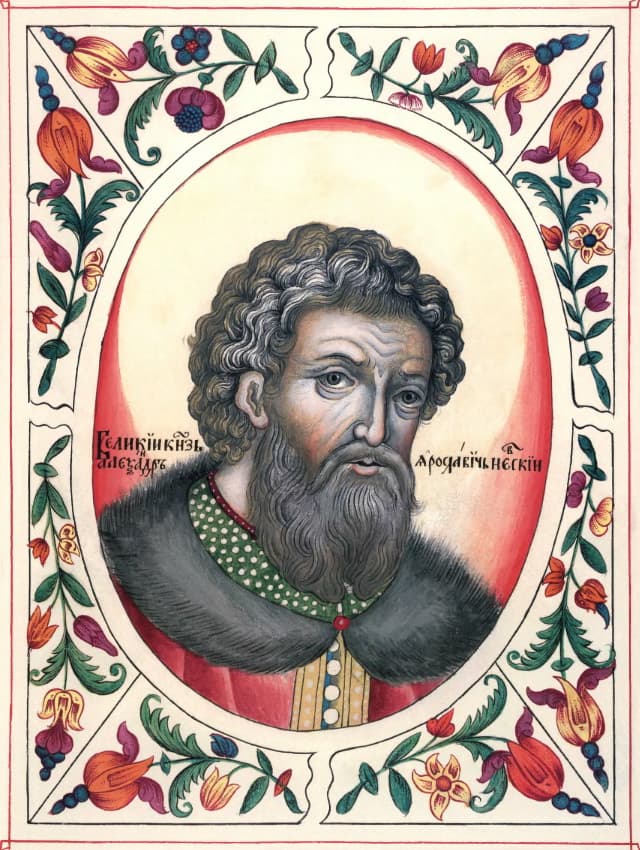
Alexander Nevsky
Alexander Nevsky was a 13th-century prince of Novgorod and Grand Prince of Vladimir, renowned for his military victories against Swedish and German invaders. He is chiefly remembered for his role in preserving Orthodox Christianity by agreeing to pay tribute to the Golden Horde and resisting Western European expansion, earning him sainthood and a legendary status as a Russian savior.
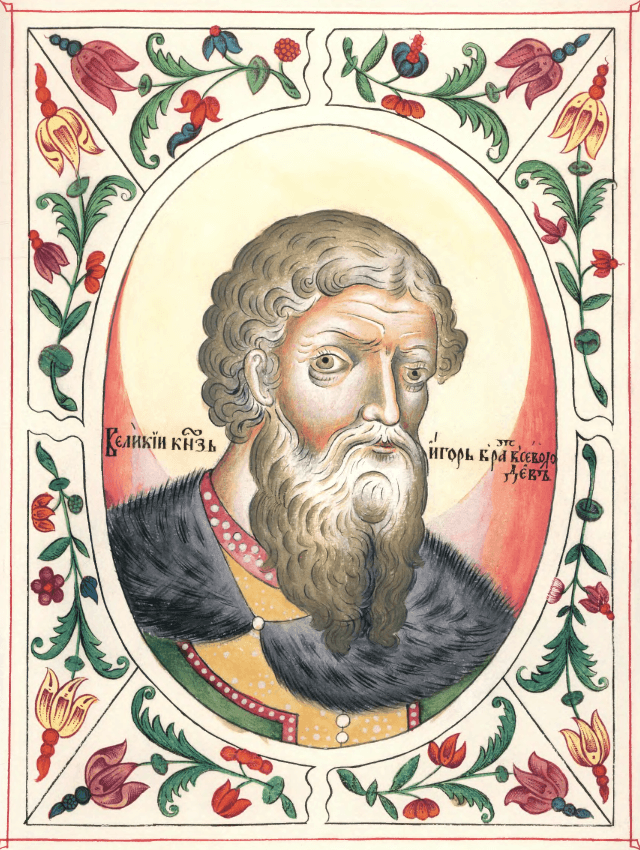
Igor II of Kiev
Igor II of Kiev was a prince of Chernigov and briefly Grand Prince of Kiev in 1146. He is remembered as a saint-martyr in the Eastern Orthodox Church, venerated for his suffering and alleged miracles after his violent death. Despite initial unpopularity and a short reign, his eventual monasticism and martyrdom led to his proclamation as a saint.
Lazarus of Serbia
Lazar Hrebeljanović was a medieval Serbian prince who established the largest and most powerful state on the fragmented Serbian Empire's territory, known as Moravian Serbia. He sought to revive the Serbian Empire, claiming succession from the Nemanjić dynasty, and was supported by the Serbian Orthodox Church. He is primarily remembered for his leadership in the Battle of Kosovo and his subsequent veneration as a martyr and saint.