
Alexander Nevsky
Alexander Nevsky was a 13th-century prince of Novgorod and Grand Prince of Vladimir, renowned for his military victories against Swedish and German invaders. He is chiefly remembered for his role in preserving Orthodox Christianity by agreeing to pay tribute to the Golden Horde and resisting Western European expansion, earning him sainthood and a legendary status as a Russian savior.
Key Facts
- ›He was Prince of Novgorod from 1236 to 1240, 1241 to 1256, and 1258 to 1259, and Grand Prince of Vladimir from 1252 to 1263.
- ›He achieved legendary status after victories over Swedish invaders in the Battle of the Neva (1240) and German crusaders in the Battle on the Ice (1242).
- ›He agreed to pay tribute to the Golden Horde, which helped preserve the Eastern Orthodox Church.
- ›Macarius, Metropolitan of Moscow, canonized him as a saint of the Russian Orthodox Church in 1547.
- ›His image has been used to promote patriotism, notably during World War II, and the 1938 film Alexander Nevsky cemented his reputation as a Russian savior.
- ›He died on November 14, 1263, while returning from a diplomatic mission to the Golden Horde.
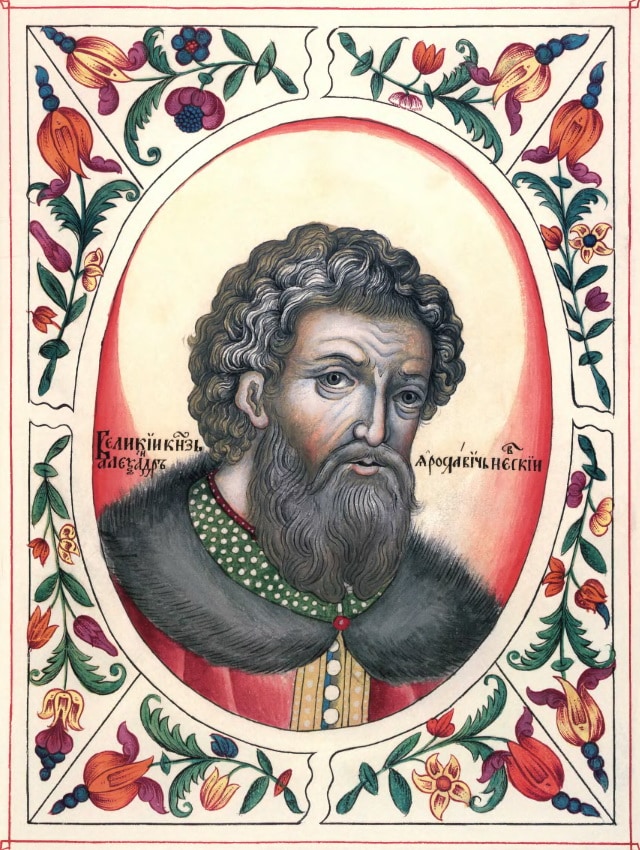
Aleksiy (monastic name)
Russia, Soldiers
Sword, Shield
About Alexander Nevsky
Alexander Yaroslavich Nevsky (1221–1263) was a pivotal figure in medieval Russian history, serving as Prince of Novgorod and later Grand Prince of Vladimir. He rose to prominence through significant military victories that have cemented his legendary status as a defender of Russia and its Orthodox faith.
Life and Historical Context
Born in Pereslavl-Zalessky, Alexander was the son of Grand Prince Yaroslav II of Vladimir. His early life was marked by the political landscape of northeastern Russia, which was increasingly influenced by external powers. He first served as Prince of Novgorod, a key trading city, where he demonstrated his military acumen.
Military Victories and Political Strategy
Nevsky is most celebrated for his victories against foreign invaders. In 1240, he led the Novgorodian army to a decisive win against Swedish forces in the Battle of the Neva, a feat that later earned him the epithet "Nevsky" (meaning "of the Neva"). Three years later, in 1242, he achieved another critical triumph in the Battle on the Ice, defeating the Livonian Order and halting their eastward expansion into Russian lands. These victories were crucial in preserving the territorial integrity and cultural identity of the region.
Beyond his military achievements, Alexander Nevsky's political strategy involved a complex relationship with the Golden Horde. Recognizing the overwhelming power of the Mongol Empire, he chose to pay tribute and maintain a degree of subservience to the Khan. This pragmatic approach allowed him to focus on defending Russia's western borders and, importantly, to protect the Eastern Orthodox Church from potential foreign encroachment and influence, particularly from Catholic powers in the West.
Sainthood and Legacy
Alexander Nevsky's devotion to Orthodoxy and his role as a protector of the faith led to his canonization as a saint by the Russian Orthodox Church in 1547. His veneration intensified over centuries, and his image became a powerful symbol of Russian national identity and resistance. During World War II, his memory was invoked to foster patriotism and rally the Soviet people against German aggression, notably through Sergei Eisenstein's acclaimed 1938 film "Alexander Nevsky."
His relics were discovered to be incorrupt after his death and are now enshrined in the Alexander Nevsky Lavra in Saint Petersburg. The saint's legacy continues to be honored through numerous institutions, monuments, and naval vessels named in his honor, and he was even voted the "greatest Russian" in a popular national poll in 2008, underscoring his enduring significance in Russian history and culture.
Source: Wikipedia ↗
Frequently Asked Questions
When was Alexander Nevsky born and when did he die?
Alexander Nevsky was born on May 13, 1221, and died on November 14, 1263. His birth year is sometimes cited as 1220 based on older traditions.
What were Alexander Nevsky's most famous military victories?
He is most famous for his victory over Swedish invaders in the Battle of the Neva in 1240, which earned him the title "Nevsky." He also led his forces to victory against German crusaders in the Battle on the Ice in 1242.
Why is Alexander Nevsky considered a saint?
Alexander Nevsky was canonized as a saint by Macarius, Metropolitan of Moscow, in 1547. He is venerated for his defense of Orthodox Christianity and his role in preserving Russian lands from foreign conquest.
What was Alexander Nevsky's relationship with the Golden Horde?
Alexander Nevsky agreed to pay tribute to the Golden Horde, which allowed him to maintain the Eastern Orthodox Church's integrity while he fought against threats from the West. This decision has been viewed by some historians as a pragmatic choice to ensure Russia's spiritual survival.
How has Alexander Nevsky's legacy been preserved?
His legacy has been preserved through chronicles like the 'Life of Alexander Nevsky,' artistic depictions, military honors such as the Order of Saint Alexander Nevsky, and influential films like Sergei Eisenstein's 'Alexander Nevsky.' He was also voted the greatest Russian in a popular poll in 2008.
Where are Alexander Nevsky's relics kept?
Alexander Nevsky's relics were uncovered and found to be incorrupt in 1380. They were later moved to Saint Petersburg and are now housed in the Holy Trinity Cathedral of the Alexander Nevsky Lavra.
Related Saints
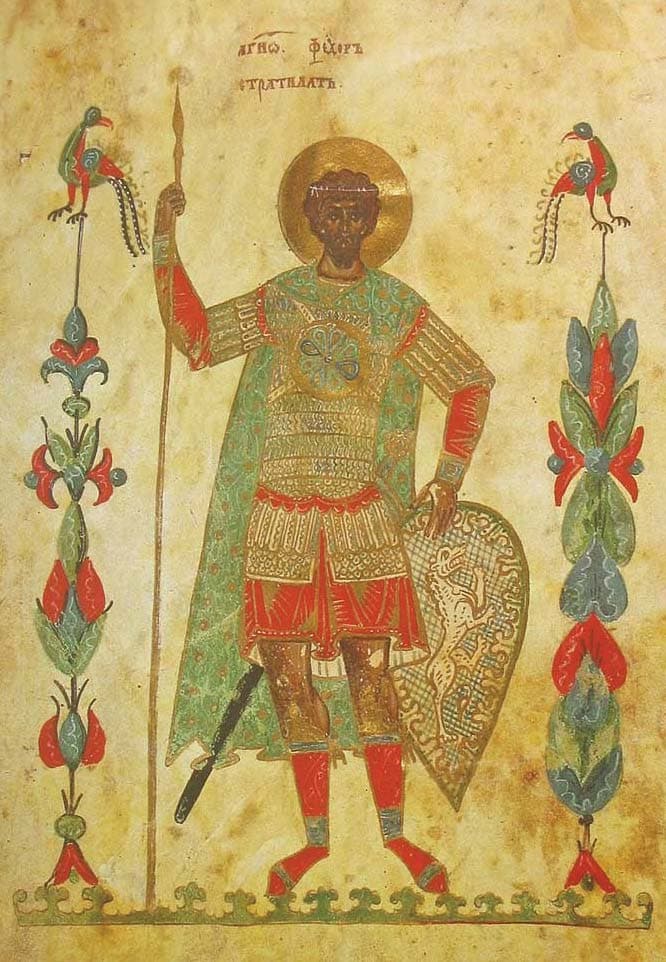
Theodore the Black
Theodore the Black was a Russian prince who served as ruler of Smolensk and Yaroslavl. He is remembered as a saint of the Russian Orthodox Church, canonized for the depth of his deathbed repentance. Theodore played a significant role in the complex political landscape of 13th-century Rus', including service within the Golden Horde.
Mstislav Rostislavich of Smolensk
Mstislav Rostislavich, also known as Mstislav the Brave, was a prince of Smolensk and Novgorod in 12th-century Rus'. He is remembered for his military prowess, his defiance of Andrey Bogolyubsky, and his later canonization as a saint by the Russian Orthodox Church. His remains were found incorrupt and are venerated in Novgorod.
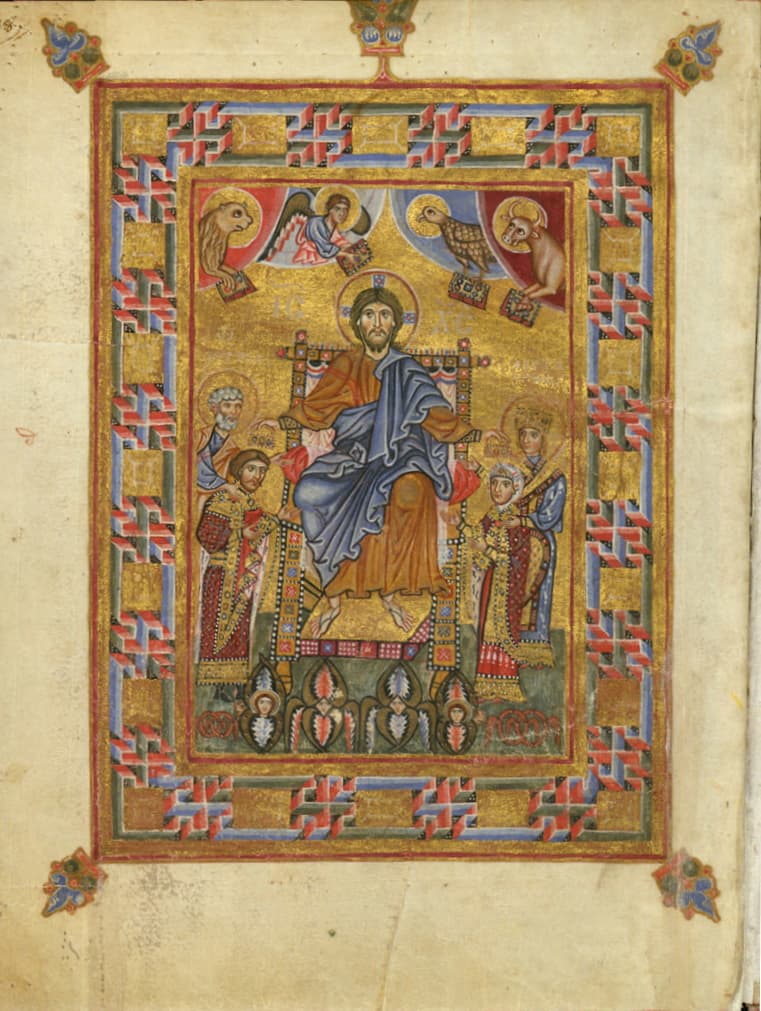
Yaropolk Izyaslavich
Yaropolk Izyaslavich was a prince of Turov and Volhynia in Kievan Rus' during the late 11th century. He is remembered for his diplomatic efforts seeking favor from the German emperors and the papal court on behalf of his exiled father, Iziaslav I of Kiev. Though his political career was marked by conflict and exile, he is venerated as a saint in the Eastern Orthodox Church.