
Mstislav Rostislavich of Smolensk
June 27·12th century·Rus'
Mstislav Rostislavich, also known as Mstislav the Brave, was a prince of Smolensk and Novgorod in 12th-century Rus'. He is remembered for his military prowess, his defiance of Andrey Bogolyubsky, and his later canonization as a saint by the Russian Orthodox Church. His remains were found incorrupt and are venerated in Novgorod.
Key Facts
- ›He was Prince of Smolensk from 1175 to 1177 and Prince of Novgorod from 1179 to 1180.
- ›Mstislav was known for his bravery and was described as the "Jewel" of Rus' princes.
- ›He once defied Andrey Bogolyubsky by shaving the head and beard of his envoy.
- ›He led the Novgorodians against the Chud tribes in 1179–1180.
- ›By his baptismal name Georgii, he was canonized by the Russian Orthodox Church and the Ukrainian Orthodox Church – Kyiv Patriarchate.
- ›His remains were uncovered in 1634 and found to be incorrupt.
Mstislav the Brave, Mstislav Rostislavich Khrabry, Georgii
Eastern Orthodox Church, Ukrainian Orthodox Church – Kyiv Patriarchate
About Mstislav Rostislavich of Smolensk
Mstislav Rostislavich, often referred to as "the Brave" (Russian: Мстислав Ростиславич Храбрый), was a prominent prince in 12th-century Rus'. He held the title of Prince of Smolensk from 1175 to 1177 and later served as Prince of Novgorod from 1179 until his death in 1180.
Life and Historical Context
Born into a significant princely lineage, Mstislav was a son of Rostislav Mstislavich, a key figure in the Rostislavichi dynasty. His early life saw him serving as Prince of Belgorod and Prince of Toropets. Mstislav was actively involved in the complex political and military landscape of Rus', participating in battles against the Polovtsy and in dynastic struggles for the Kievan throne alongside his brothers. A notable event in his life was his defiance of Andrey Bogolyubsky, where he responded to a demand by disrespecting an envoy and subsequently withstanding a siege.
Military and Political Career
Mstislav's career was marked by military engagement and strategic alliances. He played a role in placing his relatives on the Kievan throne and, as Prince of Novgorod, led campaigns against the Chud tribes. His reign in Novgorod was brief, however, as he fell ill and died shortly after taking the city.
Legacy and Veneration
Mstislav's valor and character were recognized in contemporary chronicles, which described him as the "Jewel" of Rus' princes, noting his pursuit of glory over wealth and his generosity to the church. He is also mentioned in "The Tale of Igor's Campaign," a significant piece of Old East Slavic literature. By his baptismal name, Georgii, Mstislav Rostislavich has been canonized as a saint by the Russian Orthodox Church and the Ukrainian Orthodox Church – Kyiv Patriarchate. His feast day is observed on June 27 (New Style). His remains were discovered in 1634 and found to be incorrupt, and they are now venerated in the Cathedral of Holy Wisdom in Novgorod the Great.
Source: Wikipedia ↗
Frequently Asked Questions
Who was Mstislav Rostislavich?
Mstislav Rostislavich, known as "the Brave," was a prince of Smolensk and Novgorod in 12th-century Rus'. He was a significant figure in the political and military landscape of his time.
What is Mstislav Rostislavich remembered for?
He is remembered for his military actions, including a notable defiance of Andrey Bogolyubsky, and for his princely rule in Smolensk and Novgorod. He is also venerated as a saint.
Why is Mstislav Rostislavich called "the Brave"?
The epithet "the Brave" likely stems from his military exploits and his bold actions, such as the incident involving Andrey Bogolyubsky's envoy. Historical chronicles also refer to him with high praise, calling him the "Jewel" of Rus' princes.
Is Mstislav Rostislavich a saint?
Yes, Mstislav Rostislavich was canonized as a saint by the Russian Orthodox Church and the Ukrainian Orthodox Church – Kyiv Patriarchate. He is known by his baptismal name, Georgii.
Where are Mstislav Rostislavich's relics kept?
His remains were found to be incorrupt and are now housed in a gypsum sarcophagus in the Cathedral of Holy Wisdom in Novgorod the Great, along the south wall of the Chapel of the Nativity of the Mother of God.
Related Saints

Theobald of Provins
Theobald of Provins was a 11th-century French hermit and saint. He is remembered for his rejection of a noble life and military service in favor of asceticism and religious devotion, becoming a priest and later joining the Camaldolese order. His cult is centered in his native Provins and at Saint-Thibault-en-Auxois, and he is the patron saint of charcoal-burners.
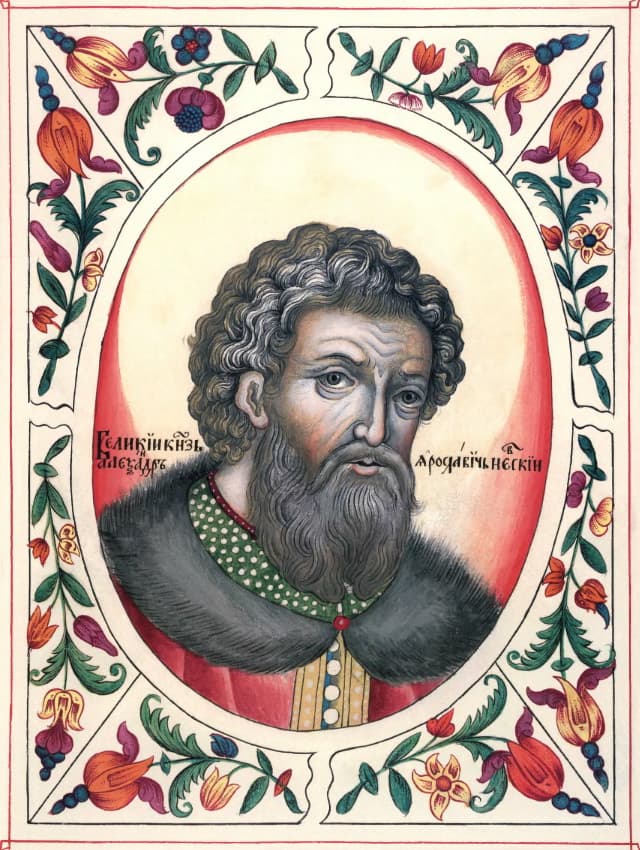
Alexander Nevsky
Alexander Nevsky was a 13th-century prince of Novgorod and Grand Prince of Vladimir, renowned for his military victories against Swedish and German invaders. He is chiefly remembered for his role in preserving Orthodox Christianity by agreeing to pay tribute to the Golden Horde and resisting Western European expansion, earning him sainthood and a legendary status as a Russian savior.
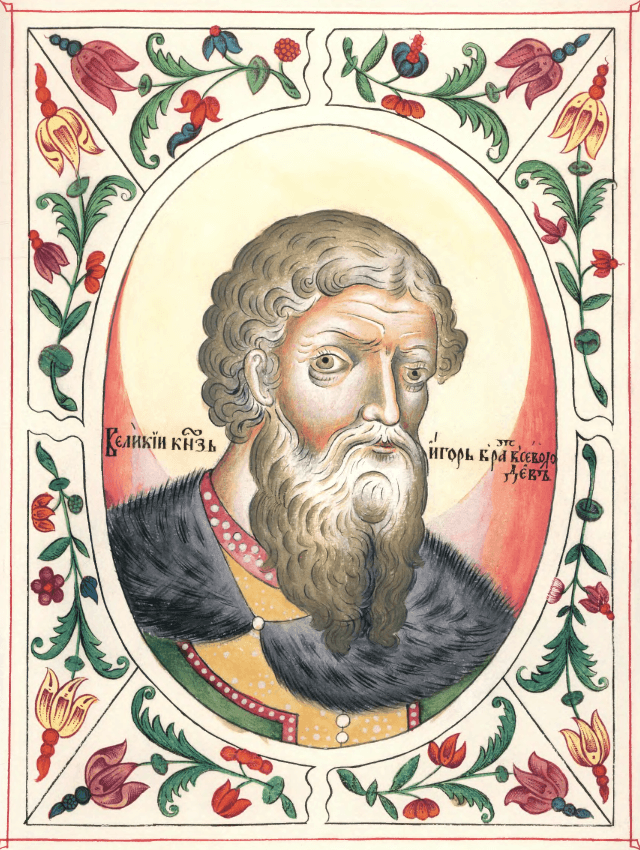
Igor II of Kiev
Igor II of Kiev was a prince of Chernigov and briefly Grand Prince of Kiev in 1146. He is remembered as a saint-martyr in the Eastern Orthodox Church, venerated for his suffering and alleged miracles after his violent death. Despite initial unpopularity and a short reign, his eventual monasticism and martyrdom led to his proclamation as a saint.