
Lazarus of Serbia
Lazar Hrebeljanović was a medieval Serbian prince who established the largest and most powerful state on the fragmented Serbian Empire's territory, known as Moravian Serbia. He sought to revive the Serbian Empire, claiming succession from the Nemanjić dynasty, and was supported by the Serbian Orthodox Church. He is primarily remembered for his leadership in the Battle of Kosovo and his subsequent veneration as a martyr and saint.
Key Facts
- ›Lazar Hrebeljanović was born around 1329 and ruled Moravian Serbia from 1371 until his death.
- ›He aimed to reconstitute the Serbian Empire and saw himself as a successor to the Nemanjić dynasty.
- ›Lazar's state encompassed the basins of the Great Morava, West Morava, and South Morava rivers.
- ›He was killed leading a Christian army against the Ottoman Empire at the Battle of Kosovo on June 15, 1389.
- ›His widow, Milica, accepted Ottoman suzerainty to protect their state from Hungarian invasion.
- ›He is venerated in the Orthodox Christian Church as a martyr and saint.
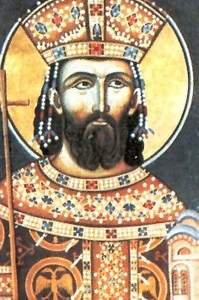
Tsar Lazar Hrebeljanović, Car Lazar
About Lazarus of Serbia
Lazar Hrebeljanović (c. 1329 – 15 June 1389), often referred to as Tsar Lazar Hrebeljanović or simply Car Lazar, was a pivotal medieval Serbian ruler. He is credited with establishing Moravian Serbia, the largest and most powerful state within the fragmented Serbian Empire during his reign from 1371 until his death. Lazar's ambition was to revive the Serbian Empire, positioning himself as the successor to the revered Nemanjić dynasty. This aspiration was strongly endorsed by the Serbian Orthodox Church, though not universally recognized by the Serbian nobility.
Life and Rule
Born into a noble family, Lazar's father served as a logothete at the court of Emperor Stefan Dušan. Lazar himself began his court career as a stavilac, a relatively junior but prestigious position that allowed him close proximity to the ruler. Following the death of Emperor Dušan and the subsequent decline of central authority in the Serbian Empire, Lazar emerged as a significant regional lord. By 1371, after the disastrous Battle of Marica and the death of King Vukašin Mrnjavčević, Lazar asserted his dominance.
Lazar's state, Moravian Serbia, strategically encompassed the basins of the Great Morava, West Morava, and South Morava rivers, extending north to the Danube and Sava rivers. Its territory included important mining centers like Novo Brdo and Rudnik, and it benefited from its relative distance from Ottoman centers, attracting refugees and fostering a revival of ecclesiastical life. Lazar actively engaged in state-building, consolidating his domain and strengthening its administration and military. He also played a crucial role in ending the schism between the Serbian Church and the Patriarchate of Constantinople, demonstrating his commitment to religious unity.
The Battle of Kosovo and Legacy
Lazar's reign culminated in his leadership of a Christian army against the invading Ottoman Empire under Sultan Murad I at the Battle of Kosovo in June 1389. The battle resulted in heavy casualties on both sides and ended without a clear victor. Lazar was killed in the fighting, a sacrifice that has profoundly shaped Serbian national consciousness and religious veneration.
In the aftermath of his death, Lazar's widow, Princess Milica, secured the survival of their state by accepting Ottoman suzerainty to ward off Hungarian incursions. Lazar Hrebeljanović is venerated in the Orthodox Christian Church as a martyr and saint, celebrated for his piety, his patronage of the Church, and his ultimate sacrifice. His figure is central to Serbian epic poetry and national memory, symbolizing resistance and martyrdom.
Source: Wikipedia ↗
Frequently Asked Questions
Who was Lazar Hrebeljanović?
Lazar Hrebeljanović was a medieval Serbian prince who ruled Moravian Serbia from 1371 until his death in 1389. He is recognized for creating the largest and most powerful state on the territory of the disintegrated Serbian Empire.
What was Lazar's main goal as a ruler?
Lazar sought to resurrect the Serbian Empire and place himself at its head, claiming to be a direct successor to the Nemanjić dynasty. This program had the full support of the Serbian Orthodox Church.
What is Lazar Hrebeljanović most famous for?
He is most famous for leading the Christian army against the Ottoman Empire at the Battle of Kosovo in 1389, where he was killed. He is venerated in the Orthodox Christian Church as a martyr and saint.
What happened to Lazar's state after his death?
After Lazar's death at the Battle of Kosovo, his widow, Milica, acted as regent for their son Stefan Lazarević. To protect the weakened Serbian state from Hungarian invasion, she accepted Ottoman suzerainty in exchange for a military alliance.
What role did the Serbian Orthodox Church play in Lazar's reign?
The Serbian Orthodox Church fully supported Lazar's political program of resurrecting the Serbian Empire. Lazar, in turn, was a significant patron of the Church, building monasteries like Ravanica and funding construction on Mount Athos.
Related Saints
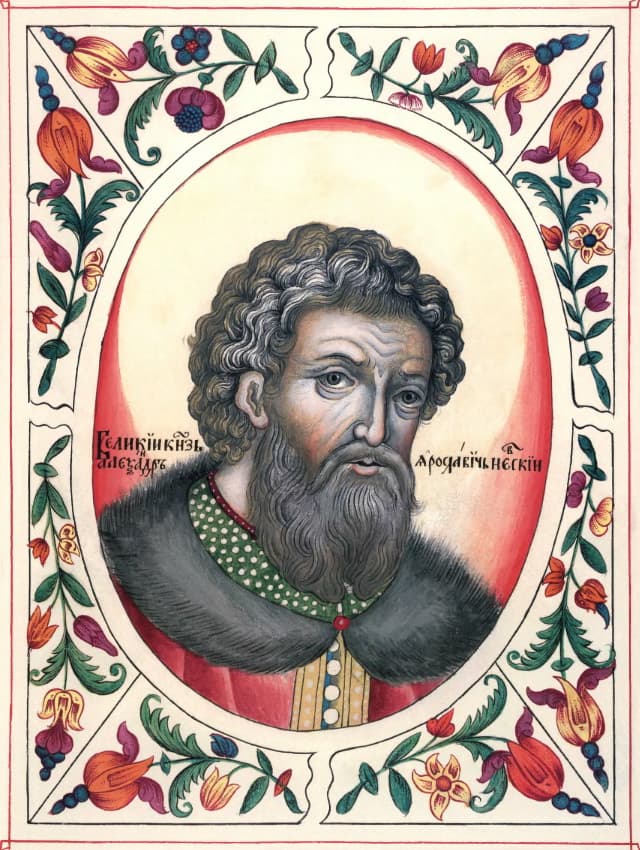
Alexander Nevsky
Alexander Nevsky was a 13th-century prince of Novgorod and Grand Prince of Vladimir, renowned for his military victories against Swedish and German invaders. He is chiefly remembered for his role in preserving Orthodox Christianity by agreeing to pay tribute to the Golden Horde and resisting Western European expansion, earning him sainthood and a legendary status as a Russian savior.
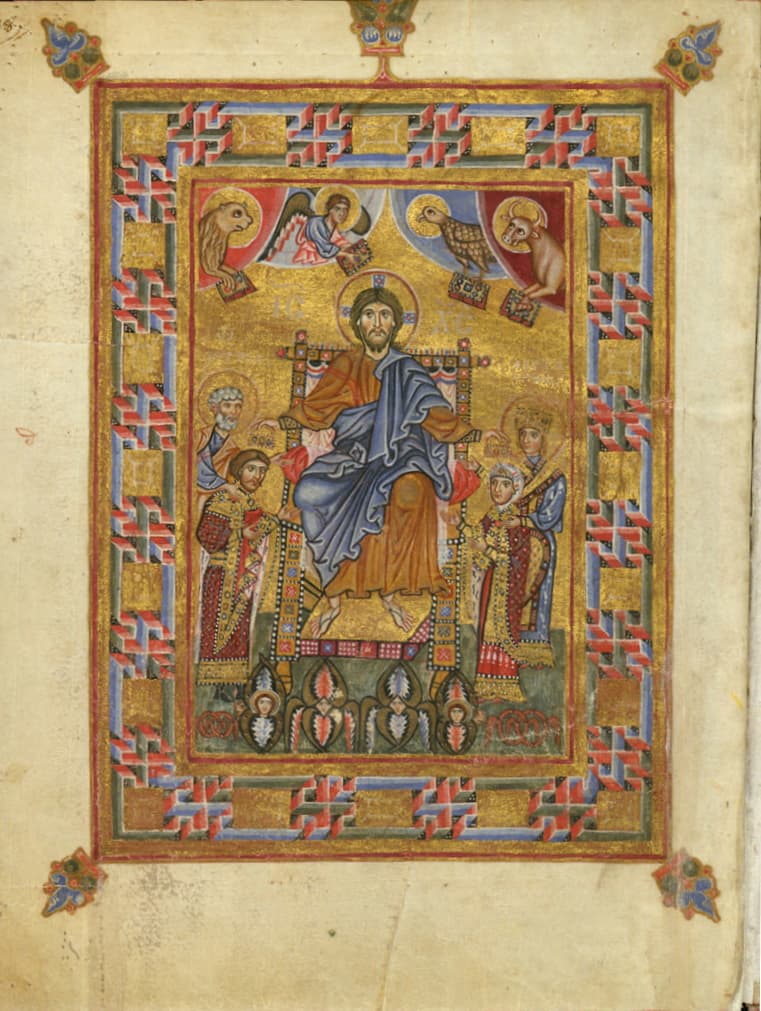
Yaropolk Izyaslavich
Yaropolk Izyaslavich was a prince of Turov and Volhynia in Kievan Rus' during the late 11th century. He is remembered for his diplomatic efforts seeking favor from the German emperors and the papal court on behalf of his exiled father, Iziaslav I of Kiev. Though his political career was marked by conflict and exile, he is venerated as a saint in the Eastern Orthodox Church.
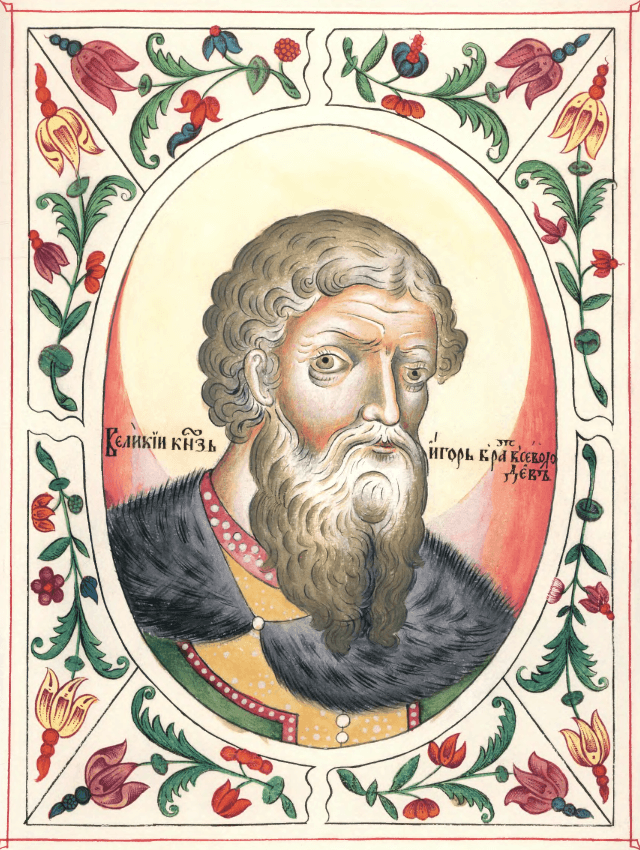
Igor II of Kiev
Igor II of Kiev was a prince of Chernigov and briefly Grand Prince of Kiev in 1146. He is remembered as a saint-martyr in the Eastern Orthodox Church, venerated for his suffering and alleged miracles after his violent death. Despite initial unpopularity and a short reign, his eventual monasticism and martyrdom led to his proclamation as a saint.