
Theodore the Admiral
October 2·19th century·Russia
Fyodor Ushakov was an Imperial Russian Navy admiral renowned for his undefeated record in naval battles. He is celebrated for his innovative tactics and his significant role in campaigns during the French Revolutionary and Napoleonic Wars. He was later canonized as a saint by the Russian Orthodox Church and is considered the patron of the Russian Navy.
Key Facts
- ›Fyodor Ushakov was born in 1745 in the Yaroslavl province, Russia.
- ›He joined the Imperial Russian Navy in 1761 and rose through the ranks.
- ›Ushakov commanded the Russian fleet in numerous engagements, winning every battle he participated in.
- ›He demonstrated innovative naval tactics, focusing on maneuvering and concentrated fire.
- ›After his naval career, he withdrew to Sanaksar Monastery.
- ›In 2001, the Russian Orthodox Church canonized him as a saint and declared him the patron of the Russian Navy.
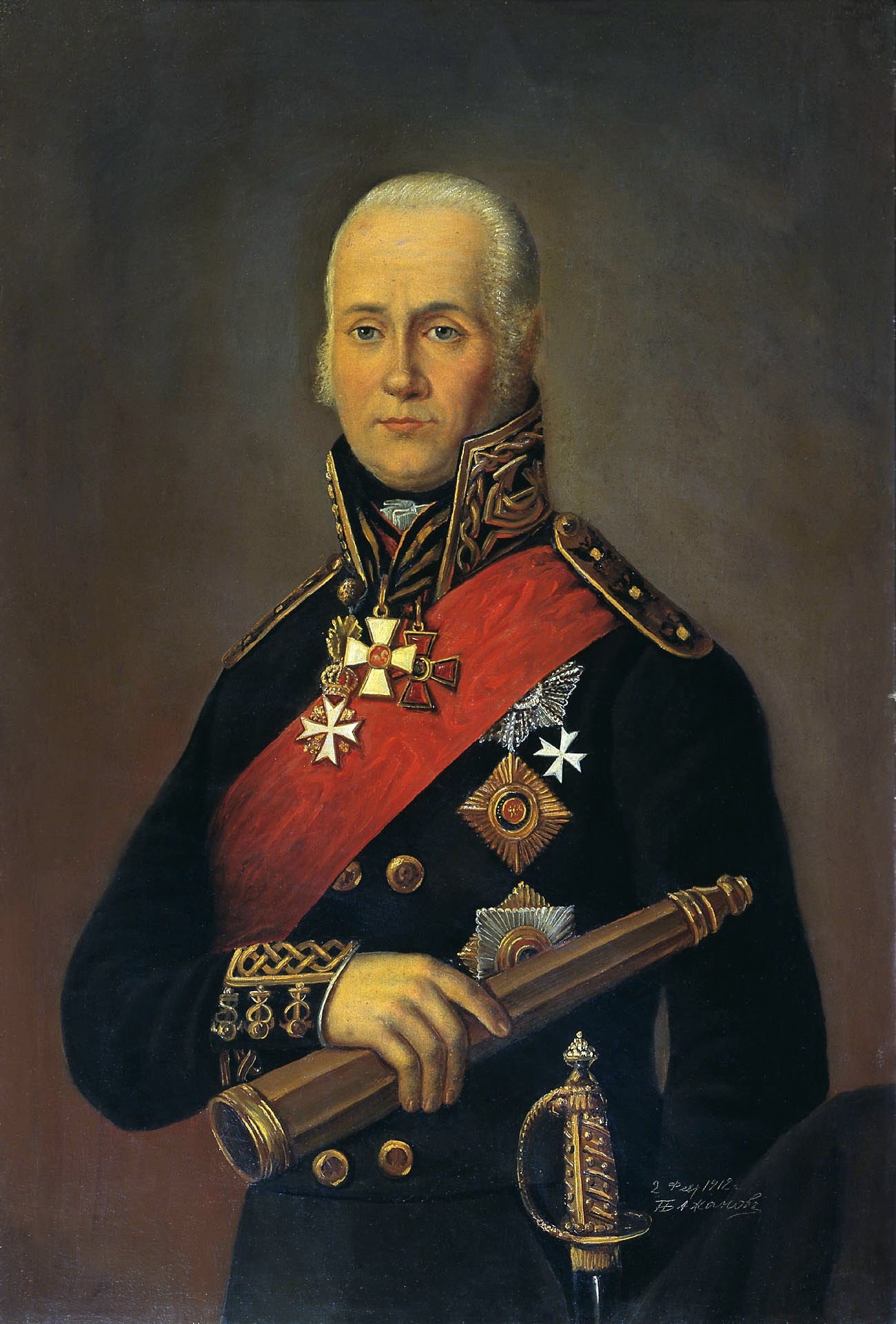
Fyodor Ushakov, Saint Feodor Ushakov
Russian Navy, Russian Nuclear-Armed Strategic Bombers
Naval Sword, Ship
About Theodore the Admiral
Fyodor Ushakov: Admiral and Saint
Fyodor Fyodorovich Ushakov (1745–1817) was a distinguished Imperial Russian Navy admiral, celebrated for his exceptional military career and later venerated as a saint by the Russian Orthodox Church. He is best known for his undefeated record in naval battles, successfully leading the Russian fleet through numerous engagements during conflicts such as the Russo-Turkish Wars and the French Revolutionary and Napoleonic Wars. Ushakov's tactical genius lay in his innovative doctrines, which emphasized decisive maneuvers and concentrated fire, deviating from traditional naval formations to achieve overwhelming victories.
Born into a modest noble family, Ushakov joined the navy in 1761 and steadily rose through the ranks. His career saw him oversee the construction of naval bases and lead expeditions that secured Russian interests in the Black Sea and the Mediterranean. Following his military service, Ushakov retired to the Sanaksar Monastery, where he lived as a monk. In recognition of his spiritual devotion and military leadership, the Russian Orthodox Church glorified him as a saint in 2001, naming him the patron saint of the Russian Navy and its strategic bombers.
Life and Naval Career
Fyodor Ushakov was born in the village of Burnakovo in the Yaroslavl province. His father was a retired sergeant of the Preobrazhensky Regiment. Ushakov joined the Imperial Russian Navy in Saint Petersburg on February 15, 1761. After training, he served in the Baltic Fleet before being transferred to the Don Flotilla in 1768. He played a significant role in the Russo-Turkish War (1768–1774), commanding Catherine II's yacht and protecting Russian merchant ships.
Following the annexation of the Crimean Khanate, Ushakov was instrumental in establishing a naval base in Sevastopol and supervising dock construction in Kherson. During the Russo-Turkish War (1787–1792), he achieved notable victories at Fidonisi, Kerch Strait, Tendra, and Cape Kaliakra, showcasing his innovative naval strategies. In 1798, as a full admiral, he commanded a squadron in the Mediterranean, operating against French forces in the War of the Second Coalition. His expedition led to the conquest of the Ionian islands and the establishment of the Septinsular Republic, demonstrating his skills as a politician and diplomat. He also blockaded French bases in Italy and participated in the assault on Naples and Rome.
In 1799, Tsar Paul I ordered Ushakov to proceed to Malta, which was under siege by a British fleet. However, Ushakov was recalled to Russia in 1800. The new Emperor, Alexander I, did not fully appreciate his victories, leading Ushakov to resign his command in 1807 and withdraw to the Sanaksar Monastery. He declined to command local militia during the Patriotic War of 1812 due to ill health but donated his savings.
Tactics
Ushakov's naval tactics were revolutionary for their time. Key features included the use of unified marching and fighting orders, resolute close-quarters engagement without elaborate maneuvering, concentrating efforts against enemy flagships, maintaining a reserve force, and combining aimed artillery fire with effective maneuvering. He strongly supported Suvorov's principles of training for sailors and officers, emphasizing sea and fire training. Ushakov's innovations were among the earliest successful developments in naval tactics, moving away from rigid linear formations towards more dynamic maneuvering concepts.
Legacy
Admiral Ushakov's legacy is multifaceted. Several warships have been named in his honor. In 1944, the Order of Ushakov was established by the USSR for naval officers who demonstrated outstanding achievement in combat, a high military award that continues in the Russian Federation. The Ushakov Medal was also established for valor in naval theaters. The Ushakov Baltic Higher Naval School in Kaliningrad bears his name. A minor planet, 3010 Ushakov, was named after him. His life was depicted in two Soviet films released in 1953. A bust in Messina, Italy, commemorates Russian aid after the 1908 earthquake. He is also depicted as one of the eight patrons in the Cathedral of the Resurrection of Christ in Moscow.
Veneration
On August 7, 2001, the Russian Orthodox Church glorified Fyodor Ushakov as a Saint, declaring him the patron of the Russian Navy. His relics are enshrined in Sanaksar Monastery. In 2005, Patriarch Alexius II declared Saint Feodor Ushakov the patron saint of Russian nuclear-armed strategic bombers. His feast days are observed on October 2 (day of death), July 23 (day of glorification), and May 23 (commemorating saints of Yaroslavl and Rostov).
Source: Wikipedia ↗
Frequently Asked Questions
What was Fyodor Ushakov famous for?
Fyodor Ushakov was an Imperial Russian Navy admiral famous for his undefeated record in naval battles. He is also known for his innovative tactics and for being canonized as a saint by the Russian Orthodox Church.
When did Fyodor Ushakov live?
Fyodor Ushakov lived from 1745 to 1817. He served prominently in the Russian Navy during the late 18th and early 19th centuries.
What military achievements is Fyodor Ushakov credited with?
Ushakov is credited with winning every naval engagement he participated in as admiral, demonstrating ingenuity in naval warfare. Notable campaigns include battles during the Russo-Turkish Wars and operations in the Mediterranean during the French Revolutionary and Napoleonic Wars.
What is Fyodor Ushakov's significance in the Russian Orthodox Church?
Fyodor Ushakov was canonized as a saint by the Russian Orthodox Church in 2001 and declared the patron saint of the Russian Navy. His relics are enshrined at Sanaksar Monastery.
What kind of naval tactics did Fyodor Ushakov employ?
Ushakov's tactics were characterized by unified fighting orders, resolute close-quarters engagement, concentration of effort on enemy flagships, maintaining reserves, and combining artillery fire with maneuvering for total destruction or capture of the enemy.
Where are Fyodor Ushakov's relics kept?
The relics of Fyodor Ushakov are enshrined in the Sanaksar Monastery, located in Temnikov, Mordovia, Russia.
Related Saints
Ephraim of Antioch
Saint Ephraim of Antioch was the Patriarch of Antioch from 527 to 545 and a prominent figure in the Eastern Orthodox and Catholic Churches. A former military general, he became a monk and then patriarch, dedicating his tenure to rebuilding Antioch after earthquakes and defending Chalcedonian orthodoxy against non-Chalcedonian factions. He is remembered for his administrative, military, and theological roles.
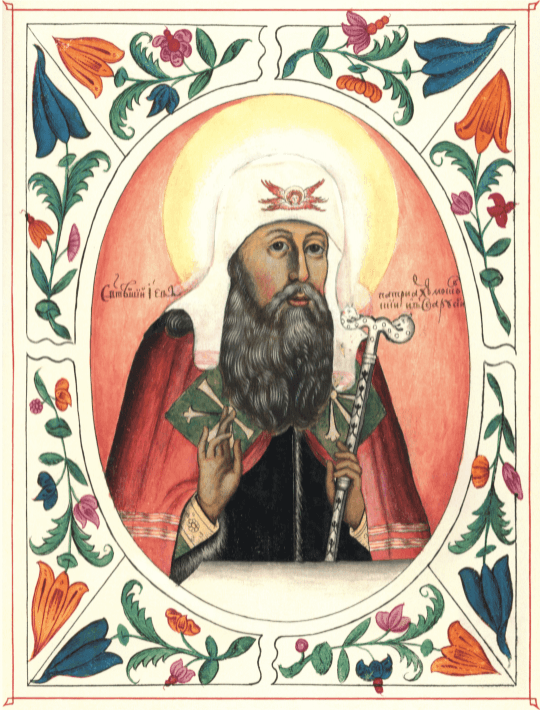
Job of Moscow
Job of Moscow was the first Patriarch of the Russian Orthodox Church, serving from 1589 to 1605. He was instrumental in establishing the patriarchate in Moscow, elevating its ecclesiastical authority. Job is remembered for his role in church reforms, canonizations, and for his staunch opposition to the False Dmitry I.
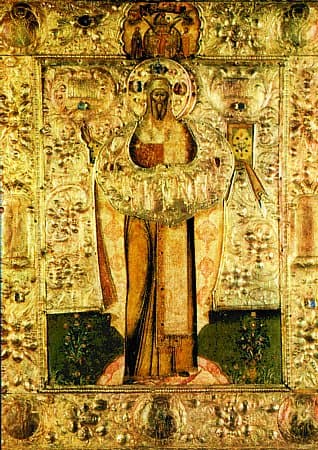
Euthymius II of Novgorod
Euthymius II of Novgorod served as the Archbishop of Novgorod from 1429 to 1458. He is distinguished as one of the most significant patrons of arts and architecture among all Novgorodian archbishops. His extensive building projects and promotion of local saints and legends left a lasting cultural legacy.