
Shemaiah
January 8·10th century BC·Ancient Israel
Shemaiah was a prophet in the reign of King Rehoboam of Judah. He is chiefly remembered for his divine intervention that prevented a civil war between the northern tribes of Israel and the southern tribes of Judah and Benjamin. His prophecy also foretold Rehoboam's punishment by the king of Egypt.
Key Facts
- ›Shemaiah was a prophet during the reign of King Rehoboam.
- ›He prevented a war between Rehoboam and Jeroboam by delivering a divine message.
- ›His intervention stopped Rehoboam from leading 180,000 troops against the rebellious northern tribes.
- ›Shemaiah was referred to as a "man of God".
- ›He also prophesied Rehoboam's punishment by Shishak, king of Egypt.
- ›He is venerated in the Eastern Orthodox and Roman Catholic Churches.
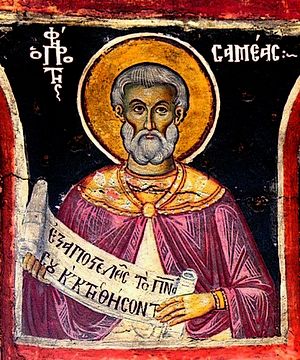
About Shemaiah
Shemaiah, also known by the Greek transliteration Samaia or Semeias, was a prophet who lived during the reign of King Rehoboam of Judah. His significant role in biblical history is primarily documented in the books of 1 Kings and 2 Chronicles, where his divine pronouncements averted a devastating civil war.
Biblical Narrative
According to the biblical account, after the northern tribes of Israel seceded from the united kingdom under Jeroboam, King Rehoboam assembled an army of 180,000 troops to forcibly subjugate the rebellious tribes. At this critical juncture, Shemaiah, identified as a "man of God," intervened with a prophecy directly from God. He declared that the conflict was divinely ordained and commanded Rehoboam not to engage in battle against his own kin. Rehoboam heeded Shemaiah's words, and the army stood down, thereby preventing a large-scale civil war.
Beyond averting this conflict, 2 Chronicles also records that Shemaiah prophesied the future punishment of Rehoboam by Shishak, the king of Egypt. This dual role as a peacemaker and a foreteller of judgment underscores the prophetic authority attributed to him.
Veneration
Shemaiah is recognized and venerated as a saint in both the Roman Catholic Church and the Eastern Orthodox Church. His liturgical feast day is observed on January 8th, with an additional commemoration in Eastern Orthodoxy on January 9th. His intervention in a pivotal moment of Israelite history has preserved his memory as a significant figure of divine guidance.
Source: Wikipedia ↗
Frequently Asked Questions
Who was Shemaiah?
Shemaiah was a prophet during the reign of King Rehoboam of Judah. He is known for his divine pronouncements that influenced significant historical events.
What is Shemaiah most famous for?
Shemaiah is most remembered for preventing a civil war between the ten northern tribes of Israel and the southern tribes of Judah and Benjamin. He delivered a prophecy from God that halted King Rehoboam's military campaign.
When did Shemaiah live?
Shemaiah was active during the reign of King Rehoboam, which corresponds to the early 10th century BCE.
In which religious traditions is Shemaiah venerated?
Shemaiah is venerated as a saint in both the Eastern Orthodox Church and the Roman Catholic Church.
When is Shemaiah's feast day?
Shemaiah's feast day is commemorated on January 8th in both the Roman Catholic and Eastern Orthodox Churches. In Eastern Orthodoxy, there is an additional commemoration on January 9th.
Related Saints
David
David, the second king of the united Kingdom of Israel, is a pivotal figure in Jewish and Christian scripture, renowned as a shepherd, warrior, musician, and ancestor of the Messiah. He is remembered for his legendary defeat of Goliath, his reign over a unified Israel, and his complex personal life, which included both profound devotion and significant moral failings.
Solomon
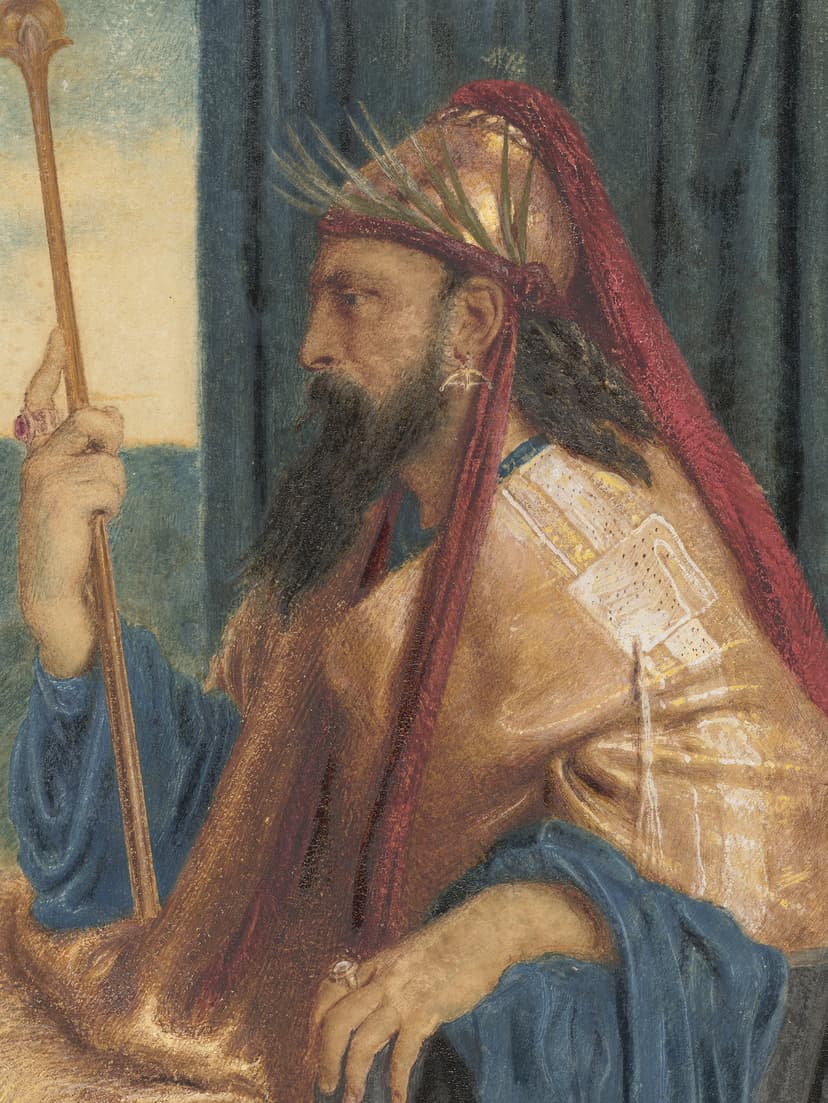
Solomon was an ancient Israelite king, successor to his father David, reigning from approximately 970 to 931 BCE. He is celebrated in biblical narrative for immense wisdom, the construction of the First Temple in Jerusalem, and a reign of commercial prosperity. However, his accumulation of wealth and foreign wives who introduced idolatry led to divine punishment, resulting in the division of the kingdom after his death.

Aaron
Aaron was an Israelite prophet and the first High Priest, elder brother to Moses. He served as Moses' spokesman to the Pharaoh during the Exodus and was divinely appointed as the progenitor of the Israelite priesthood. Aaron is remembered for his role in establishing the Levitical priesthood and for his interactions with Moses during the Israelites' journey in the wilderness.