
Sabbas of Storozhi
August 23·15th century·Russia
Sabbas of Storozhi was a Russian Orthodox monk and saint of the 14th and 15th centuries. He is chiefly remembered as the founder of the Savvino-Storozhevsky Monastery and a disciple of Sergius of Radonezh. Sabbas was also known for his alleged healings, wisdom, and preaching.
Key Facts
- ›Sabbas of Storozhi was a Russian Orthodox monk and saint.
- ›He was a disciple of Sergius of Radonezh and spent much of his life at Trinity-St. Sergius Lavra.
- ›He founded the monastery of the Nativity of the Theotokos in Zvenigorod, later named after him.
- ›Sabbas was venerated for his alleged healings, sagacity, and preaching.
- ›He died in 1407 and was canonized in 1547.
- ›His feast days are celebrated on August 23 and December 19.
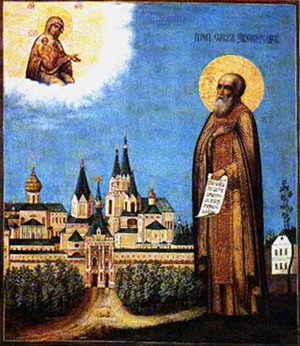
Savva Storozhevsky
About Sabbas of Storozhi
Sabbas of Storozhi, also known by the Russian name Savva Storozhevsky, was a prominent Russian Orthodox monk and saint of the 14th and 15th centuries. He is most notably recognized as the founder and the first hegumen (abbot) of the monastery dedicated to the Nativity of the Theotokos, located in Zvenigorod on Storozhi hill. This monastery was later renamed the Savvino-Storozhevsky Monastery in his honor.
Life and Veneration
Sabbas was a devoted disciple of the revered Sergius of Radonezh and spent nearly his entire monastic life within the walls of the Trinity-St. Sergius Lavra. His spiritual leadership and piety led to his widespread veneration. Historical accounts highlight his popularity among the faithful for his purported miraculous healings, his profound wisdom, and his eloquent preaching.
Sabbas of Storozhi died in 1407. His sanctity was formally recognized when he was canonized in 1547. He is commemorated by the Russian Orthodox Church on two feast days: August 23 and December 19. His legacy endures through the continued existence and spiritual significance of the Savvino-Storozhevsky Monastery.
Source: Wikipedia ↗
Frequently Asked Questions
Who was Sabbas of Storozhi?
Sabbas of Storozhi was a Russian Orthodox monk and saint who lived in the 14th and 15th centuries. He is recognized as the founder of the Savvino-Storozhevsky Monastery and was a disciple of Sergius of Radonezh.
What is Sabbas of Storozhi remembered for?
He is primarily remembered for founding the monastery that now bears his name, the Savvino-Storozhevsky Monastery. He was also known for his alleged healing abilities, his wisdom, and his preaching.
When did Sabbas of Storozhi live and die?
Sabbas of Storozhi lived during the 14th and 15th centuries and died in the year 1407. He was later canonized in 1547.
What are the feast days for Sabbas of Storozhi?
The feast days for Sabbas of Storozhi are celebrated on August 23 and December 19.
Was Sabbas of Storozhi a disciple of Sergius of Radonezh?
Yes, Sabbas of Storozhi was one of the first disciples of Sergius of Radonezh. He spent a significant portion of his life at the Trinity-St. Sergius Lavra.
Related Saints

Olga of Alaska
Olga of Alaska was a Yup'ik Native American Eastern Orthodox midwife, healer, and matushka who became the first North American woman and the first Yup'ik person to be canonized as an Eastern Orthodox saint. She is remembered for her deep faith, charitable works, and her role as a spiritual counselor, particularly to women. Her canonization in 2025 followed numerous reported miracles and a long period of veneration.
Abraham of Paleostrov
Abraham of Paleostrov was an Eastern Orthodox saint and hegumen (abbot) of the Monastery of the Nativity of the Blessed Virgin Mary in Paleostrov, Russia. A disciple and successor of Cornelius of Paleostrov, he participated in the construction of the monastery and its churches. He is remembered for his abbatial service and burial alongside his spiritual father.
Herman of Solovki
Herman of Solovki was a Russian hermit and one of the founders of the Solovetsky Monastery. He is venerated as a saint for his role in establishing a prominent monastic community in a remote northern location. Herman is chiefly remembered for his ascetic life and his contribution to the spiritual and monastic development of the Solovetsky Islands.