
Abraham of Paleostrov
August 21·15th century·Russia
Abraham of Paleostrov was an Eastern Orthodox saint and hegumen (abbot) of the Monastery of the Nativity of the Blessed Virgin Mary in Paleostrov, Russia. A disciple and successor of Cornelius of Paleostrov, he participated in the construction of the monastery and its churches. He is remembered for his abbatial service and burial alongside his spiritual father.
Key Facts
- ›He was a disciple and successor to Cornelius of Paleostrov.
- ›Abraham participated in the construction of the Monastery of the Nativity of the Blessed Virgin Mary.
- ›He was appointed abbot by Cornelius and buried him.
- ›His feast day is celebrated on August 21st in the Russian Orthodox Church.
- ›Abraham was included in the Synaxis of the Karelian Saints in 1974 and Novgorod Saints in 1981.
Avraamy Paleostrovsky, Avraamy Olonetsky
About Abraham of Paleostrov
Abraham of Paleostrov, also known as Avraamy Paleostrovsky or Avraamy Olonetsky, was an Eastern Orthodox saint who lived in Russia and died around 1460. He served as a hegumen, or abbot, of the Monastery of the Nativity of the Blessed Virgin Mary located in Paleostrov.
Life and Ministry
Abraham was a disciple of the revered Cornelius of Paleostrov. He came to Cornelius after his spiritual father had settled in a cave on Paley Island in Lake Onega. The Paleostrovsky Monastery itself was founded by Cornelius, likely between 1415 and 1421. Abraham, along with other disciples of Cornelius, was involved in the construction of the monastery's churches, including those dedicated to the Nativity of the Blessed Virgin, Elijah the Prophet, and Nicholas the Wonderworker, as well as the monks' caves.
During Cornelius's lifetime, Abraham was appointed as his successor. Following Cornelius's death around 1420, Abraham buried him in the cave on Paley Island. Later, the relics of Cornelius were transferred to the Church of the Nativity of the Blessed Virgin. Abraham himself died in the mid-15th century and was buried in the same Church of the Nativity of the Virgin, near his spiritual father.
Veneration
The exact date of Abraham Paleostrovsky's local canonization is not recorded, possibly due to the devastation of the Palaeostrovsky Monastery twice in the 17th century, which led to the loss of most of its archives. Local veneration of both Abraham and Cornelius was documented at the beginning of the 19th century. Archbishop Sergius (Spassky) assigned their feast day to August 21st. In recognition of his sanctity, Abraham Paleostrovsky was included in the Synaxis of the Karelian Saints in 1974 and later in the Synaxis of the Novgorod Saints in 1981. His feast day is celebrated annually on August 21st within the Russian Orthodox Church.
Source: Wikipedia ↗
Frequently Asked Questions
Who was Abraham of Paleostrov?
Abraham of Paleostrov was an Eastern Orthodox saint and the hegumen (abbot) of the Monastery of the Nativity of the Blessed Virgin Mary in Paleostrov, Russia. He was a disciple of Cornelius of Paleostrov and one of his successors.
When did Abraham of Paleostrov live?
Abraham of Paleostrov died around 1460. He was active in the first half of the 15th century, serving as abbot during that period.
What was Abraham of Paleostrov's role in the Paleostrov Monastery?
Abraham was a disciple of the monastery's founder, Cornelius of Paleostrov, and later became its abbot. He participated in the construction of the monastery's churches and caves.
When is the feast day of Abraham of Paleostrov?
The feast day of Abraham of Paleostrov is celebrated on August 21st. This date is shared with his predecessor, Cornelius of Paleostrov, and is observed in the Russian Orthodox Church.
Where is Abraham of Paleostrov venerated?
Abraham of Paleostrov is venerated in the Eastern Orthodox Church. He was locally venerated starting in the 19th century and was later included in the Synaxis of the Karelian Saints and the Synaxis of the Novgorod Saints.
Related Saints
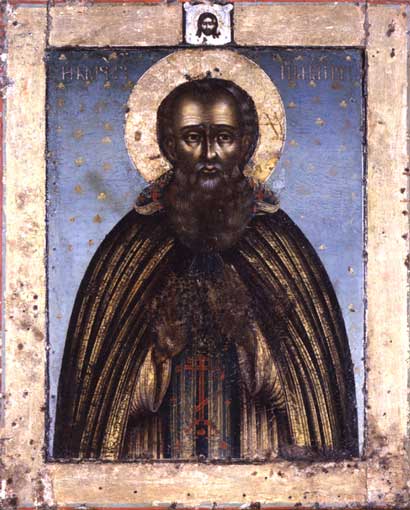
Herman of Solovki
Herman of Solovki was a Russian hermit and one of the founders of the Solovetsky Monastery. He is venerated as a saint for his role in establishing a prominent monastic community in a remote northern location. Herman is chiefly remembered for his ascetic life and his contribution to the spiritual and monastic development of the Solovetsky Islands.
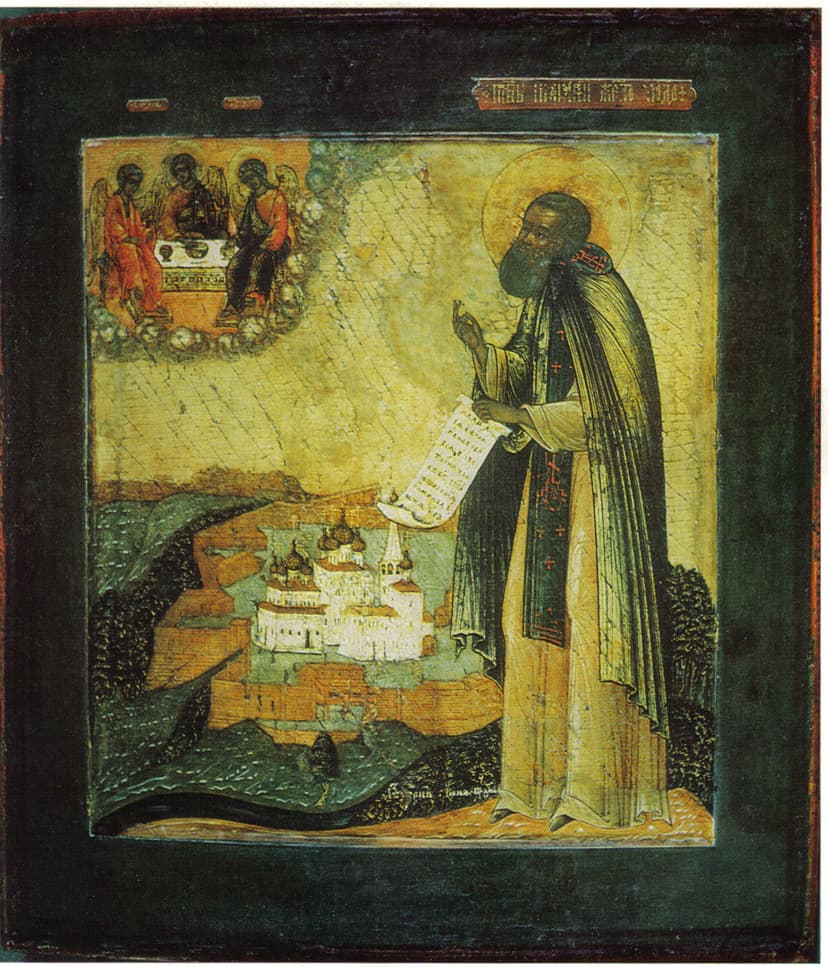
Macarius of Unzha
Macarius of Unzha was a Russian Orthodox monk and miracle worker, venerated for founding four monasteries in the Middle and Upper Volga regions. He is remembered for his ascetic life, his role in converting many to Christianity, and for his numerous miracles, which led to his canonization and widespread veneration.
Sabbas of Storozhi
Sabbas of Storozhi was a Russian Orthodox monk and saint of the 14th and 15th centuries. He is chiefly remembered as the founder of the Savvino-Storozhevsky Monastery and a disciple of Sergius of Radonezh. Sabbas was also known for his alleged healings, wisdom, and preaching.