
Macarius of Unzha
August 7·15th century·Russia
Macarius of Unzha was a Russian Orthodox monk and miracle worker, venerated for founding four monasteries in the Middle and Upper Volga regions. He is remembered for his ascetic life, his role in converting many to Christianity, and for his numerous miracles, which led to his canonization and widespread veneration.
Key Facts
- ›Macarius of Unzha was born in 1349 in Nizhny Novgorod, Russia.
- ›He became a monk at the age of 12 at Pechersky Ascension Monastery.
- ›He founded four monasteries: Makaryev Reshma Monastery, Zheltovodsky Makariev Monastery, Makaryev Ascencion Monastery, and Makaryev Unzhensky Convent.
- ›He was taken prisoner by the khan of Kazan in 1439 but was released due to the khan's admiration for his piety.
- ›Macarius died on July 25, 1444, at the age of 95.
- ›His relics were discovered in 1671 and are now divided between Makaryev Zheltovodsky Monastery and Pechersky Ascension Monastery.
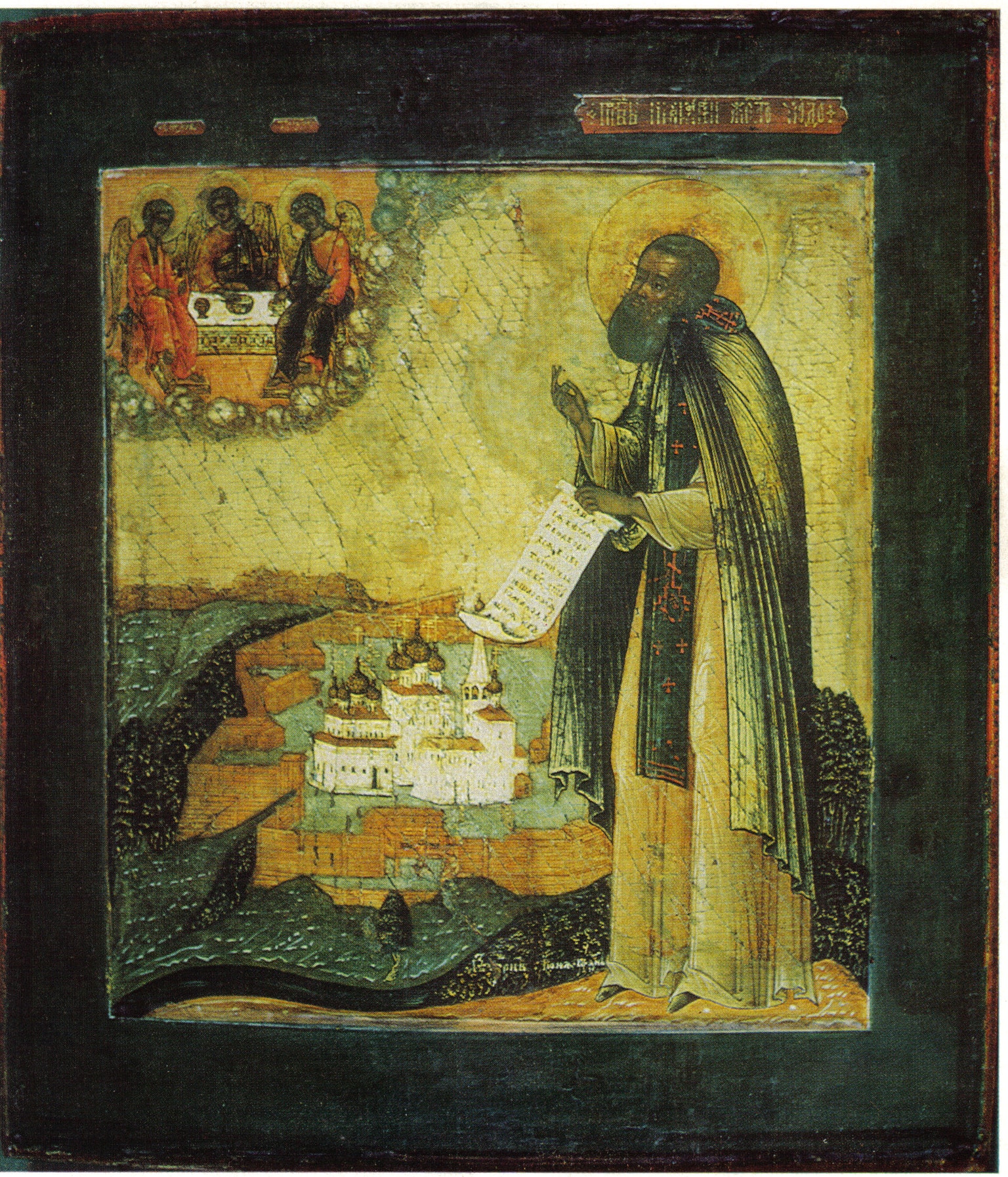
- Macarius of the Yellow Water Lake and the Unzha
- Macarius the Miracle Worker
- Prepodobny Makariy Unzhenskiy Zheltovodskiy Chudotvorets
Craftsmen, Merchants, Travellers, Makariev Fair
Moose
About Macarius of Unzha
Macarius of Unzha, also known as Macarius of the Yellow Water Lake and the Unzha, the Miracle Worker, was a prominent Russian Orthodox monk and saint who lived from 1349 to 1444. His life and legacy are deeply intertwined with the founding of monasteries and the spiritual landscape of the Middle and Upper Volga regions of Russia.
Life and Ministry
Born in Nizhny Novgorod, Macarius displayed early piety, becoming a monk at the age of twelve. He was a disciple of Dionysius and known for his strict asceticism and fervent prayer. He embarked on a monastic path that led him to found four significant monasteries: the Makaryev Reshma Monastery, the Zheltovodsky Makariev Monastery of Holy Trinity, the Makaryev Ascencion Monastery, and the Makaryev Unzhensky Convent. His ascetic practices and compassion attracted many, leading him to baptize numerous people from various ethnic and religious backgrounds.
In 1439, Macarius and his community faced destruction during an invasion by the khan of Kazan. Captured as prisoners, Macarius was eventually released by the khan, who was impressed by his devout life. Following this event, Macarius journeyed to the Unzha River, where he and his companions founded the Makaryev Unzhensky Monastery. He continued his spiritual work there, performing miracles and ministering to the faithful until his death in 1444.
Canonization and Veneration
Macarius' reputation grew after his death through numerous reported miracles, including healings and repelling invasions. These accounts led to his canonization by a Sobor of the Russian Orthodox Church, likely around 1619. His relics were discovered in 1671 and became objects of pilgrimage and veneration. Despite periods of disruption, such as the confiscation of relics by Soviet authorities, his relics were eventually returned to ecclesiastical custody and are now housed in several key monasteries, including Makaryev Unzhensky Monastery and Pechersky Ascension Monastery.
Legacy
Macarius of Unzha is venerated as a miracle worker and a founder of monasticism in his region. He is particularly remembered as the patron saint of craftsmen, merchants, and travellers, and is invoked for prosperity and relief from poverty. The monasteries he founded continue to be important centers of Orthodox life and pilgrimage, preserving his memory and spiritual heritage.
Source: Wikipedia ↗
Frequently Asked Questions
When was Macarius of Unzha born and when did he die?
Macarius of Unzha is believed to have been born in 1349 and died on July 25, 1444. He lived for 95 years, with an 83-year monastic career.
What monasteries did Macarius of Unzha found?
He is credited with founding four monasteries: Makaryev Reshma Monastery, Zheltovodsky Makariev Monastery of Holy Trinity, Makaryev Ascencion Monastery, and Makaryev Unzhensky Convent.
What are some of the miracles attributed to Macarius of Unzha?
Miracles attributed to Macarius include repelling Tatar invasions, protecting regions against troops, healing the sick, expelling demons, and a miracle of saving travelers from starvation during a journey.
Where are the relics of Macarius of Unzha located?
The body of Macarius is at Makaryev Unzhensky Monastery, while his head is kept in Pechersky Ascension Monastery in Nizhny Novgorod. Both are significant sites of his veneration.
Why is Macarius of Unzha considered a patron saint?
Macarius of Unzha is considered the patron saint of craftsmen, merchants, and travellers, as well as of the Makariev Fair. People also pray to him for success in business and to alleviate poverty.
Related Saints
Abraham of Paleostrov
Abraham of Paleostrov was an Eastern Orthodox saint and hegumen (abbot) of the Monastery of the Nativity of the Blessed Virgin Mary in Paleostrov, Russia. A disciple and successor of Cornelius of Paleostrov, he participated in the construction of the monastery and its churches. He is remembered for his abbatial service and burial alongside his spiritual father.
Herman of Solovki
Herman of Solovki was a Russian hermit and one of the founders of the Solovetsky Monastery. He is venerated as a saint for his role in establishing a prominent monastic community in a remote northern location. Herman is chiefly remembered for his ascetic life and his contribution to the spiritual and monastic development of the Solovetsky Islands.
Sabbas of Storozhi
Sabbas of Storozhi was a Russian Orthodox monk and saint of the 14th and 15th centuries. He is chiefly remembered as the founder of the Savvino-Storozhevsky Monastery and a disciple of Sergius of Radonezh. Sabbas was also known for his alleged healings, wisdom, and preaching.