
Romanus the Melodist
October 1·6th century·Byzantine Empire
Romanos the Melodist was a central figure in Byzantine music, renowned as the foremost composer of kontakia in the 6th century. Born to a Jewish family in Syria, he converted to Christianity and was ordained a deacon before moving to Constantinople. He is chiefly remembered for his theological depth and poetic skill in hymns, particularly his "Kontakion of the Nativity."
Key Facts
- ›Romanos was born in Emesa, Syria, to a Jewish family in the late 5th century.
- ›He converted to Christianity and was ordained a deacon in Berytus (Beirut).
- ›He moved to Constantinople, where he composed over 1,000 hymns, with nearly 60 widely accepted as genuine.
- ›His style is characterized by arresting imagery, sharp metaphors, and VIVID dramatization.
- ›His "Kontakion of the Nativity" is considered his masterpiece and was sung annually at the imperial banquet.
- ›He is celebrated on October 1 in the Eastern Orthodox Church, where he is the patron saint of music.
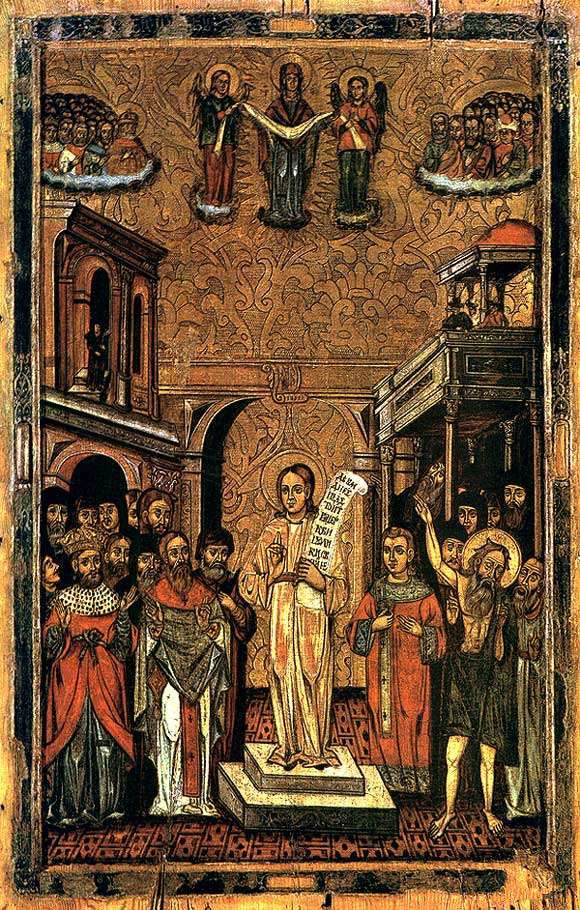
Romanus the Melodist, Romanos of Emesa
Music
Scroll
About Romanus the Melodist
Romanos the Melodist
Romanos the Melodist (Greek: Ῥωμανὸς ὁ Μελωδός) was a pivotal Byzantine hymnographer and composer of the 6th century, widely regarded as a central figure in the development of Byzantine music. Often referred to as "the Pindar of rhythmic poetry," he was the preeminent composer of kontakia during his era. His works, characterized by profound theological insights and vivid poetic imagery, have left an indelible mark on Christian liturgical music.
Life and Background
Historical accounts, primarily from the Menaion for October and the 10th-century Souda, indicate that Romanos was born in Emesa, Syria, in the late 5th century to a Jewish family. He converted to Christianity, likely in his youth, though the conversion of his parents remains uncertain. He was ordained a deacon in the Church of the Resurrection in Berytus (modern Beirut) before relocating to Constantinople, where he eventually died and was buried in the Church of the Virgin.
The Legend of Divine Inspiration
A popular legend recounts that Romanos was initially not recognized for his vocal or reading talents. Despite this, his humility endeared him to the Patriarch of Constantinople. During a vigil service around 518 AD, after a humiliating experience of reading poorly, he fell asleep and was visited in a dream by the Theotokos (Mother of God). She offered him a scroll, which he consumed, awakening with the divine gift to compose and sing. He immediately ascended the pulpit and chanted his renowned "Kontakion of the Nativity," astonishing the congregation with its theological depth and his clear voice. This event is traditionally considered the first instance of a kontakion being sung, with the "kontakion" itself referring to the scroll, symbolizing divinely inspired composition.
Contributions to Hymnography
Romanos is credited with composing over 1,000 hymns, known as kontakia. Of the surviving manuscripts, approximately 89 works are attributed to him, with nearly 60 widely accepted as authentic. His style is notable for its "Atticized literary koine," a popular yet elevated style rich in Semiticisms, which supports his Jewish origins. His compositions feature arresting imagery, sharp metaphors, bold comparisons, and vivid dramatization. The "Kontakion of the Nativity" remains his masterpiece, and its influence extended to the imperial court. Other well-known works include "My soul, my soul, why sleepest thou..." and hymns for significant liturgical events.
Legacy and Veneration
Romanos the Melodist is venerated in the Eastern Orthodox Church as the patron saint of music, with his feast day observed on October 1. His musical compositions significantly influenced Armenian hymnography, despite the historical theological differences between the Armenian Apostolic Church and the Byzantine tradition. While the earliest complete manuscripts of his works date centuries after his lifetime, early papyri fragments suggest their existence closer to his era. His poetic talent and depth of feeling have led some scholars to regard him as the greatest ecclesiastical poet of all time.
Source: Wikipedia ↗
Frequently Asked Questions
Who was Romanos the Melodist?
Romanos the Melodist was a Byzantine hymnographer and composer who flourished in the 6th century. He is considered a central early figure in the history of Byzantine music and is best known as the foremost composer of kontakia.
What is a kontakion?
A kontakion was a type of liturgical hymn that served as a versified sermon set to music. It typically consisted of multiple metrically identical acrostic stanzas that used a common refrain, preceded by a prelude.
What is Romanos the Melodist most famous work?
His most famous work is the "Kontakion of the Nativity," which is still considered his masterpiece. It was sung annually at the imperial banquet in Constantinople until the 12th century.
What is the legend behind Romanos's ability to compose hymns?
According to legend, Romanos was initially not a talented singer. The Theotokos appeared to him in a dream and commanded him to eat a scroll, after which he awoke with the ability to compose and sing profound hymns, beginning with his famous Kontakion of the Nativity.
When is Romanos the Melodist celebrated?
In the Eastern Orthodox Church, Saint Romanos is celebrated annually on October 1 and is recognized as the patron saint of music.
What is the origin of Romanos the Melodist?
Romanos the Melodist was born in Emesa, Syria, in the late 5th century to a Jewish family. He was baptized as a young boy and later ordained as a deacon.
Related Saints
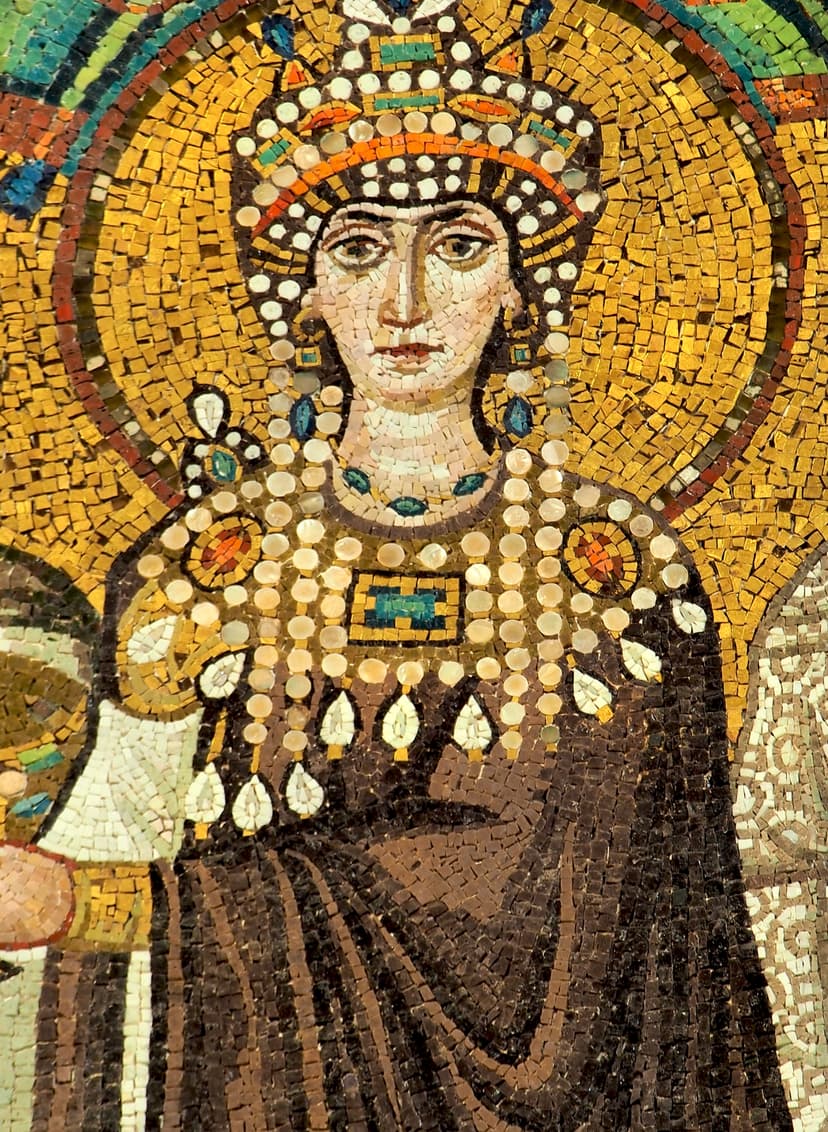
Theodora (wife of Justinian I)
Theodora was the wife of Byzantine Emperor Justinian I and served as Empress from 527 until her death. She is remembered as a formidable political advisor who played a crucial role in quelling the Nika riots and advocating for marginalized groups, particularly women. Revered as a saint in Eastern Orthodox and Oriental Orthodox traditions, she remains an influential figure in history and culture.
Abraham of Ephesus
Abraham of Ephesus was a 6th-century Archbishop of Ephesus and monastery founder, venerated as a saint in both the Eastern Orthodox and Roman Catholic Churches. He is remembered for his role in founding monasteries in Constantinople and Jerusalem, and for two homilies that offer insight into ancient Byzantine liturgy. His legacy also includes the Abrahamite monks, a group of martyrs he inspired.
Sampson the Hospitable
Sampson the Hospitable was a physician from Constantinople who dedicated his life to serving the poor and sick. He is remembered for his immense charity, establishing a free clinic in his home and later founding a large hospital with the support of Emperor Justinian. His devotion to the needy led to his veneration as a saint in both Eastern and Catholic traditions.