
Abraham of Ephesus
October 28·6th century·Byzantine Empire
Abraham of Ephesus was a 6th-century Archbishop of Ephesus and monastery founder, venerated as a saint in both the Eastern Orthodox and Roman Catholic Churches. He is remembered for his role in founding monasteries in Constantinople and Jerusalem, and for two homilies that offer insight into ancient Byzantine liturgy. His legacy also includes the Abrahamite monks, a group of martyrs he inspired.
Key Facts
- ›He was an Archbishop of Ephesus in the 6th century.
- ›He played an important role in founding monasteries in Constantinople and Jerusalem.
- ›Two homilies attributed to him survive, offering insights into ancient Byzantine liturgy.
- ›He founded a monastery in Constantinople that later became associated with the Abrahamite monks.
- ›His feast day is commemorated on October 28th.
About Abraham of Ephesus
Abraham of Ephesus was a significant religious figure of the 6th century Byzantine Empire, serving as the Archbishop of Ephesus and a notable monastery founder. He is venerated as a saint by both the Eastern Orthodox Church and the Roman Catholic Church, with his feast day observed on October 28th.
Life and Contributions
During his tenure as bishop, Abraham of Ephesus was instrumental in the establishment of monastic communities. He played a key role in the foundation of a monastery located in Constantinople and another in Jerusalem. These foundations highlight his dedication to monastic life and its spread within the Byzantine world.
Abraham's theological and liturgical contributions are also recognized through two extant homilies. These writings are considered important for the knowledge and understanding of ancient Byzantine liturgy. One homily focuses on the feast of the Annunciation, and the other on the feast of the Presentation of Jesus at the Temple, offering valuable insights into the devotional and ceremonial practices of the era.
Legacy
The legacy of Abraham of Ephesus extends to the history of monasticism and martyrdom. He founded a monastery in Constantinople that, centuries later, became associated with the Abrahamite monks. This group of monks was martyred around 835 during the iconoclast persecutions under Emperor Theophilus. The Abrahamite monks are also recognized as saints, with separate feast days in both the Roman Catholic and Eastern Orthodox Churches. His enduring veneration underscores his impact on religious life and spiritual tradition.
Source: Wikipedia ↗
Frequently Asked Questions
Who was Abraham of Ephesus?
Abraham of Ephesus was a 6th-century Archbishop of Ephesus in the Byzantine Empire. He is recognized as a saint in both the Eastern Orthodox and Roman Catholic Churches.
What is Abraham of Ephesus known for?
He is known for his role in founding monasteries in Constantinople and Jerusalem. Additionally, two homilies attributed to him are significant for understanding ancient Byzantine liturgy.
When is Abraham of Ephesus's feast day?
His feast day is commemorated on October 28th.
What is the connection between Abraham of Ephesus and the Abrahamite monks?
Abraham of Ephesus founded a monastery in Constantinople, and the monks from this institution became known as the Abrahamite monks. Some of these monks were martyred during iconoclast persecutions in the 9th century.
Related Saints
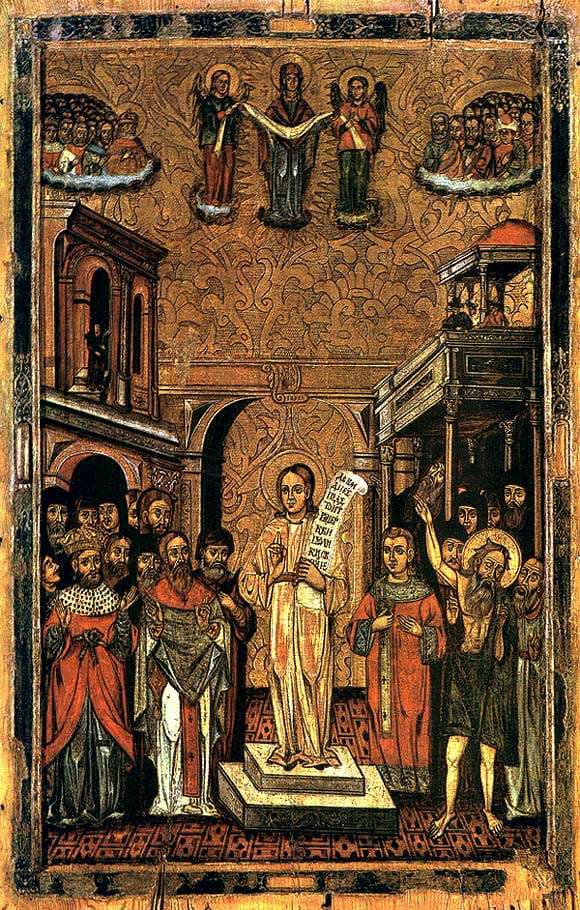
Romanus the Melodist
Romanos the Melodist was a central figure in Byzantine music, renowned as the foremost composer of kontakia in the 6th century. Born to a Jewish family in Syria, he converted to Christianity and was ordained a deacon before moving to Constantinople. He is chiefly remembered for his theological depth and poetic skill in hymns, particularly his "Kontakion of the Nativity."
Paul IV of Constantinople
Paul IV of Constantinople, also known as Paul the New, served as Ecumenical Patriarch of Constantinople from 780 to 784. He is remembered for his role in the iconoclast controversy, initially opposing icon veneration but later advocating for an ecumenical council to resolve the issue. He resigned due to age and illness and is venerated as a saint in the Eastern Orthodox Church.
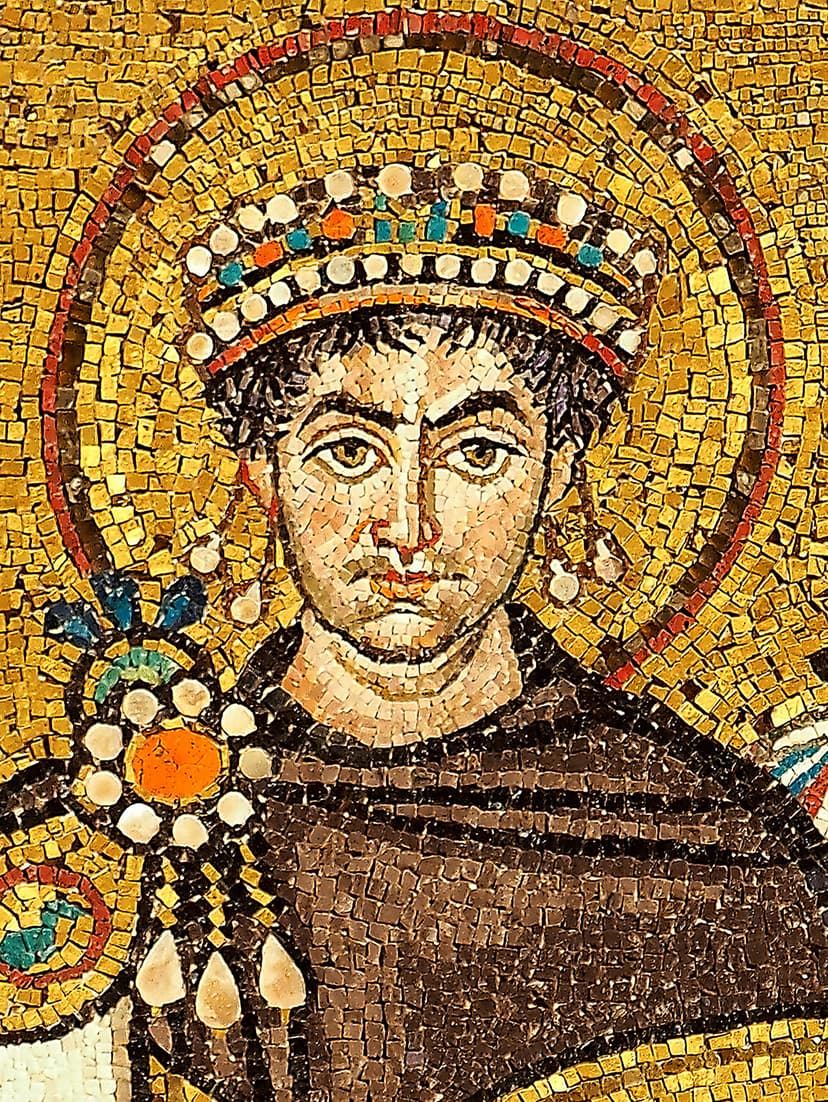
Justinian I
Justinian I was a prominent Roman emperor whose reign (527-565) was marked by an ambitious effort to restore the empire and a significant codification of Roman law. He is chiefly remembered for the Corpus Juris Civilis, the partial reconquest of the Western Roman Empire, and the construction of the Hagia Sophia. His reign significantly influenced the development of civil law and Byzantine culture.