
Phinehas
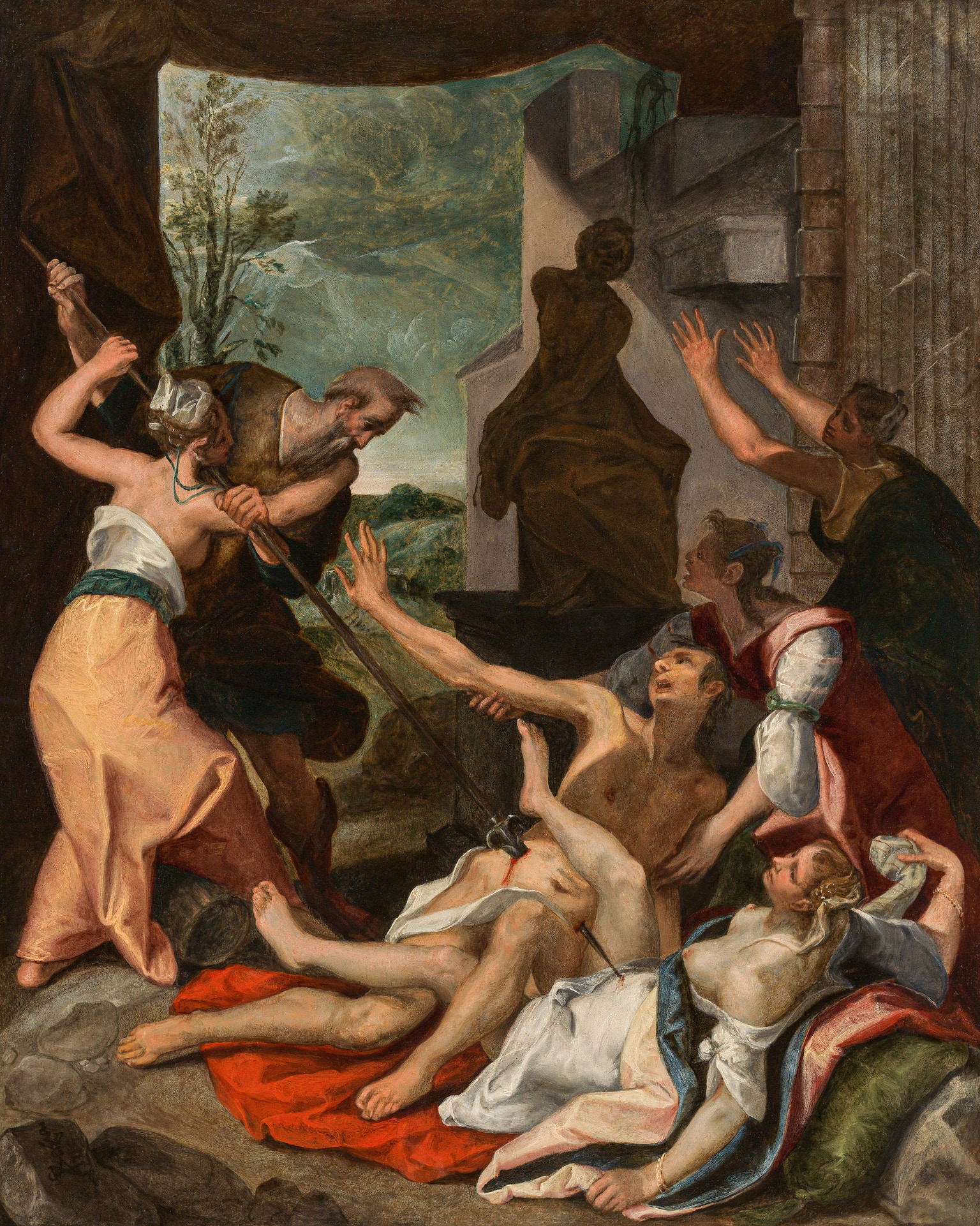
Phinehas was a priest in the Hebrew Bible, grandson of Aaron and son of Eleazar. He is chiefly remembered for his zealous act of executing an Israelite man and a Midianite woman to stop a plague resulting from the Israelites' idolatry and immoral relations with the Midianites. This act earned him divine commendation and a covenant for an everlasting hereditary priesthood.
Key Facts
- ›Phinehas was the grandson of Aaron and son of High Priest Eleazar.
- ›He distinguished himself at Shittim by his zeal against the heresy of Peor.
- ›Phinehas executed an Israelite man and a Midianite woman for intermarrying and worshipping Baal-peor.
- ›His act ended a plague that had killed 24,000 Israelites.
- ›Yahweh commended Phinehas for his loyalty and bravery, establishing a covenant of peace and an everlasting hereditary priesthood.
- ›He later led an army against the Midianites and served as the third High Priest of Israel at Bethel.
About Phinehas
Phinehas, also known as Phineas, was a prominent priest in the Hebrew Bible, distinguished for his zealous defense of Israelite religious purity during the Exodus period. As the grandson of Aaron and son of High Priest Eleazar, he held a significant lineage within the priestly tradition. His most notable act occurred at Shittim, where he intervened decisively to halt the Israelites' involvement with the Moabites and Midianites, which involved idolatry and sexual immorality centered around the worship of Baal-peor.
The Heresy of Peor
The account of Phinehas's zeal is detailed in the Book of Numbers. Displeased by the widespread sinfulness that had led to a plague decimating the Israelite population, Phinehas personally executed an Israelite man, Zimri, and a Midianite woman, Cozbi, who were openly defying Moses's authority and engaging in illicit acts. This act of righteous anger, performed with a spear, is credited with stopping the plague and saving the Israelite nation from further divine wrath. Yahweh commended Phinehas for his loyalty and bravery, establishing a covenant of peace and the promise of an everlasting hereditary priesthood for his lineage.
Later Life and Priesthood
Following these events, Phinehas played a crucial role in the subsequent history of Israel. He later led a military expedition against the Midianites to avenge the earlier transgressions and is mentioned in the Book of Joshua as an investigator of the altar built by the trans-Jordanic tribes. He eventually succeeded his father as the third High Priest of Israel, serving at the sanctuary in Bethel. His lineage is traced through biblical accounts, connecting him to figures like Zadok and Matitiyahu.
Veneration and Legacy
Phinehas is commemorated as a saint in both the Catholic Church and the Eastern Orthodox Church, with feast days noted in their liturgical calendars. His story has been interpreted in various ways throughout history, sometimes serving as a symbol of divine justice and zealous faith. The name Phinehas itself is believed to have Egyptian origins, possibly relating to the term for 'southerner' or 'Nubian'.
Source: Wikipedia ↗
Frequently Asked Questions
Who was Phinehas in the Hebrew Bible?
Phinehas was a priest in the Hebrew Bible, the grandson of Aaron and son of Eleazar. He is prominently featured in the Book of Numbers for his zealous actions at Shittim.
What is Phinehas most remembered for?
He is remembered for his decisive and zealous act of executing an Israelite man and a Midianite woman who were engaged in immoral relations and idolatry. This action is credited with stopping a plague that was devastating the Israelite community.
What was the consequence of Phinehas's act?
As a result of his zeal for Yahweh, Phinehas received divine commendation and a covenant for an everlasting hereditary priesthood for himself and his descendants. His act also helped to atone for the sins of the Israelites.
Did Phinehas hold any other significant roles?
After the death of his father, Eleazar, Phinehas was appointed the third High Priest of Israel and served at the sanctuary of Bethel. He also led an army against the Midianites and acted as an advisor in military conflicts.
What is the origin of the name Phinehas?
The name Phinehas likely originates from the Egyptian name Pa-nehasi, possibly meaning 'the bronze-colored one' or 'the southerner'.
Related Saints

Asenath
Asenath was a minor but significant figure in the Book of Genesis, an aristocratic Egyptian woman who became the wife of Joseph. She is chiefly remembered as the mother of Manasseh and Ephraim, who became the patriarchs of two of the twelve tribes of Israel. Rabbinic traditions offer differing accounts of her origins, with some portraying her as an Egyptian convert to Judaism and others as a descendant of Jacob through his daughter Dinah.

Aaron
Aaron was an Israelite prophet and the first High Priest, elder brother to Moses. He served as Moses' spokesman to the Pharaoh during the Exodus and was divinely appointed as the progenitor of the Israelite priesthood. Aaron is remembered for his role in establishing the Levitical priesthood and for his interactions with Moses during the Israelites' journey in the wilderness.
Shemaiah
Shemaiah was a prophet in the reign of King Rehoboam of Judah. He is chiefly remembered for his divine intervention that prevented a civil war between the northern tribes of Israel and the southern tribes of Judah and Benjamin. His prophecy also foretold Rehoboam's punishment by the king of Egypt.