
Nino of Georgia
January 14·4th century·Georgia
Saint Nino was a woman who preached Christianity in the Kingdom of Iberia, located in present-day Georgia. Her missionary efforts led to the Christianization of the entire country, making Iberia the second Christian state after Armenia. She is chiefly remembered for her role in establishing Christianity in Georgia and is a highly venerated saint in the Georgian Orthodox Church.
Key Facts
- ›Nino preached Christianity in the Kingdom of Iberia, leading to its Christianization.
- ›She was a relative of Saint George and came to Iberia from Cappadocia.
- ›According to tradition, she received a vision of the Virgin Mary, who gave her a grapevine cross and instructed her to go to Iberia.
- ›Nino performed miraculous healings and converted Queen Nana and King Mirian III of Iberia.
- ›King Mirian III declared Christianity the official religion of his kingdom around 326 AD.
- ›Her tomb is venerated at the Bodbe Monastery in Kakheti, eastern Georgia.
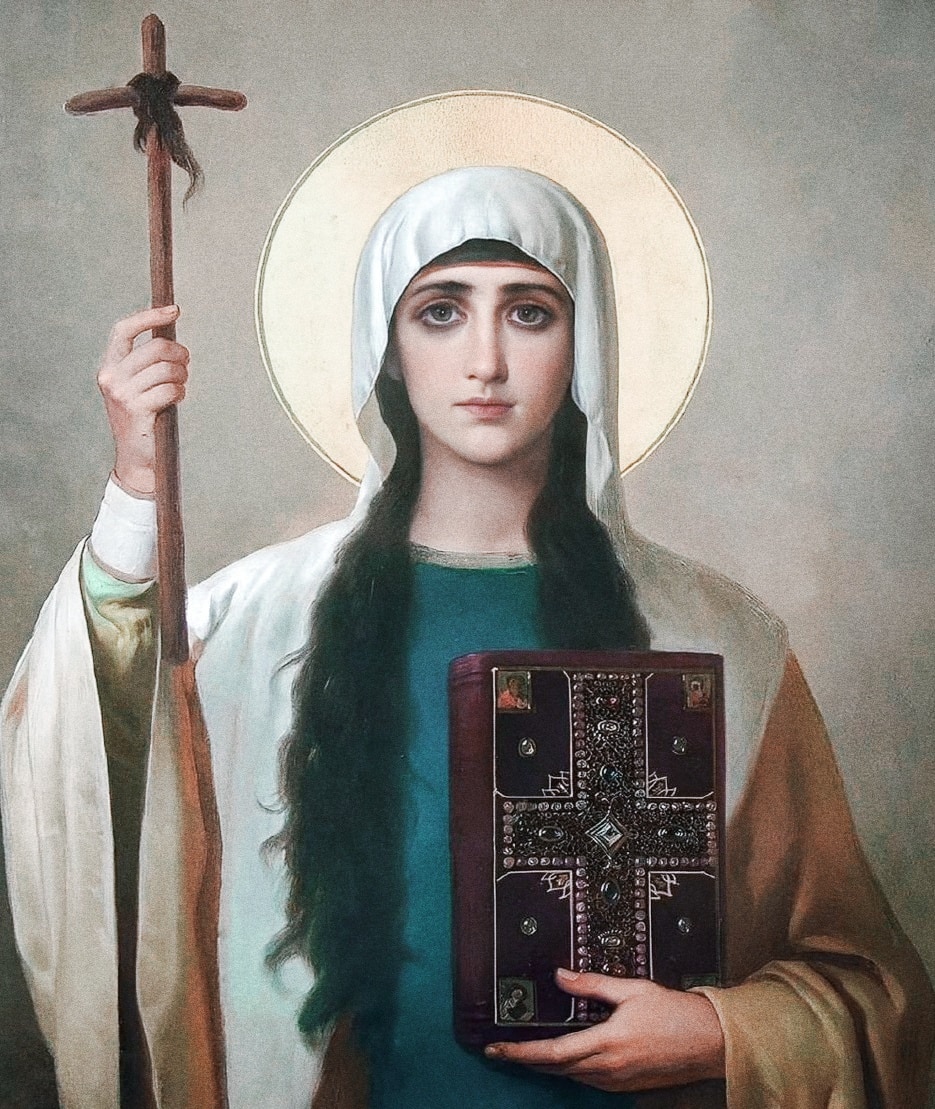
St. Nune, St. Nina, St. Ninny, Christiana, Theognosta
Georgia
Grapevine Cross
About Nino of Georgia
Saint Nino of Georgia
Saint Nino is a pivotal figure in the history of Christianity in Georgia, credited with bringing the faith to the Kingdom of Iberia in the 4th century. While specific details of her early life are intertwined with hagiography, traditional accounts describe her as belonging to a Greek-speaking Roman family from Cappadocia. She was a relative of Saint George and, according to legend, was divinely instructed to travel to Iberia to spread Christianity.
Life and Ministry
Nino's journey to Iberia is often depicted as a divinely ordained mission. Upon arrival, she began preaching the Gospel and performing miraculous healings, which attracted many followers. Among those converted were Queen Nana and, notably, King Mirian III. The king's own conversion is attributed to a miraculous healing he experienced after praying to the God of Saint Nino when he was blinded during a hunt. This event led to the official adoption of Christianity as the state religion of Iberia around 326 AD, making it one of the earliest Christian nations.
Legacy and Veneration
Following the Christianization of Iberia, Saint Nino continued her missionary work, establishing churches and promoting the faith. She eventually settled in Bodbe, Kakheti, where she died. Her tomb at the Bodbe Monastery remains a significant pilgrimage site. Saint Nino is one of the most venerated saints in the Georgian Orthodox Church, and her attribute, the grapevine cross, is an enduring symbol of Georgian Christianity. Her feast day is commemorated on January 14th, with other commemorative dates also observed.
Source: Wikipedia ↗
Frequently Asked Questions
Who was Saint Nino?
Saint Nino was a woman who preached Christianity in the Kingdom of Iberia, in what is now Georgia, during the 4th century. Her missionary work was instrumental in the Christianization of the country.
What is Saint Nino most remembered for?
She is primarily remembered for bringing Christianity to Georgia and converting its people, including Queen Nana and King Mirian III. This led to Christianity becoming the official religion of Iberia.
What is the significance of the grapevine cross associated with Saint Nino?
The grapevine cross is Saint Nino's principal attribute. According to tradition, the Virgin Mary appeared to Nino and gave her this cross, instructing her to travel to Iberia to spread Christianity. It is now a symbol of Georgian Christianity.
Where is Saint Nino's tomb located?
Her tomb is venerated at the Bodbe Monastery in Kakheti, located in eastern Georgia. Construction of the monastery began shortly after her death at the behest of King Mirian III.
What were the main sources for Saint Nino's life story?
The oldest extant source is Rufinus's Latin account in his Historia ecclesiastica, based on oral information from a Georgian prince. Other early Christian authors also wrote about her, and later Georgian hagiographic works largely repeat these accounts.
Related Saints
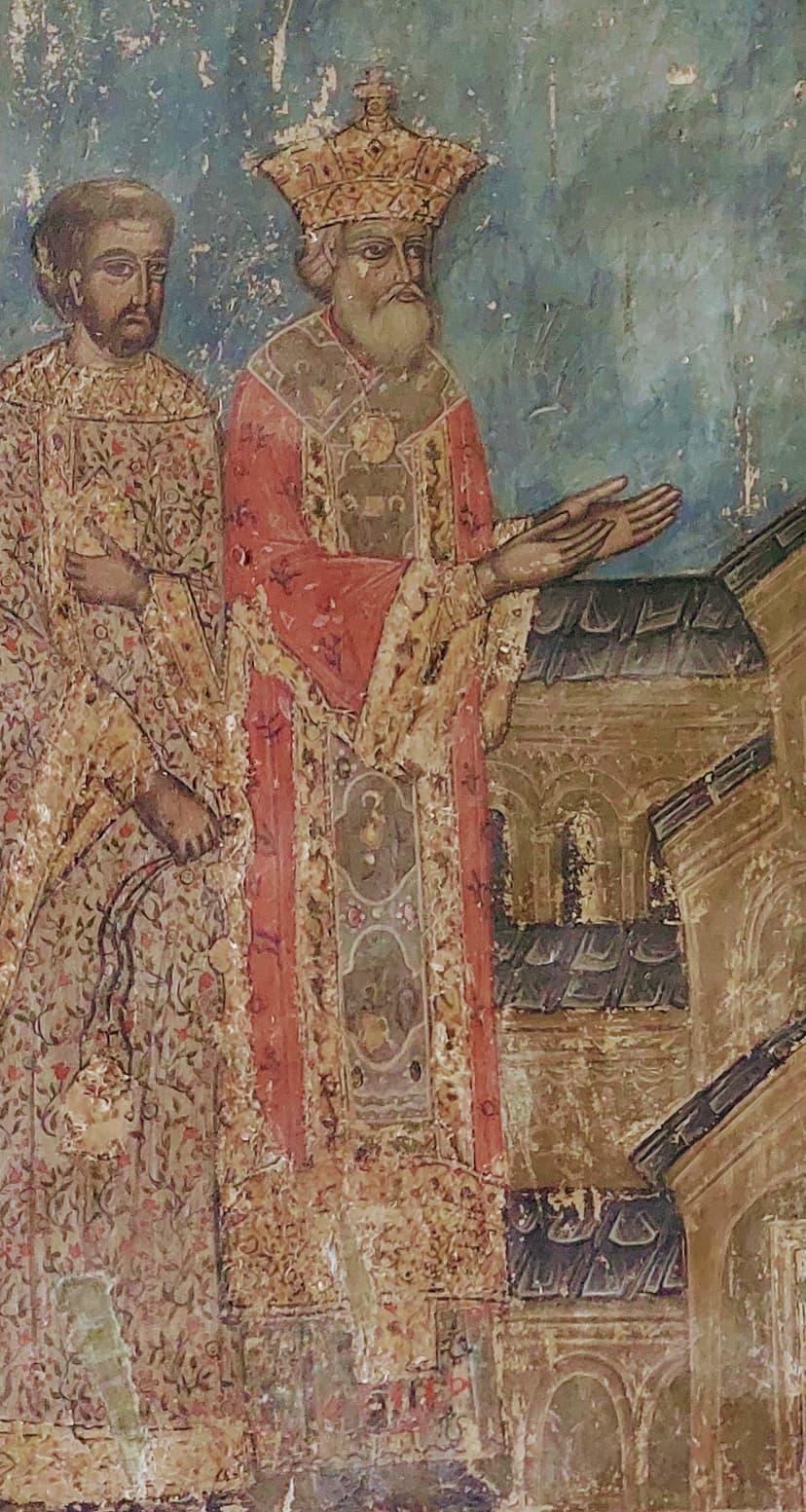
Mirian III of Iberia
Mirian III was a king of Iberia (modern Georgia) and the founder of the Chosroid dynasty, living contemporaneously with Roman Emperor Constantine the Great. He is chiefly remembered as the first Christian king of Iberia, having established Christianity as the state religion through the ministry of Saint Nino. The Georgian Orthodox Church venerates him as a saint, equal to the Apostles.
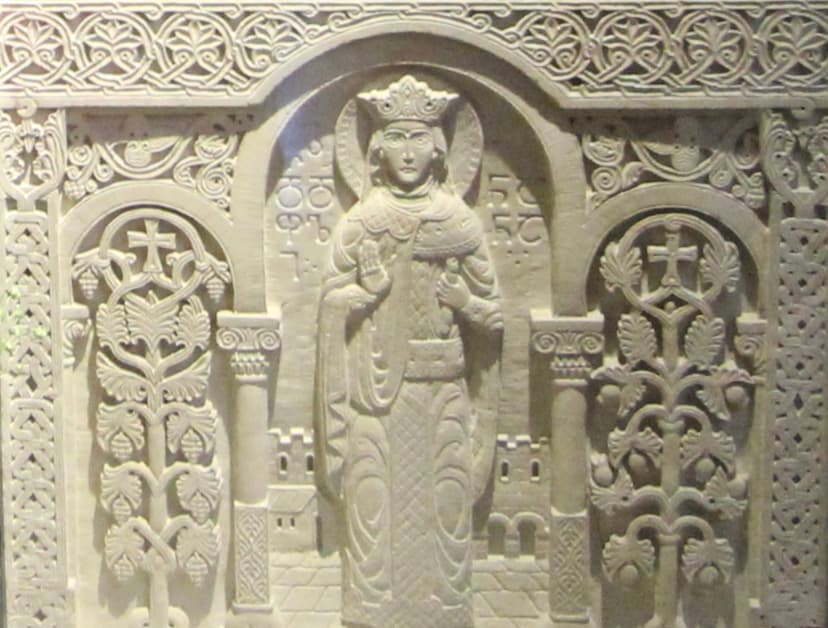
Nana of Iberia
Nana of Iberia was a Queen consort of the Kingdom of Iberia in the 4th century, wife of King Mirian III. She is venerated as a saint by the Georgian Orthodox Church for her pivotal role in the Christianization of Georgia. Nana is chiefly remembered for her conversion to Christianity through the missionary Saint Nino and her subsequent influence on King Mirian's conversion, which established Christianity as the official religion of Iberia.
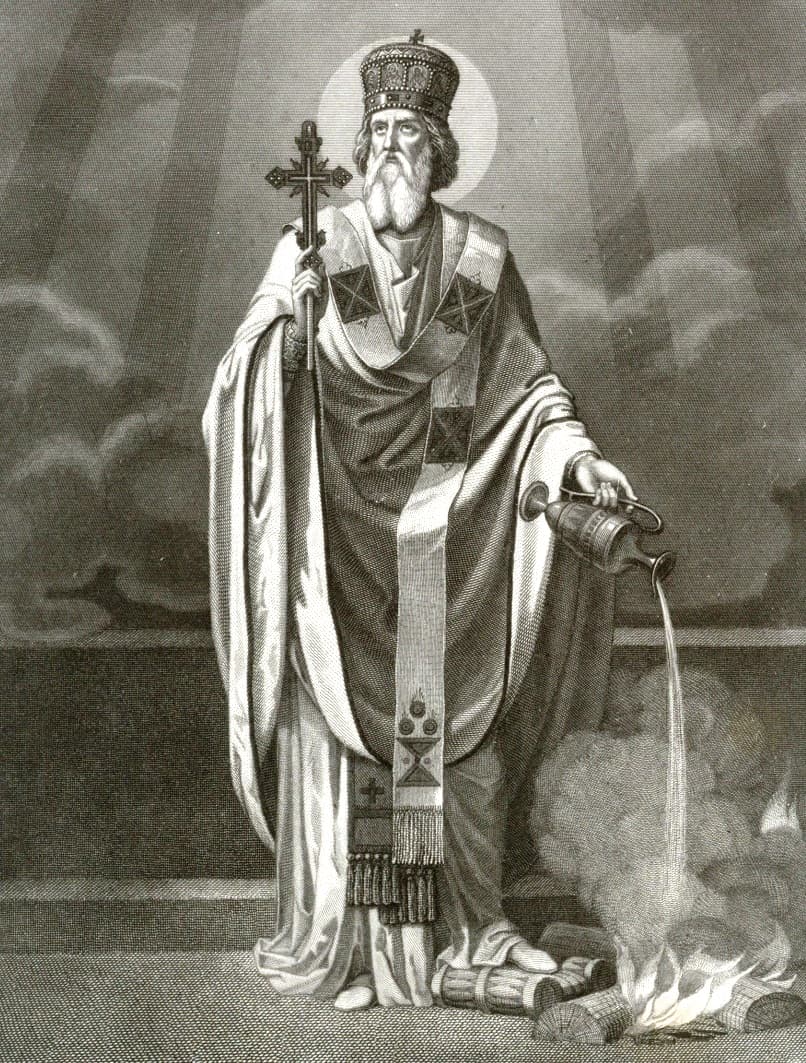
Abibos of Nekresi
Abibos of Nekresi was one of the thirteen Assyrian apostles who brought Christianity to Georgia in the 6th century, serving as the bishop of Nekresi. He is remembered for his missionary work among both Georgians and mountain tribes, and for his martyrdom under Persian Zoroastrian rule. Abibos was stoned to death by Zoroastrian Persians for dousing a sacred flame.