
Nikephoros I of Constantinople
March 13·9th century·Byzantine Empire
Nikephoros I was an Ecumenical Patriarch of Constantinople and a Byzantine writer known for his staunch defense of iconodules during the period of Iconoclasm. He played a significant role in the synod of 787 and later engaged in literary polemics against the iconoclastic synod of 815. He is revered as a confessor and remembered for his historical writings and his efforts to delineate the accepted canon of the New Testament.
Key Facts
- ›Nikephoros I served as Ecumenical Patriarch of Constantinople from 806 to 815.
- ›He was born into a family that had suffered under the earlier Iconoclasm and inherited strong Orthodox convictions.
- ›He participated in the synod of 787 as an imperial commissioner and later founded cloisters.
- ›His historical work, Historia syntomos, covered the period from 602 to 769.
- ›He compiled a Chronography, a universal history from Adam and Eve to his own time, including a canon catalog.
- ›Nikephoros I is recognized for his three major writings defending iconodulism against iconoclasm.
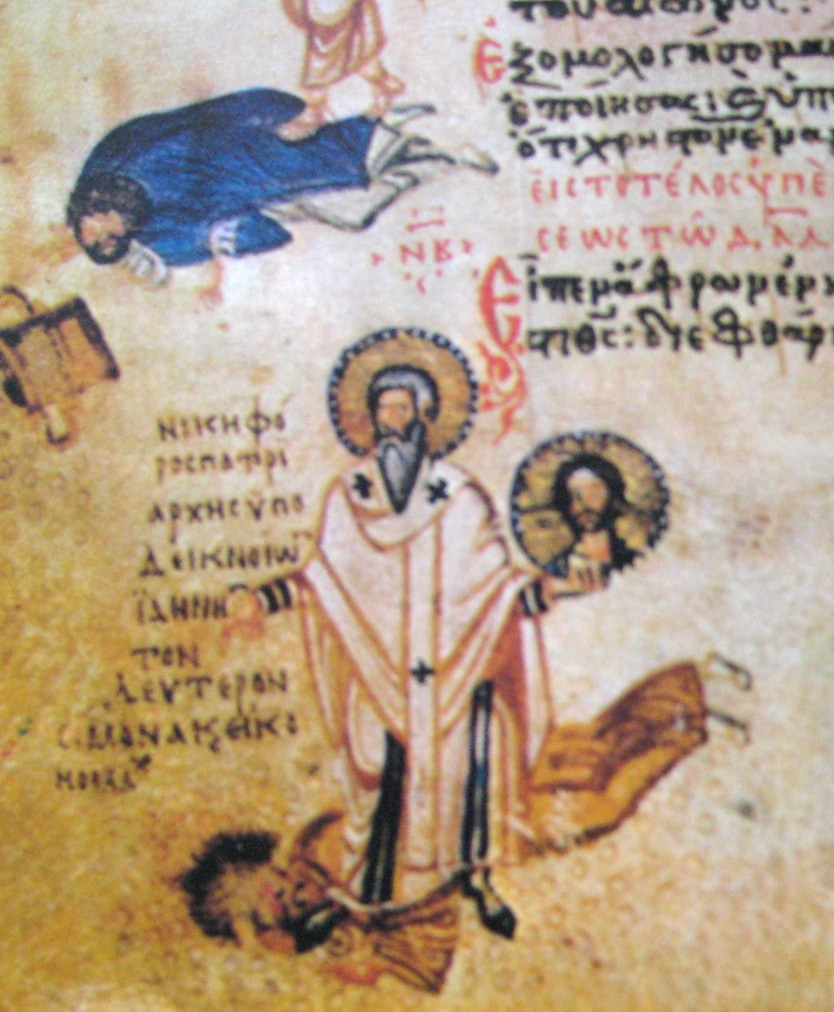
Nicephorus I
About Nikephoros I of Constantinople
Nikephoros I (c. 758 – 5 April 828) was a significant Byzantine writer and Ecumenical Patriarch of Constantinople, serving from April 12, 806, to March 13, 815. His life and work were deeply intertwined with the theological controversies of his era, particularly the Iconoclasm. He is remembered as a staunch defender of iconodules and a notable historian.
Life and Historical Context
Born in Constantinople to a devout Orthodox family that had experienced persecution during earlier Iconoclasm, Nikephoros inherited strong religious convictions. His father, Theodore, had been punished for his zealous support of iconodules. Nikephoros entered imperial service, eventually becoming an imperial secretary. He participated in the synod of 787 as an imperial commissioner and later withdrew to cloisters he founded on the Thracian Bosporus, dedicating himself to asceticism and scholarly pursuits.
He was recalled to serve as director of a major hospital in Constantinople around 802. Following the death of Patriarch Tarasios, Nikephoros, though still a layman, was chosen patriarch by the emperor's wish. This uncanonical choice faced opposition from the Stoudites, an opposition that intensified when Nikephoros, as a moralist, complied with the emperor's will by reinstating an excommunicated priest.
After theological disputes and personal insults, Nikephoros was eventually forced to yield to imperial power under Emperor Leo V the Armenian. He was exiled to cloisters he had founded, where he continued his literary defense of iconodules against the synod of 815. He died at the monastery of Saint Theodore, revered as a confessor. His remains were later brought back to Constantinople and interred in the Church of the Holy Apostles, where they became an object of imperial veneration. His feast is observed on March 13 in both the Greek and Roman Churches, with the Greeks also commemorating June 2 as the day of his death.
Major Contributions
Nikephoros I's literary output was considerable. Compared to his contemporary Theodore the Studite, he is seen as more conciliatory and learned in patristics. His historical work, the Historia syntomos, breviarium, covered the period from 602 to 769 and focused thematically on the offices of emperor and patriarch, seeking to uphold the reputation of the patriarchate.
His Chronography or Chronographikon Syntomon presented a universal history from creation to his own time and was widely circulated. Attached to this work was his Stichometry of Nicephorus, a catalog of accepted books of the Old and New Testaments, along with the antilegomena and apocrypha, noting the line count for each book. This catalog is significant for its contribution to the development of the biblical canon.
His principal works concerning iconoclasm include the Apologeticus minor, an explanation for laymen; the Apologeticus major with the Antirrhetici against Mamonas-Constantine Kopronymos, a comprehensive dogmatics of icon veneration; and a refutation of the iconoclastic synod of 815. His thorough tracing of traditional proofs and detailed refutations are valuable for understanding texts used by his opponents and drawn from older church literature.
Source: Wikipedia ↗
Frequently Asked Questions
When did Nikephoros I live and serve as Patriarch?
Nikephoros I lived from approximately 758 to 828 and served as the Ecumenical Patriarch of Constantinople from April 12, 806, to March 13, 815. He is venerated as a confessor, and his feast day is celebrated on March 13.
What was Nikephoros I's background and early life?
Born in Constantinople to Theodore and Eudokia, Nikephoros I came from a devout Orthodox family that had suffered during the earlier Iconoclasm. His father, Theodore, was a secretary to Emperor Constantine V and was persecuted for his support of iconodules, a conviction the son inherited.
What were Nikephoros I's major theological and historical contributions?
Nikephoros I was a key figure in the defense of iconodulism, writing extensively against iconoclasm. His historical works, such as the Historia syntomos and Chronography, provided important chronicles of Byzantine history and aided in the study of the biblical canon, including his Stichometry.
Why was Nikephoros I exiled and when did he die?
Nikephoros I was exiled under Emperor Leo V the Armenian due to the ongoing theological disputes surrounding iconoclasm. He was sent to cloisters he had founded and continued his literary polemics from there. He died in the monastery of Saint Theodore in 828.
What is the significance of Nikephoros I's historical writings?
His historical works, like the Historia syntomos, are valuable for their detailed accounts of Byzantine history and their focus on the relationship between imperial and patriarchal authority. The Chronography offered a universal historical narrative and included a canon catalog that is useful for understanding the development of the biblical canon.
Related Saints
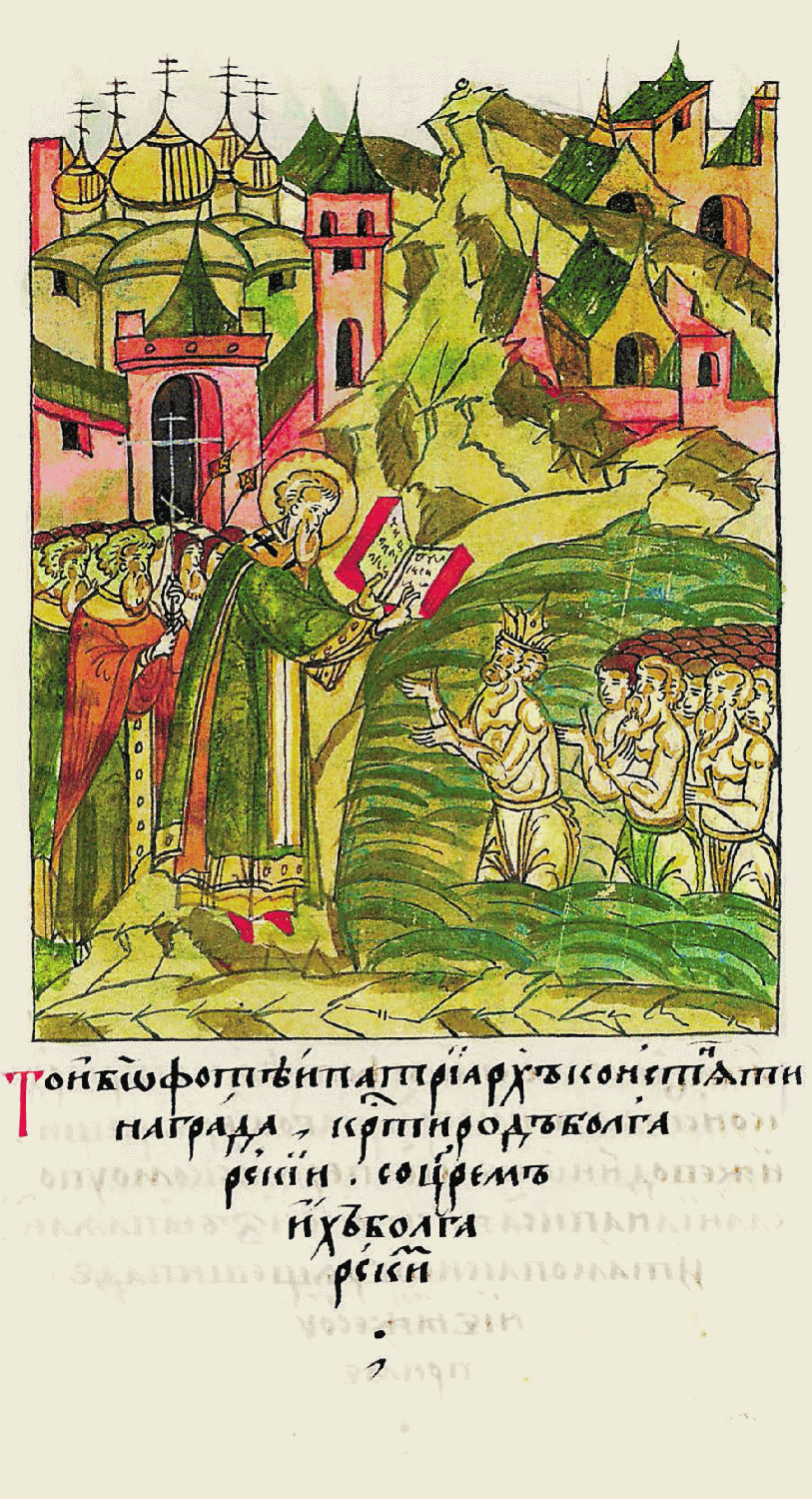
Photius the Great
Photius I of Constantinople, also known as Saint Photius the Great, was a towering intellectual and influential church leader of the 9th century. He served as Ecumenical Patriarch of Constantinople twice and played a pivotal role in the conversion of the Slavs and the Photian schism. He is remembered as a brilliant scholar, a systematic compiler of Church Law, and a defender of Greek spiritual independence.
Theophanes the Confessor
Theophanes the Confessor was a Byzantine aristocrat who became a monk and chronicler. He is remembered for his resistance to iconoclasm and for his historical chronicle, which preserved accounts of lost Byzantine historical sources. He is venerated in both the Catholic and Eastern Orthodox Churches.
Tarasius of Constantinople
Tarasius of Constantinople served as the Ecumenical Patriarch from 25 December 784 until his death on 25 February 806. He is primarily remembered for his role as acting chairman of the Second Council of Nicaea, which condemned Iconoclasm and formally approved the veneration of icons. Despite facing criticism for his perceived pliability to imperial power, he is revered in Eastern Orthodox Churches for his defense of icons and his efforts for Church unity.