
Photius the Great
February 6·9th century·Byzantine Empire
Photius I of Constantinople, also known as Saint Photius the Great, was a towering intellectual and influential church leader of the 9th century. He served as Ecumenical Patriarch of Constantinople twice and played a pivotal role in the conversion of the Slavs and the Photian schism. He is remembered as a brilliant scholar, a systematic compiler of Church Law, and a defender of Greek spiritual independence.
Key Facts
- ›Photius I served as Ecumenical Patriarch of Constantinople from 858 to 867 and again from 877 to 886.
- ›He is considered the most important intellectual of his time and a leading figure of the ninth-century renaissance.
- ›Photius was instrumental in the conversion of the Slavs to Christianity and was a central figure in the Photian schism.
- ›His most significant work is the Bibliotheca, a collection of summaries and extracts from numerous ancient texts.
- ›He engaged in significant theological disputes with the Western Church, particularly concerning the Filioque clause.
- ›Photius is venerated as a saint in the Eastern Orthodox Church with a feast day on February 6.
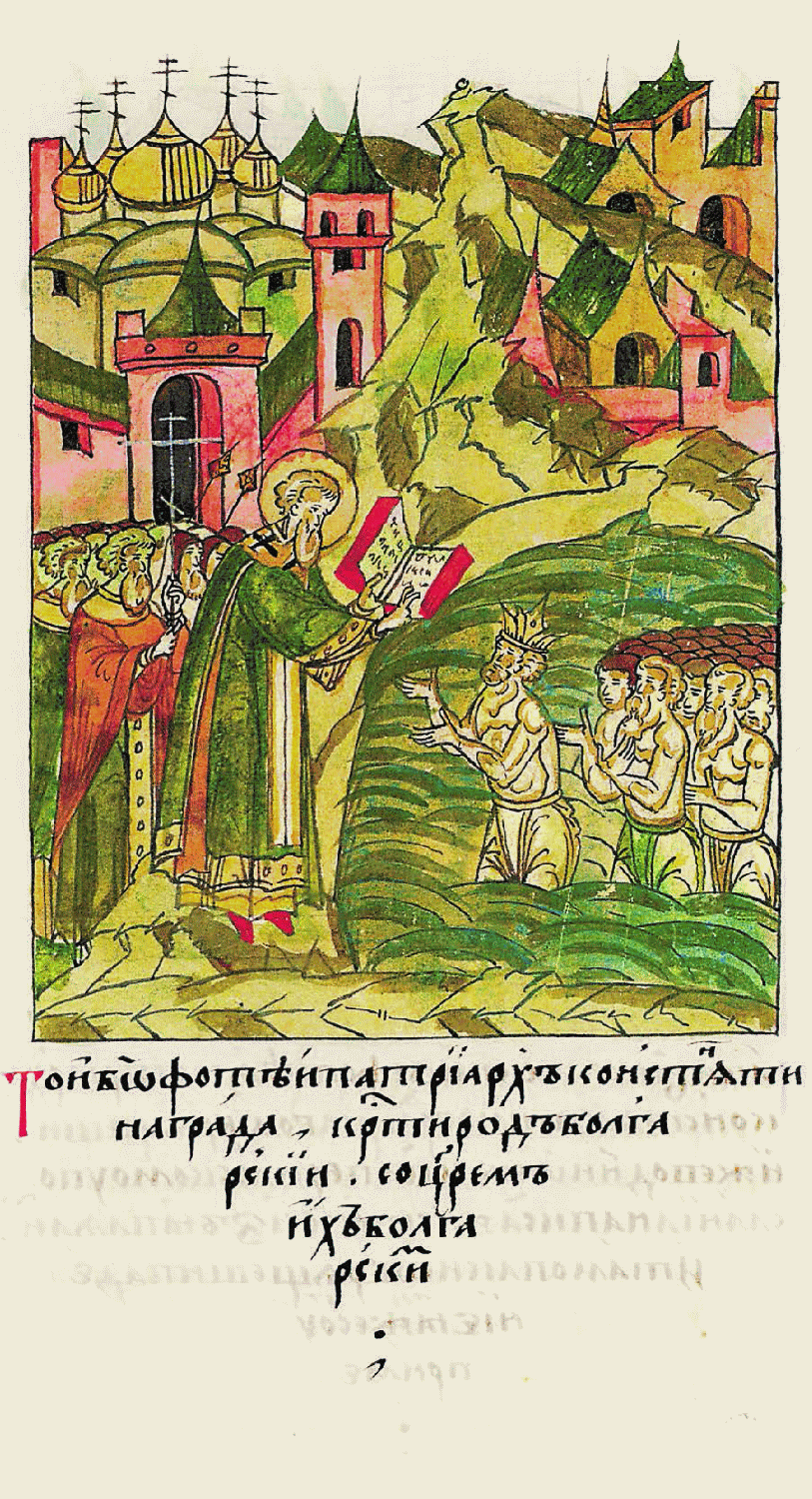
Photius the Great, Photios I
About Photius the Great
Photius I of Constantinople (c. 815 – February 6, 893), venerated as Saint Photius the Great in the Eastern Orthodox Church, was a preeminent intellectual and a profoundly influential church leader of the 9th century Byzantine Empire. He served as the Ecumenical Patriarch of Constantinople for two non-consecutive terms: from 858 to 867 and again from 877 to 886. His significance extends beyond his ecclesiastical office; he is widely regarded as the leading scholar of his era, often described as the "leading light of the ninth-century renaissance," and is credited with being a central figure in the conversion of the Slavs to Christianity and the complex ecclesiastical events known as the Photian schism.
Life and Historical Context
Born into a noble and well-connected Constantinopolitan family, Photius's maternal lineage included previous patriarchs of Constantinople. Despite an early inclination towards monastic life, he pursued a career in scholarship and statesmanship. He held positions such as captain of the guard and chief imperial secretary, undertaking an embassy to the Abbasid Caliphate in Baghdad. His scholarly reputation was already established, marked by his intellectual acumen and sharp wit, famously demonstrated in a theological jest intended to outmaneuver Patriarch Ignatius.
Photius's ascent to the patriarchal throne was intertwined with imperial politics. In 858, Emperor Michael III, influenced by his uncle Caesar Bardas, engineered the deposition of Patriarch Ignatius and appointed Photius, then a layman, to the position. This rapid elevation and the circumstances surrounding it triggered significant controversy, drawing the attention and intervention of Pope Nicholas I. The ensuing disputes over legitimacy and authority contributed to the Photian schism, a period of division between the Eastern and Western churches that marked a turning point in their relationship, underscoring the contested nature of papal authority and jurisdictional claims, particularly over newly converted regions like Bulgaria.
Following political shifts and the ascension of Basil I, Photius was deposed in 867. However, he later regained imperial favor, becoming tutor to the emperor's children. Upon the death of Ignatius in 877, Photius was reinstated as patriarch, this time securing broader recognition, including from Pope John VIII, though not without continued theological and political tensions, especially concerning the Filioque clause. His later years saw him exiled again after Basil I's death and the accession of Leo VI, but he continued his scholarly pursuits and appears to have been rehabilitated to some extent in his final years. His death in 893 was followed by veneration as a saint, with his name appearing in liturgical texts from the mid-10th century.
Major Contributions and Legacy
Photius I's intellectual legacy is immense, primarily through his monumental work, the Bibliotheca (or Myriobiblon). This compilation of summaries and critical extracts from 280 works, many of which would otherwise be lost to history, makes him an indispensable figure for the study of classical antiquity. The Bibliotheca provides invaluable insights into ancient Greek literature, history, theology, and philosophy, preserving texts from authors such as Ctesias, Memnon of Heraclea, and Conon, as well as lost books of Diodorus Siculus and Arrian.
Beyond his literary achievements, Photius was a formidable theologian and canonist. His Amphilochia, a collection of scriptural questions and answers, and his treatises against the Manichaeans and Paulicians, along with his correspondence on the Filioque controversy with the West, highlight his deep engagement with theological matters. He is also recognized as a compiler of Church Law, occupying a similar position to Gratian in the West, with his collections serving as a fundamental source for Byzantine canon law. Photius's role in the conversion of the Slavs and his defense of the spiritual independence of the Byzantine Church against Western claims cemented his status as a pivotal figure in both Byzantine history and Orthodox tradition.
Source: Wikipedia ↗
Frequently Asked Questions
What was Photius I's primary role in the Byzantine Empire?
Photius I served as the Ecumenical Patriarch of Constantinople, holding this high ecclesiastical office twice. He was also a prominent scholar, statesman, and theologian, deeply involved in the political and religious affairs of his time.
What is the Bibliotheca and why is it significant?
The Bibliotheca, also known as Myriobiblon, is Photius I's most important work. It is a collection of extracts and summaries of 280 books, many of which are now lost, making it an invaluable source for understanding ancient literature, history, and theology.
What was the Photian schism?
The Photian schism refers to a period of ecclesiastical controversy and division between the Eastern Orthodox Church and the Roman Catholic Church, largely stemming from disputes over papal authority, jurisdiction, and theological issues like the Filioque clause, during Photius I's patriarchate.
How is Photius I remembered in the Eastern Orthodox Church?
Photius I is venerated as a saint in the Eastern Orthodox Church, recognized as 'Saint Photius the Great'. His feast day is celebrated on February 6th, and he is honored for his intellectual contributions and his role in defending the Orthodox faith.
What is known about Photius I's family and early life?
Photius I came from a noble Constantinopolitan family. His mother was related to previous patriarchs, and his uncle, Saint Tarasius, also served as patriarch. His family faced persecution during iconoclasm due to his father's iconophile stance.
What theological disputes was Photius I involved in?
Photius I was a key figure in disputes with the Western Church, particularly regarding the addition of the Filioque clause to the Nicene Creed and the question of papal supremacy. He also worked towards reconciliation with the Armenian Church.
Related Saints
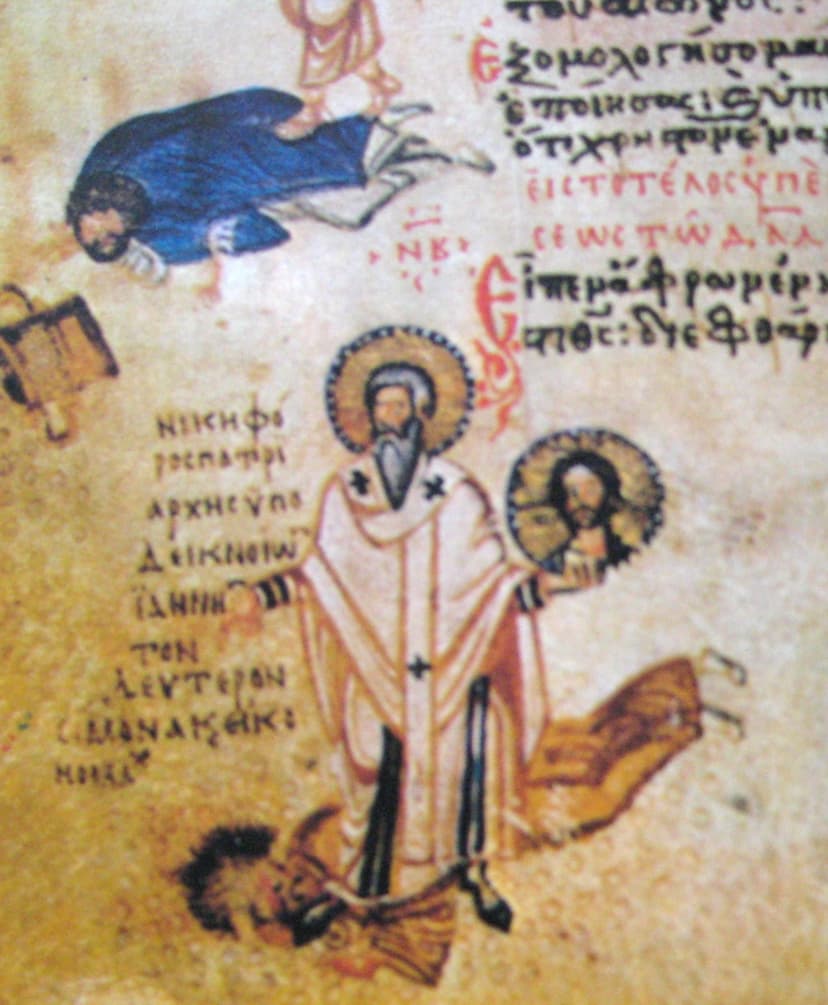
Nikephoros I of Constantinople
Nikephoros I was an Ecumenical Patriarch of Constantinople and a Byzantine writer known for his staunch defense of iconodules during the period of Iconoclasm. He played a significant role in the synod of 787 and later engaged in literary polemics against the iconoclastic synod of 815. He is revered as a confessor and remembered for his historical writings and his efforts to delineate the accepted canon of the New Testament.
Tarasius of Constantinople
Tarasius of Constantinople served as the Ecumenical Patriarch from 25 December 784 until his death on 25 February 806. He is primarily remembered for his role as acting chairman of the Second Council of Nicaea, which condemned Iconoclasm and formally approved the veneration of icons. Despite facing criticism for his perceived pliability to imperial power, he is revered in Eastern Orthodox Churches for his defense of icons and his efforts for Church unity.
Theodore the Studite
Theodore the Studite was a prominent Byzantine Greek monk and abbot of the Stoudios Monastery in Constantinople during the 8th and 9th centuries. He was a key figure in the revival of Byzantine monasticism and classical literary genres, and is chiefly remembered as a fervent opponent of iconoclasm, which led to significant conflicts with imperial and ecclesiastical authorities.