
Menas of Egypt
November 11·4th century·Egypt
Menas of Egypt was a Coptic soldier in the Roman army who became a martyr and wonder-worker in the early 4th century. He is highly venerated in both Eastern and Western Christianity for his numerous attributed miracles and his steadfast refusal to renounce his faith. Menas is chiefly remembered as a protector of pilgrims and merchants and for his healing powers.
Key Facts
- ›Menas was born in Egypt in 285 to ascetic Christian parents.
- ›He served as a soldier in the Roman army before devoting his life to Christ as a hermit.
- ›He was martyred for his Christian faith around 309 AD.
- ›His relics were initially taken to Alexandria and later reburied in the Libyan Desert near Lake Mariout.
- ›Menas is renowned as a wonder-worker, particularly for his healing intercessions.
- ›Iconographically, he is often depicted between two camels.
Mina, Minas, Mena, Meena, Ἅγιος Μηνᾶς, ⲁⲃⲃⲁ ⲙⲏⲛⲁ ⲛ̀ⲧⲉ ⲛⲓⲫⲁⲓⲁⲧ, Mīna, Mina the Soldier, Wonder worker
Pilgrims, Merchants, Protection Against Illness, German Towns, Swiss Towns
Two Camels
About Menas of Egypt
Menas of Egypt, also known by various names including Mina, Minas, Mena, and Meena, was a Coptic soldier who lived from approximately 285 to 309 AD. He is one of the most prominent Coptic saints, venerated in both Eastern and Western Christianity as a martyr and a wonder-worker. His life and legend are documented in numerous sources across different languages, attesting to his significant historical and spiritual importance.
Life and Martyrdom
Born in Nikiou, Egypt, Menas was the son of Eudoxios and Euphemia, devout Christians who had long prayed for a child. According to tradition, his mother named him Menas after hearing a divine voice say "Amen" during prayer. His father, a Roman administrator, died when Menas was young, and at the age of fifteen, Menas joined the Roman army, leveraging his father's reputation for a high rank. After three years of service, he left the army to pursue a life devoted to Christ, spending five years as a hermit in the desert. During this time, he experienced visions of angels crowning martyrs, which inspired him to seek martyrdom himself. He then declared his Christian faith to the authorities, leading to his execution.
Relics and Veneration
Following his martyrdom, his body was subjected to fire but remained unharmed. His sister retrieved his body and transported it to Alexandria. Later, during the papacy of Athanasius of Alexandria, an angel reportedly instructed that Menas' body be taken to the Libyan Desert, where it was buried at a specific spot near Lake Mariout. The site of his tomb later became a renowned pilgrimage destination, particularly after its miraculous rediscovery by a shepherd. The sick who visited the location experienced miraculous healings, leading to the establishment of a church and the growth of Menas' cult. The city of Abu Mena, built around his tomb, became a major center for healing and veneration, with pilgrims traveling from across the Christian world.
Legacy and Iconography
Menas is celebrated for his healing powers and is often referred to as the "Wonder worker." He is the patron saint of many German and Swiss towns and is invoked as a protector of pilgrims and merchants. Numerous small clay flasks, known as Menas flasks, stamped with his image, have been found in archaeological sites throughout the Mediterranean, indicating the widespread devotion to him. Iconographically, Menas is typically depicted between two camels, symbolizing the animals that reportedly carried his body back to Egypt for burial. His military background also leads to his veneration as a military saint in some traditions. The New Monastery and Cathedral of Saint Mina, established in modern times, continues to be a significant spiritual center in Egypt.
Source: Wikipedia ↗
Frequently Asked Questions
When was Menas of Egypt born and when did he die?
Menas of Egypt was born in 285 AD. Historical accounts suggest his martyrdom occurred around 309 AD.
What was Menas' background before becoming a saint?
Menas was born to Christian parents in Egypt and served as a soldier in the Roman army. After a period of military service, he left to dedicate his life to Christ as a hermit.
Why is Menas considered a martyr?
Menas was martyred because he refused to recant his Christian faith when ordered to do so by Roman authorities. His steadfastness in the face of persecution led to his execution.
What is Menas of Egypt most remembered for?
He is primarily remembered as a wonder-worker and a healer, with numerous miracles attributed to his intercession. He is also venerated as a protector of pilgrims and merchants.
Where are Menas' relics located?
After his martyrdom, his body was buried in the Libyan Desert near Lake Mariout. The modern Monastery of Saint Mina in Egypt is a significant center of devotion and is believed to house his relics.
What are the feast days for Menas of Egypt?
In the Catholic Church and some Eastern Orthodox churches, his feast day is November 11. In the Coptic Orthodox Church and other Eastern Orthodox churches following the Julian calendar, it is celebrated on November 24.
Related Saints
George of Lydda
Saint George was an early Christian martyr, likely a soldier in the Roman army, venerated for his unwavering faith and refusal to recant it during the Diocletianic Persecution. He is famously remembered for the legend of slaying a dragon to save a princess and is revered as a prominent military saint and one of the Fourteen Holy Helpers. His widespread veneration spans across Christianity, with respect also shown by Druze and some Muslims.
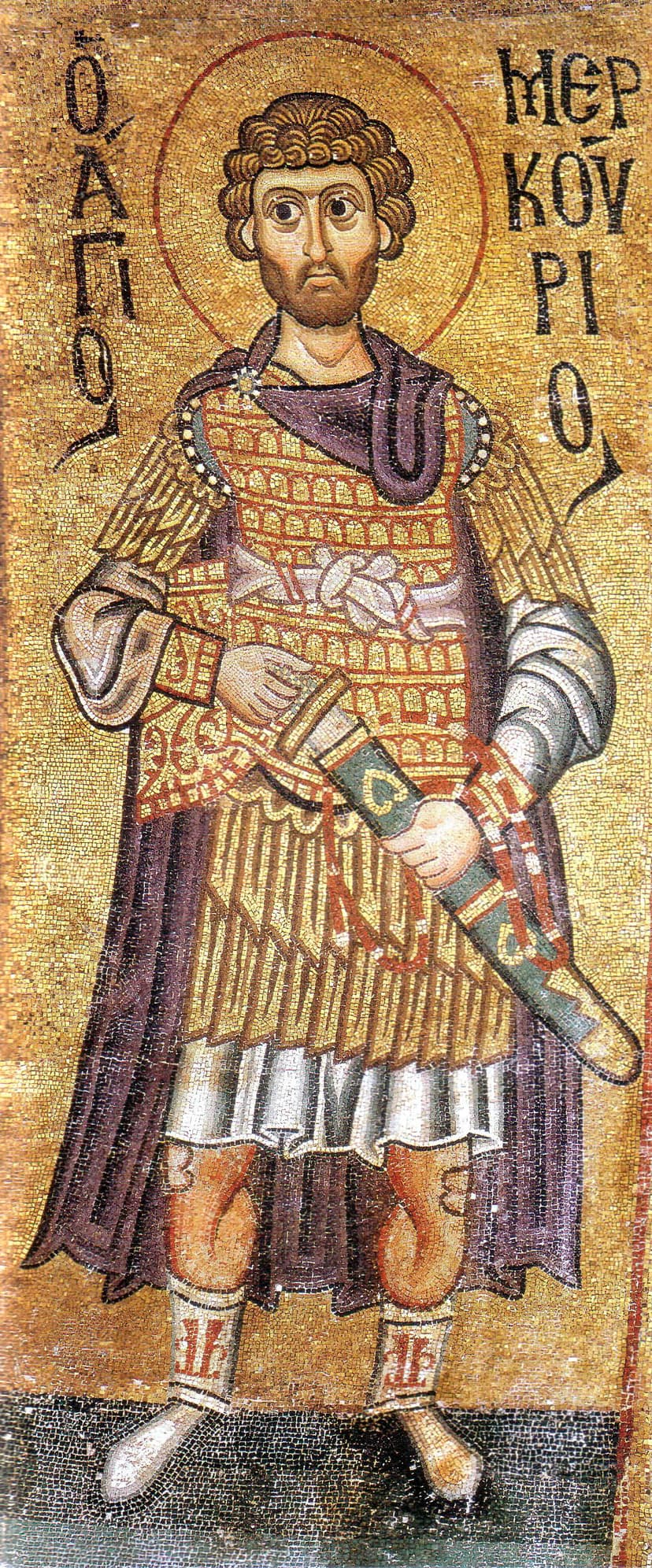
Mercurius Philopateer
Saint Mercurius Philopateer was a Roman soldier of Scythian descent who became a Christian martyr in the 3rd century. He is venerated for his military prowess and his unwavering faith, particularly for the tradition that he killed Emperor Julian the Apostate. Mercurius is widely known by the Arabic name Abu Sayfain, meaning "wielder of two swords," symbolizing his earthly and heavenly weapons.
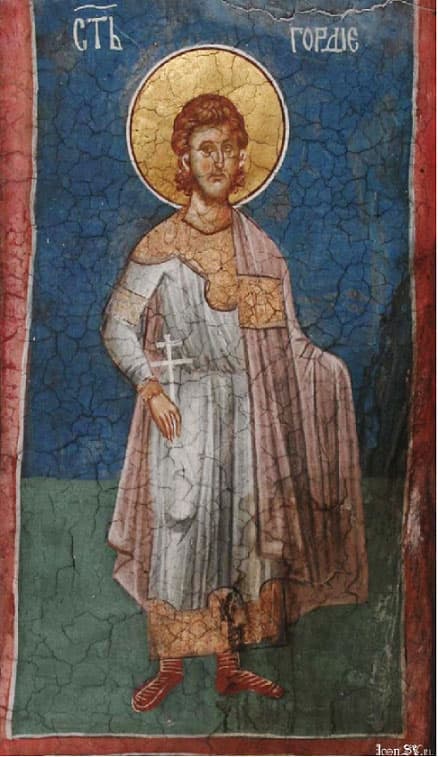
Gordius
Saint Gordius was a Christian soldier in Cappadocia who, after being dismissed from the Roman army, lived as a hermit. He later returned to Caesarea Maritima and openly declared his faith, leading to his martyrdom by beheading. He is remembered for his zealous confession and the panegyric delivered by Saint Basil the Great.