
Gordius
January 3·4th century·Cappadocia
Saint Gordius was a Christian soldier in Cappadocia who, after being dismissed from the Roman army, lived as a hermit. He later returned to Caesarea Maritima and openly declared his faith, leading to his martyrdom by beheading. He is remembered for his zealous confession and the panegyric delivered by Saint Basil the Great.
Key Facts
- ›Gordius was a Christian soldier in Cappadocia.
- ›He was dismissed from the Roman army during a persecution.
- ›He initially lived as a hermit before returning to Caesarea.
- ›Gordius made an open declaration of his faith before a crowd.
- ›He was condemned to be beheaded and martyred.
- ›Saint Basil the Great delivered a panegyric in his honor.
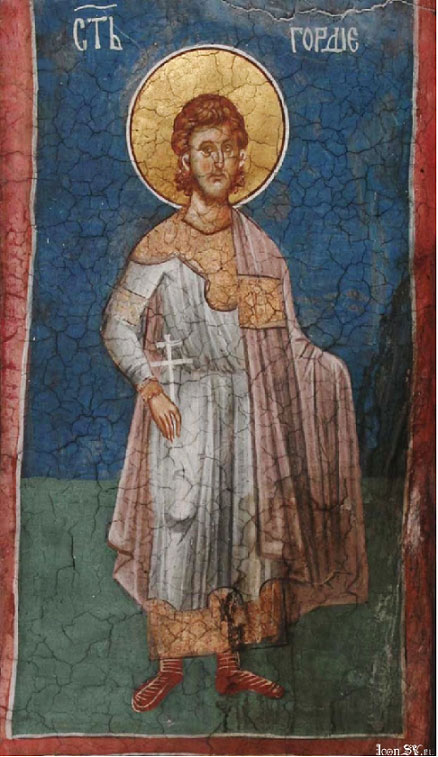
Gordinus
About Gordius
Saint Gordius
Saint Gordius was a Christian soldier whose life and martyrdom are recorded in early Christian hagiography. He is venerated as a martyr, with his feast day observed on January 3rd by both the Roman Catholic Church and the Eastern Orthodox Church. Historical accounts suggest he lived and died in Cappadocia.
Life and Historical Context
Gordius served as a centurion in the Roman army. During a period of persecution against Christians, which sources indicate may have been initiated by Emperor Diocletian or occurred during the reign of Emperor Licinius, he was dismissed from his military service. Following his dismissal, Gordius sought solitude and lived as a hermit for some time. However, his commitment to his faith eventually led him to return to the city of Caesarea Maritima.
Martyrdom
Upon his return to Caesarea, Gordius, moved by religious zeal, addressed a crowd gathered for public games honoring Mars. He openly declared his Christian faith, a bold act that led to his arrest and trial. The governor condemned him to be beheaded. Historical accounts emphasize his joyful acceptance of his fate, fortifying himself with the sign of the cross before receiving the fatal blow. His death is estimated to have occurred between 314 and 320 AD.
Veneration and Legacy
Saint Basil the Great, a prominent theologian and bishop, delivered an eloquent panegyric in honor of Saint Gordius on his feast day in Caesarea. This discourse, which noted that some in the audience had witnessed Gordius's martyrdom, has been instrumental in preserving his memory and elevating his status as a saint. Gordius is remembered as a confessor and martyr who exemplifies steadfast faith in the face of persecution.
Source: Wikipedia ↗
Frequently Asked Questions
Who was Saint Gordius?
Saint Gordius was a Christian soldier in Cappadocia who was martyred for his faith. He was dismissed from the Roman army, lived as a hermit, and then openly declared his Christian beliefs, leading to his execution.
When and where did Saint Gordius die?
Saint Gordius died in Caesarea Maritima, Cappadocia, around the year 320 AD. His martyrdom occurred during a period of persecution against Christians.
How was Saint Gordius martyred?
Saint Gordius was condemned to be martyred by beheading. He joyfully received the fatal blow after confessing his faith before the governor.
What is Saint Gordius remembered for?
He is remembered for his courageous open declaration of faith and his martyrdom. His memory is particularly preserved through a panegyric delivered by Saint Basil the Great.
What is the feast day of Saint Gordius?
The feast day for Saint Gordius is observed on January 3rd in both the Eastern Orthodox Church and the Roman Catholic Church.
Related Saints
George of Lydda
Saint George was an early Christian martyr, likely a soldier in the Roman army, venerated for his unwavering faith and refusal to recant it during the Diocletianic Persecution. He is famously remembered for the legend of slaying a dragon to save a princess and is revered as a prominent military saint and one of the Fourteen Holy Helpers. His widespread veneration spans across Christianity, with respect also shown by Druze and some Muslims.
Menas of Egypt
Menas of Egypt was a Coptic soldier in the Roman army who became a martyr and wonder-worker in the early 4th century. He is highly venerated in both Eastern and Western Christianity for his numerous attributed miracles and his steadfast refusal to renounce his faith. Menas is chiefly remembered as a protector of pilgrims and merchants and for his healing powers.
Hermias
Hermias of Comana was a 2nd-century soldier in the Roman army who became an early Christian martyr. After confessing his faith, he endured severe torture and miraculous survivals before being beheaded. He is remembered for his unwavering faith in Christ despite immense suffering.