
George of Lydda
April 23·4th century·Middle East
Saint George was an early Christian martyr, likely a soldier in the Roman army, venerated for his unwavering faith and refusal to recant it during the Diocletianic Persecution. He is famously remembered for the legend of slaying a dragon to save a princess and is revered as a prominent military saint and one of the Fourteen Holy Helpers. His widespread veneration spans across Christianity, with respect also shown by Druze and some Muslims.
Key Facts
- ›George was a Roman military officer of Cappadocian Greek descent.
- ›He was martyred under Roman Emperor Diocletian for refusing to renounce his Christian faith.
- ›His feast day is traditionally celebrated on April 23rd.
- ›The legend of Saint George and the Dragon, though a later addition, is his most widely known exploit.
- ›He is venerated as a prominent military saint and one of the Fourteen Holy Helpers in Roman Catholicism.
- ›His relics are traditionally believed to be in a sarcophagus at the Church of Saint George in Lydda (Lod, Israel).
George of Lydda, Saint George, Γεώργιος, Jerjis, Girgus
England, Portugal, Georgia, Ukraine, Moscow, Beirut, Soldiers, Farmers, Shepherds, Dragon Slayers
Dragon, Lance, Sword, Horse
About George of Lydda
Saint George
Saint George, also known as George of Lydda, stands as one of the most revered figures in Christian tradition, celebrated as an early Christian martyr and a powerful symbol of faith and courage. While historical details of his life are sparse, tradition holds that he was a soldier in the Roman army, likely of Cappadocian Greek descent, who served in the Praetorian Guard under Emperor Diocletian. His martyrdom is linked to the Diocletianic Persecution, during which he is said to have been sentenced to death for refusing to renounce his Christian beliefs.
Historical Context and Legend
Very little is definitively known about Saint George's life beyond his status as a martyr. Early sources offer conflicting information, but a consensus places his martyrdom in the late 3rd or early 4th century, likely in or near Lydda (Diospolis), Palestine. The veneration of Saint George dates back to at least the 5th century, with evidence of churches dedicated to him existing from the 4th century.
The most enduring and widely recognized aspect of Saint George's story is the legend of his battle with a dragon. This narrative, which emerged later and is not part of the earliest hagiographies, depicts George saving a princess and an entire city from a fearsome dragon by slaying it with his lance. This tale, popularized by texts like the Golden Legend, cemented his image as a heroic warrior and protector.
Veneration and Legacy
Saint George is venerated across numerous Christian denominations, including Catholic, Orthodox, and Anglican traditions. He is particularly honored as a military saint, a role that gained prominence following the Crusades. His feast day is traditionally celebrated on April 23rd. Beyond Christianity, George is respected by Druze and some Muslims, who recognize him as a martyr of faith.
His patronage is extensive, claimed by countries such as England, Portugal, Georgia, and Ukraine, as well as cities like Moscow and Beirut, and numerous professions and organizations. The Church of Saint George in Lydda, now Lod, Israel, is traditionally believed to house his relics. The legend of Saint George and the Dragon, along with his historical significance as a martyr, continues to inspire devotion and symbolize the triumph of good over evil.
Source: Wikipedia ↗
Frequently Asked Questions
Who was Saint George?
Saint George was an early Christian martyr, believed to have been a soldier in the Roman army, who is venerated for his steadfast faith. He is most famously known through the legend of him slaying a dragon.
When was Saint George martyred?
Historical accounts suggest Saint George was martyred around the end of the third or the beginning of the fourth century, with his death traditionally dated to April 23, 303, during the Diocletianic Persecution.
What is the legend of Saint George and the Dragon?
The legend describes Saint George arriving in the city of Silene, Libya, where a dragon was terrorizing the inhabitants. To appease the beast, the townspeople sacrificed people, and when the king's daughter was chosen, George intervened, slew the dragon with his lance, and saved her, leading to the townspeople's conversion.
Why is Saint George venerated as a military saint?
George was a soldier in the Roman army, and his martyrdom occurred during a persecution that targeted Christians within the military. His legendary combat against the dragon also solidified his image as a heroic warrior, leading to his widespread veneration as a military saint, particularly since the Crusades.
Where are Saint George's relics believed to be?
The Church of Saint George in Lydda (modern-day Lod, Israel) traditionally houses a sarcophagus believed to contain Saint George's relics. Pilgrims can visit the monastery there to see the tomb and fragments of his relics.
Is Saint George recognized by Muslims?
Yes, Saint George, known as Jirjis or Girgus in Arabic, is included in some Muslim texts as a prophetic figure and is respected as a martyr of monotheistic faith.
Related Saints
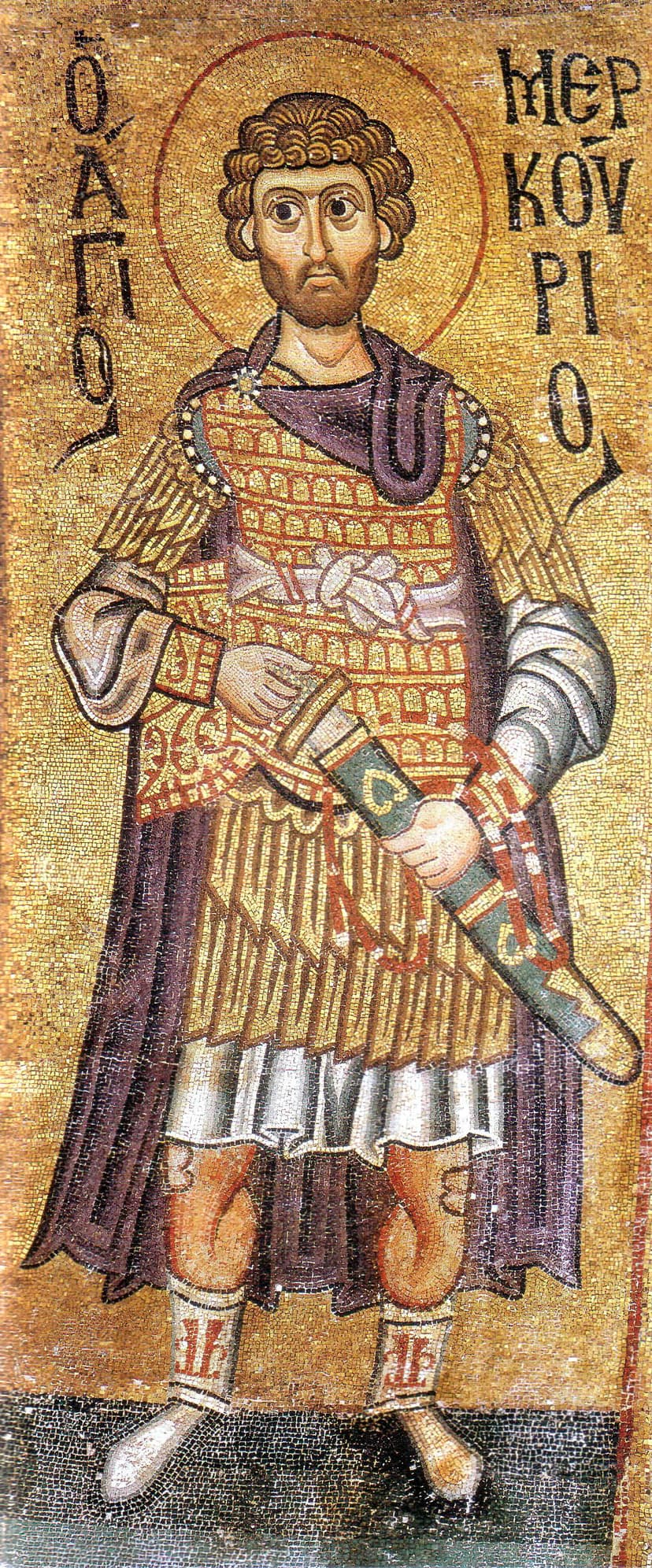
Mercurius Philopateer
Saint Mercurius Philopateer was a Roman soldier of Scythian descent who became a Christian martyr in the 3rd century. He is venerated for his military prowess and his unwavering faith, particularly for the tradition that he killed Emperor Julian the Apostate. Mercurius is widely known by the Arabic name Abu Sayfain, meaning "wielder of two swords," symbolizing his earthly and heavenly weapons.
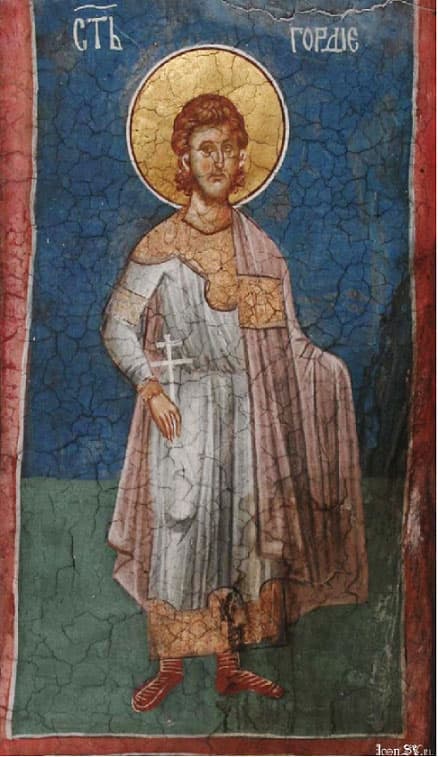
Gordius
Saint Gordius was a Christian soldier in Cappadocia who, after being dismissed from the Roman army, lived as a hermit. He later returned to Caesarea Maritima and openly declared his faith, leading to his martyrdom by beheading. He is remembered for his zealous confession and the panegyric delivered by Saint Basil the Great.
Menas of Egypt
Menas of Egypt was a Coptic soldier in the Roman army who became a martyr and wonder-worker in the early 4th century. He is highly venerated in both Eastern and Western Christianity for his numerous attributed miracles and his steadfast refusal to renounce his faith. Menas is chiefly remembered as a protector of pilgrims and merchants and for his healing powers.