
Mercurius Philopateer
December 4·3rd century·Turkey
Saint Mercurius Philopateer was a Roman soldier of Scythian descent who became a Christian martyr in the 3rd century. He is venerated for his military prowess and his unwavering faith, particularly for the tradition that he killed Emperor Julian the Apostate. Mercurius is widely known by the Arabic name Abu Sayfain, meaning "wielder of two swords," symbolizing his earthly and heavenly weapons.
Key Facts
- ›Mercurius was born in Eskentos, Cappadocia, around 225 AD.
- ›He served in the Roman army under Emperor Decius.
- ›According to tradition, he was given a divine sword by the Archangel Michael.
- ›Mercurius refused to renounce his Christian faith when ordered to sacrifice to pagan gods.
- ›He was beheaded on December 4, 250 AD, at the age of 25.
- ›He is traditionally credited with killing Emperor Julian the Apostate during a campaign in Persia.
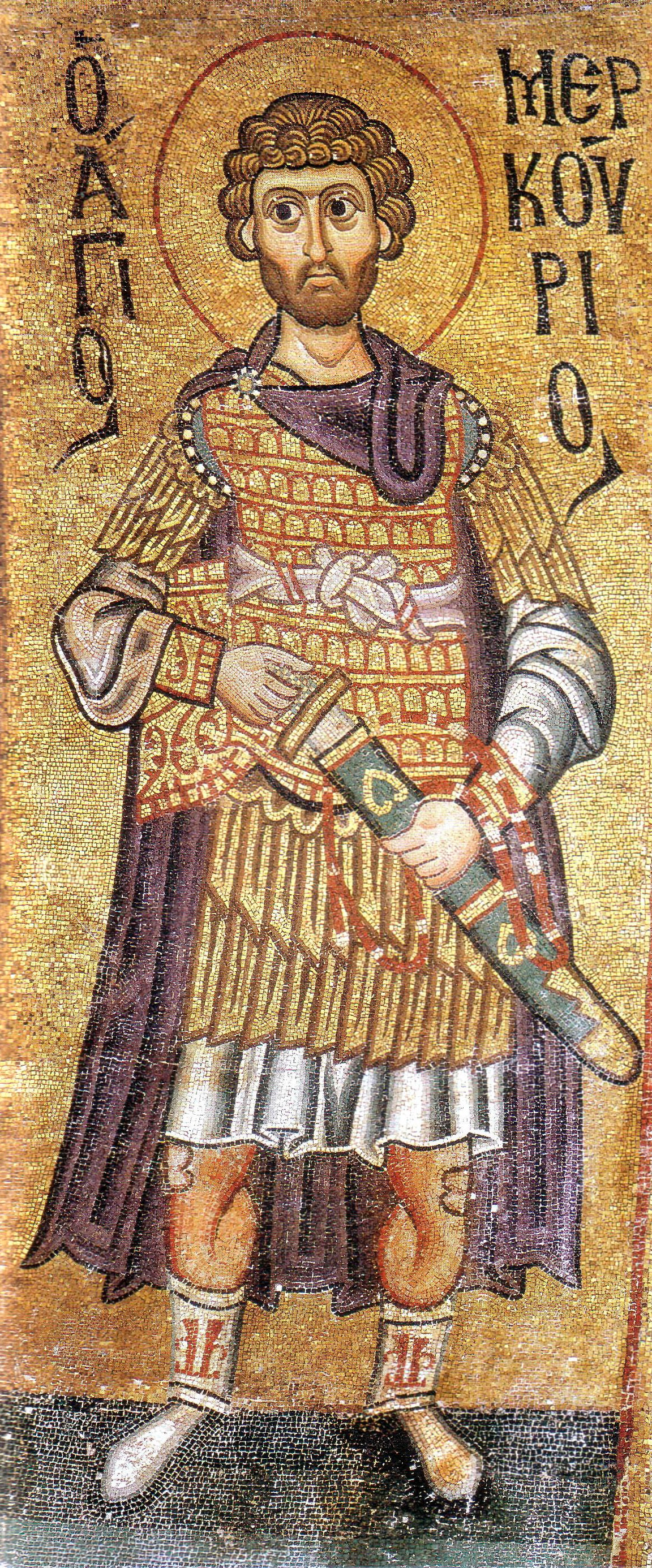
Philopateer, Philopatyr, Abu Sayfain, Abu-Sifin, Abū Seifēn
Two Swords, Spear
About Mercurius Philopateer
Saint Mercurius Philopateer was a Roman soldier of Scythian descent who lived in the 3rd century and is venerated as a Christian martyr. Born around 225 AD in Eskentos, Cappadocia, in Asia Minor, he was raised in a Christian household, his parents having converted to the faith and given him the name Philopateer, meaning 'Lover of the Father.' Upon reaching adulthood, he enlisted in the Roman army during the reign of Emperor Decius, where his strength, courage, and swordsmanship earned him significant respect.
Military Career and Divine Intervention
Mercurius distinguished himself in numerous battles. A key moment in his military career, according to tradition, occurred during a barbarian invasion when the Archangel Michael appeared to him, bestowing a shining sword. This event led to him being known as Abu Sayfain, or 'wielder of two swords,' symbolizing his earthly and divine weapons. With this divine aid, he achieved victory, and Emperor Decius promoted him to the rank of prince.
Martyrdom and Legacy
Despite his military success, Emperor Decius initiated a persecution of Christians in 249 AD, demanding sacrifices to pagan gods. Mercurius, steadfast in his faith, refused. When summoned by the emperor, he declared himself a Christian, stating his devotion only to Jesus Christ. Despite attempts at persuasion and torture, he remained firm. Fearing unrest due to his popularity, Decius ordered Mercurius to be stripped of his rank, bound, and beheaded on December 4, 250 AD, at the age of 25.
A prominent tradition also associates Mercurius with the death of Emperor Julian the Apostate. It is believed that Mercurius, through his intercession or direct action, was instrumental in Julian's mortal wounding during his campaign in Persia, thus ending Julian's efforts to suppress Christianity. His relics were later discovered and transferred, with a significant portion finding its way to Egypt, where he is particularly venerated, notably at the Abu Sefein Monastery in Cairo.
Source: Wikipedia ↗
Frequently Asked Questions
Who was Saint Mercurius Philopateer?
Saint Mercurius Philopateer was a Roman soldier of Scythian descent who lived in the 3rd century. He is revered as a Christian martyr for his refusal to renounce his faith and his eventual beheading.
What is the meaning of Abu Sayfain?
Abu Sayfain is an Arabic name for Mercurius, meaning 'wielder of two swords.' This refers to his military sword and the divine sword he received from the Archangel Michael.
What is the traditional story of his martyrdom?
According to tradition, Emperor Decius ordered Christians to sacrifice to pagan gods. Mercurius refused and declared himself a Christian, leading to his torture and beheading.
Is Saint Mercurius credited with killing Julian the Apostate?
Yes, a significant tradition holds that Saint Mercurius was the soldier who mortally wounded Emperor Julian the Apostate during his campaign in Persia, preventing further persecution of Christians.
Where are the relics of Saint Mercurius kept?
Part of Saint Mercurius's relics were transferred to Egypt and are venerated in churches there, including the Abu Sefein Monastery in Cairo.
Related Saints
Hermias
Hermias of Comana was a 2nd-century soldier in the Roman army who became an early Christian martyr. After confessing his faith, he endured severe torture and miraculous survivals before being beheaded. He is remembered for his unwavering faith in Christ despite immense suffering.
George of Lydda
Saint George was an early Christian martyr, likely a soldier in the Roman army, venerated for his unwavering faith and refusal to recant it during the Diocletianic Persecution. He is famously remembered for the legend of slaying a dragon to save a princess and is revered as a prominent military saint and one of the Fourteen Holy Helpers. His widespread veneration spans across Christianity, with respect also shown by Druze and some Muslims.
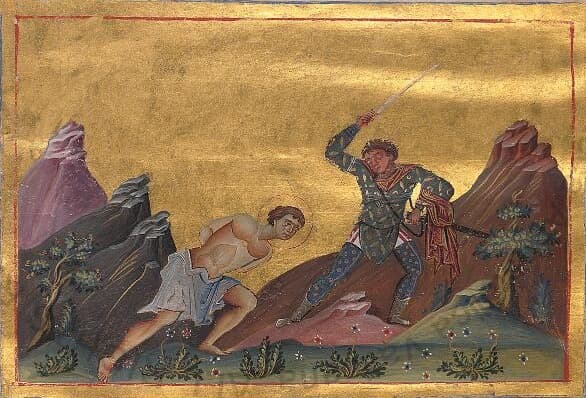
Alexander of Rome
Alexander of Rome was a Christian martyr who served as a Roman soldier. He is remembered for his refusal to offer sacrifice to Jupiter, which led to his martyrdom during the reign of Emperor Maximian Hercules. His mother, Pimenia, witnessed his death and buried him.