
Basil the Great
Basil the Great was an influential bishop of Caesarea Mazaca in Cappadocia and a theologian who championed the Nicene Creed. He is chiefly remembered for his foundational writings on monasticism and his establishment of the Basileias, an early Christian hospital for the poor.
Key Facts
- ›He served as Bishop of Caesarea Mazaca from 370 to 379.
- ›Basil supported the Nicene Creed and opposed heresies like Arianism.
- ›He established guidelines for monastic life focused on community, prayer, and labor.
- ›Together with Pachomius, he is considered a father of communal monasticism in Eastern Christianity.
- ›He is recognized as a Doctor of the Church by the Roman Catholic Church.
- ›Basil, his brother Gregory of Nyssa, and friend Gregory of Nazianzus are known as the Cappadocian Fathers.
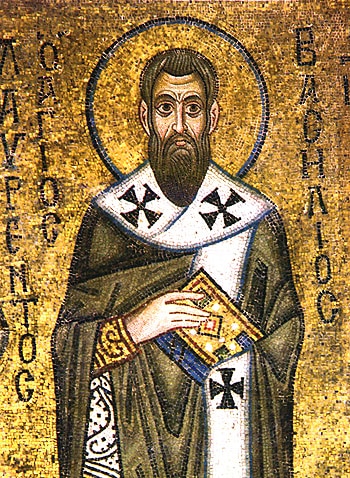
Saint Basil the Great, Ouranophantor
About Basil the Great
Basil of Caesarea, known as Saint Basil the Great, was a pivotal figure in early Christianity, serving as Bishop of Caesarea Mazaca in Cappadocia from 370 until his death in 379. He was a significant theologian who staunchly supported the Nicene Creed and actively contested heresies that threatened the unity of the early Church, notably Arianism and Apollinarianism.
Life and Historical Context
Born around 330 into a devout and wealthy Cappadocian Greek family, Basil received a distinguished education. He studied in Caesarea Mazaca and later in Athens, where he formed lasting friendships, including with the future emperor Julian the Apostate and Gregory of Nazianzus. After practicing law and teaching rhetoric, Basil experienced a profound spiritual awakening and dedicated his life to God. He embarked on extensive travels to study asceticism and monasticism in regions like Palestine, Egypt, and Syria.
Dissatisfied with solitary asceticism, Basil became drawn to communal religious life. By 358, he had founded a monastic settlement on his family's estate near Annesi, where his mother and sister also joined him. Here, he developed seminal writings on communal monasticism, which became foundational for Eastern Christian traditions. His theological journey led him to embrace the Nicene Creed fully, becoming a powerful advocate for its doctrines.
Ministry and Contributions
Ordained as a deacon in 362 and later as a presbyter in 365, Basil eventually succeeded Eusebius as Bishop of Caesarea in 370. In this role, he demonstrated remarkable administrative and pastoral care. During a famine, he personally organized soup kitchens and distributed food to the poor. He worked to reform those on the margins of society and diligently selected worthy candidates for holy orders. His most enduring institutional legacy is the Basileias, a large complex located outside Caesarea that served as a poorhouse, hospital, and hospice.
Basil was a formidable opponent of Arianism, engaging in theological debates and corresponding with church leaders like Pope Damasus. Despite facing opposition and banishment orders from Emperor Valens, Basil's conviction and influence were such that governmental power over the Church was notably defined by their interactions. His theological works, including "On the Holy Spirit" and "Refutation of the Apology of the Impious Eunomius," remain important contributions to Christian doctrine.
Legacy
Basil the Great is honored as one of the four Great Greek Church Fathers and is recognized as a Doctor of the Church by the Roman Catholic Church. Together with his brother Gregory of Nyssa and friend Gregory of Nazianzus, he is known as one of the Cappadocian Fathers. The Eastern Orthodox Church and Eastern Catholic Churches bestow upon him the title of Great Hierarch, alongside Gregory of Nazianzus and John Chrysostom. His liturgical contributions include the "Divine Liturgy of Saint Basil the Great," which is still used in the Byzantine tradition. His influence on monasticism, both in the East and West, is profound, shaping the lives of countless monks and nuns for centuries.
Source: Wikipedia ↗
Frequently Asked Questions
Who was Basil the Great?
Basil the Great was an influential early Christian bishop of Caesarea Mazaca in Cappadocia. He was a theologian who supported the Nicene Creed and a key figure in the development of Christian monasticism.
What is Basil the Great most remembered for?
He is chiefly remembered for his significant contributions to monastic life, establishing guidelines for communal living and prayer. His establishment of the Basileias, an institution for the poor that functioned as a hospital, is also a major part of his legacy.
What role did Basil the Great play in early Church theology?
Basil was a staunch supporter of the Nicene Creed and actively opposed heresies such as Arianism and Apollinarianism. His theological writings, particularly on the Holy Spirit, were crucial in defining orthodox Christian doctrine.
What was the Basileias?
The Basileias, established by Basil, was a large complex outside Caesarea that served as a poorhouse, hospice, and hospital. It is considered one of the earliest forms of a Christian hospital dedicated to the poor and infirm.
What is Basil the Great's connection to monasticism?
Basil is regarded as a father of communal monasticism in Eastern Christianity. He established guidelines for monastic life that emphasized community, liturgical prayer, and manual labor, which greatly influenced subsequent monastic traditions.
Who were the Cappadocian Fathers?
The Cappadocian Fathers were three influential theologians from Cappadocia: Basil the Great, his brother Gregory of Nyssa, and their friend Gregory of Nazianzus. They played a vital role in shaping early Christian doctrine and theology.
Related Saints
Basil of Caesarea
Basil of Caesarea, also known as Saint Basil the Great, was an influential early Christian theologian and bishop who lived from approximately 330 to 379 AD. He is remembered for his support of the Nicene Creed, his opposition to heresies like Arianism, and his pioneering work in establishing Christian hospitals and monastic communities. His enduring legacy includes his theological writings, liturgical contributions, and his role as a father of communal monasticism.
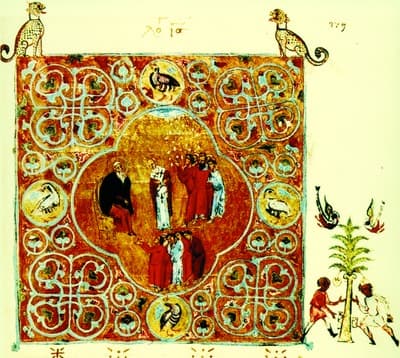
Gregory of Nazianzus the Elder
Gregory of Nazianzus the Elder was the bishop of Nazianzus in Cappadocia. He is primarily remembered as the patriarch of a significant ecclesiastical family, including his son Gregory the Younger, who became Patriarch of Constantinople. He converted to Christianity from the Hypsistarian sect, influenced by his wife Nonna, and later financed the construction of a church.
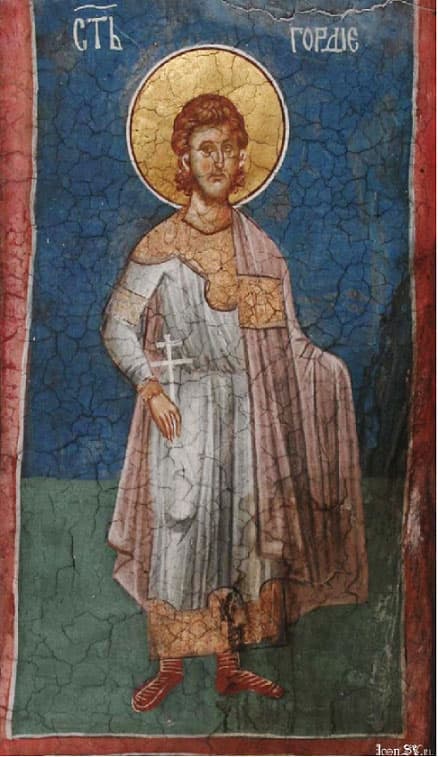
Gordius
Saint Gordius was a Christian soldier in Cappadocia who, after being dismissed from the Roman army, lived as a hermit. He later returned to Caesarea Maritima and openly declared his faith, leading to his martyrdom by beheading. He is remembered for his zealous confession and the panegyric delivered by Saint Basil the Great.