
Gregory of Nazianzus the Elder
Gregory of Nazianzus the Elder was the bishop of Nazianzus in Cappadocia. He is primarily remembered as the patriarch of a significant ecclesiastical family, including his son Gregory the Younger, who became Patriarch of Constantinople. He converted to Christianity from the Hypsistarian sect, influenced by his wife Nonna, and later financed the construction of a church.
Key Facts
- ›He was the bishop of Nazianzus in Cappadocia.
- ›He was a member of the Hypsistarians, a Jewish-pagan sect.
- ›His wife Nonna convinced him to convert to Christianity around 325.
- ›He financed the construction of a church in his region.
- ›He briefly subscribed to an Arian understanding of the Trinity but quickly renounced it.
- ›His sons were Caesarius of Nazianzus and Gregory the Younger.
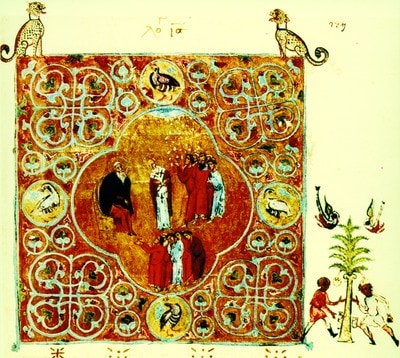
Gregory the Elder
About Gregory of Nazianzus the Elder
Gregory of Nazianzus the Elder (c. 276 – 374) served as the bishop of Nazianzus in the Roman province of Cappadocia. While he held this ecclesiastical office, he is more widely remembered as the patriarch of a significant family whose members played important roles in the early Christian church. He was a member of the Hypsistarians, a sect with distinct Jewish-pagan characteristics that worshipped a supreme deity known as Hypsistos. His conversion to Christianity in 325 was notably influenced by his wife, Nonna.
Life and Ministry
Born into a wealthy family, Gregory, with his wife Nonna, also came from affluent backgrounds. Following his conversion, Gregory was able to personally fund the construction of a church in his locality. In 328, he was chosen as the bishop of Nazianzus, a role he maintained throughout his life. Historical records note that Gregory briefly held an Arian view of the Trinity but subsequently renounced this theological position.
Family and Legacy
Gregory and Nonna were the parents of three children. Their daughter, Saint Gorgonia, was recognized for her piety and died only a year after her parents. Their younger son, Caesarius of Nazianzus, pursued a career in medicine, studying in major centers like Caesarea Mazaca and Alexandria. He eventually served as the court physician in Constantinople for Emperors Constantius II and Julian the Apostate, dying in 368. The elder son, also named Gregory, initially served alongside his father as a priest and coadjutor before rising to become the Patriarch of Constantinople. Together, Gregory the Elder and his family represent a prominent lineage within the development of Christian leadership and thought.
Source: Wikipedia ↗
Frequently Asked Questions
Who was Gregory of Nazianzus the Elder?
Gregory of Nazianzus the Elder was a bishop of Nazianzus in Cappadocia. He is primarily recognized for his role as the father of influential figures within the early Christian church, including his son Gregory the Younger, who became Patriarch of Constantinople.
What was Gregory of Nazianzus the Elder's background before converting to Christianity?
Gregory was a member of the Hypsistarians, a sect that worshipped Hypsistos, meaning "Most High" God, and had distinct Jewish-pagan characteristics. He converted to Christianity in 325, persuaded by his wife Nonna.
What was Gregory of Nazianzus the Elder's role as bishop?
He was selected as bishop of Nazianzus in 328 and held this position until his death in 374. He used his personal wealth to finance the construction of a church in the region.
Did Gregory of Nazianzus the Elder hold any heterodox beliefs?
At one point, Gregory briefly subscribed to an Arian understanding of the Trinity. However, historical accounts indicate he quickly renounced this position.
Who were the notable children of Gregory of Nazianzus the Elder?
Gregory and his wife Nonna had three children: Saint Gorgonia, their daughter who was lauded as a model Christian wife; Caesarius of Nazianzus, who became a physician and served as court physician; and their elder son, also named Gregory, known as Gregory the Younger, who became Patriarch of Constantinople.
Related Saints
Basil of Caesarea
Basil of Caesarea, also known as Saint Basil the Great, was an influential early Christian theologian and bishop who lived from approximately 330 to 379 AD. He is remembered for his support of the Nicene Creed, his opposition to heresies like Arianism, and his pioneering work in establishing Christian hospitals and monastic communities. His enduring legacy includes his theological writings, liturgical contributions, and his role as a father of communal monasticism.
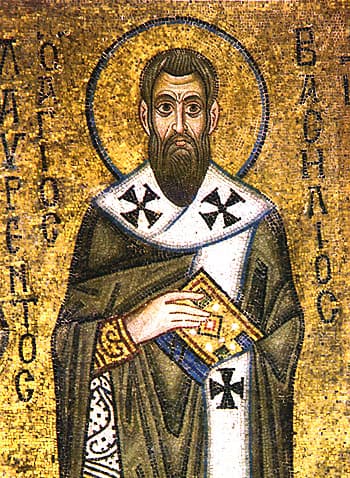
Basil the Great
Basil the Great was an influential bishop of Caesarea Mazaca in Cappadocia and a theologian who championed the Nicene Creed. He is chiefly remembered for his foundational writings on monasticism and his establishment of the Basileias, an early Christian hospital for the poor.
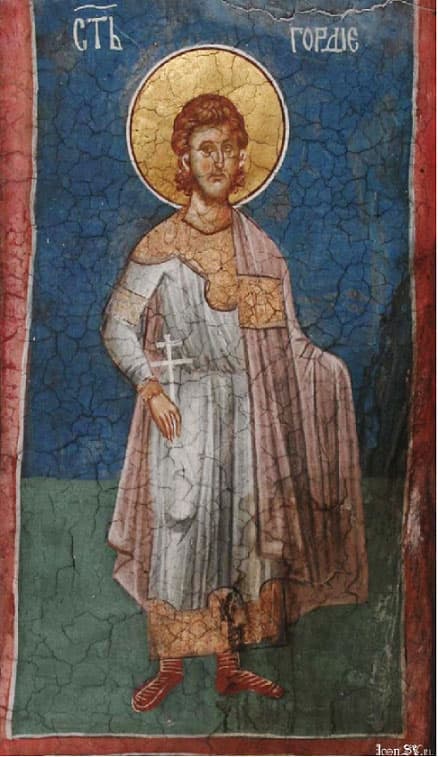
Gordius
Saint Gordius was a Christian soldier in Cappadocia who, after being dismissed from the Roman army, lived as a hermit. He later returned to Caesarea Maritima and openly declared his faith, leading to his martyrdom by beheading. He is remembered for his zealous confession and the panegyric delivered by Saint Basil the Great.