
Maximus of Ungro-Wallachia
January 18·16th century·Serbia
Maximus of Ungro-Wallachia, born Đorđe Branković, was the last male member of the Branković dynasty and titular Despot of Serbia. After relinquishing his titles, he took monastic vows, becoming known as Maksim, and later served as Metropolitan of Belgrade. He is venerated as a saint by the Serbian Orthodox Church for his devotion and role in maintaining morale during tumultuous times.
Key Facts
- ›He was the last male member of the Branković dynasty and titular Despot of Serbia.
- ›He adopted the monastic name Maksim after relinquishing his titles and possessions.
- ›Maximus built the Krušedol monastery and served as a diplomatic envoy for the Prince of Wallachia.
- ›He became Metropolitan of Belgrade in 1513.
- ›His cult was founded to boost morale for Serbs fighting against Ottoman expansion.
- ›He was canonized by the Serbian Orthodox Church after his death.
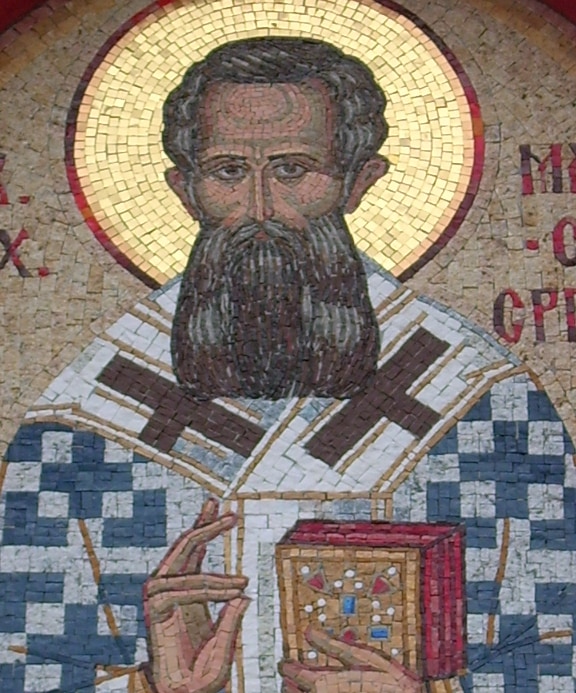
Saint Maksim, Đorđe Branković, George Branković
About Maximus of Ungro-Wallachia
Maximus of Ungro-Wallachia, born Đorđe Branković in 1461, was a significant figure in late medieval Serbian history and later recognized as a saint within the Serbian Orthodox Church. He was the last male descendant of the Branković dynasty and served as the titular Despot of Serbia from 1486. This title was bestowed upon him by Hungarian King Matthias Corvinus, with whom his family had sought refuge and patronage.
Life and Historical Context
Born into a prominent Serbian noble family exiled from their homeland, Đorđe spent his early years in various locations in the Balkans and Italy, reflecting the turbulent political landscape of the era. His father, Stefan Branković, was the last ruling Despot of Serbia before the Ottoman conquest. After his father's death, Đorđe became the principal heir. The family later settled in Carinthia, Austria, under the patronage of Emperor Friedrich III.
In 1486, seeking to re-establish a presence in the region, Đorđe and his brother Jovan were invited to Hungary. King Matthias Corvinus granted Đorđe the title of Despot of Serbia, along with considerable estates in Syrmia. During this period, he married Isabella del Balzo, a noblewoman from the Kingdom of Naples.
From 1493, Đorđe shared the title of Despot with his brother Jovan. However, in 1497, Đorđe made a profound decision to renounce all his secular titles and possessions to his brother. He then embraced monastic life, adopting the name Maksim. He was instrumental in the construction of the Krušedol monastery in Syrmia, which became a spiritual and familial center.
Diplomatic and Ecclesiastical Service
After his monastic transition, Maksim relocated to the Principality of Wallachia, where he was well-received by Prince Radu IV the Great. He undertook important diplomatic missions for the Wallachian court, notably mediating peace between Wallachia and Moldavia in 1507. While his exact ecclesiastical role in Wallachia is debated by historians, some suggest he may have served as a bishop or even Metropolitan there.
Upon returning to Hungary, Maksim assumed the position of Metropolitan of Belgrade in 1513. He served in this capacity until his death in 1516.
Sainthood and Legacy
Following his death on January 18, 1516, early indications of sainthood emerged, particularly as Belgrade fell under Ottoman control. His cult was established at the Krušedol Monastery, where he was buried alongside other family members. This veneration served as a significant morale boost for the Serbs engaged in the ongoing struggle against Ottoman expansion. Hagiographies were written for both Maksim and his mother, Angjelina, further solidifying their spiritual importance.
Maximus of Ungro-Wallachia was canonized by the Serbian Orthodox Church, recognizing his piety, his role in preserving Serbian identity and faith during challenging times, and his contributions to monastic life and ecclesiastical service. His relics were preserved at the Krušedol monastery, though parts were lost during later conflicts.
Source: Wikipedia ↗
Frequently Asked Questions
Who was Maximus of Ungro-Wallachia?
Maximus of Ungro-Wallachia, originally named Đorđe Branković, was the last male member of the Branković dynasty and held the title of Despot of Serbia. He later became a monk and Metropolitan of Belgrade.
Why is Đorđe Branković known as Saint Maksim?
Đorđe Branković adopted the monastic name Maksim after relinquishing his secular titles. He is venerated as Saint Maksim by the Serbian Orthodox Church, which canonized him.
What significant buildings or institutions are associated with Maximus?
Maximus is credited with building the Krušedol monastery in the region of Syrmia, which became a significant religious site and burial place for his family.
What was Maximus's role in Wallachia?
In Wallachia, he was welcomed by Prince Radu IV the Great, who entrusted him with diplomatic missions. He successfully mediated peace between Wallachia and Moldavia in 1507.
When and how did Maximus die?
Maximus died on January 18, 1516. While the exact circumstances are not detailed, he is generally considered to have died of natural causes.
What is the significance of his sainthood and cult?
His cult was founded after his death to serve as a morale booster for Serbs fighting against Ottoman expansion. His sainthood by the Serbian Orthodox Church recognizes his devotion and spiritual leadership.
Related Saints
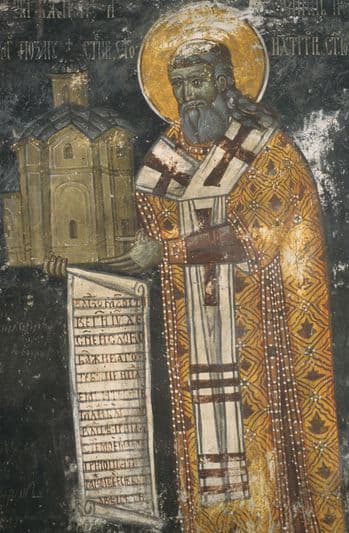
Macarius of Serbia
Macarius of Serbia was the first Patriarch of the restored Serbian Patriarchate of Peć, serving from 1557 to 1571. His re-establishment of the patriarchate, with the influence of his kinsman Grand Vizier Mehmed-paša Sokolović, marked a significant revival for the Serbian Orthodox Church and culture. He is venerated as a saint within the Serbian Orthodox Church.
Euthymius of Dečani
Venerable Euthymius of Dečani was a 16th-century Serbian monk who became a martyr during the Ottoman invasion of Medieval Serbia. He is primarily remembered for his martyrdom, with his feast day celebrated by the Serbian Orthodox Church.
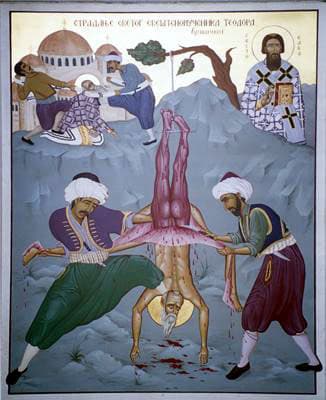
Theodore of Vršac
Theodore of Vršac was a Serbian Orthodox Bishop who led the Banat Uprising against Ottoman occupation in 1594. He is remembered as a hieromartyr for organizing the revolt and being brutally executed by Sinan Pasha. Theodore was canonized by the Serbian Orthodox Church in 1994.