
Joseph the Hymnographer
April 3·9th century·Byzantine Empire
Joseph the Hymnographer was a ninth-century Greek monk, celebrated as one of the Eastern Orthodox Church's greatest liturgical poets and hymnographers. He is also remembered for his staunch confession of Orthodox faith against Iconoclasm. His prolific writings and monastic foundations left a significant mark on Byzantine liturgical tradition.
Key Facts
- ›Born around 816 AD in Sicily to devout parents, Plotinus and Agatha.
- ›Fled Sicily due to Arab invasion and became a monk at age fifteen in Thessalonica.
- ›Ordained a hieromonk around 840 and later invited to join the Stoudios Monastery in Constantinople.
- ›Sent on a mission to Rome but captured and enslaved in Crete before regaining freedom.
- ›Founded a monastery dedicated to his mentor, Gregory of Dekapolis, in 855.
- ›Exiled in 858 for denouncing Caesar Bardas, returning to Constantinople in 867.
- ›Appointed skeuophylax of the Great Church of Constantinople and later accompanied Patriarch Photius into banishment.
- ›Died on April 3, 886 AD.
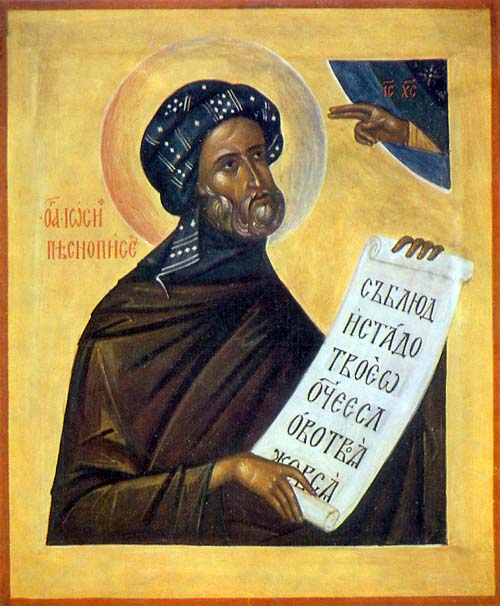
Ósios Iosif o Ymnográfos
Book, Manuscript
About Joseph the Hymnographer
Joseph the Hymnographer, also known by his Greek name Ósios Iosif o Ymnográfos, was a significant figure in the ninth-century Eastern Orthodox Church. He is primarily celebrated as one of the most accomplished liturgical poets and hymnographers, whose work profoundly influenced the church's musical and poetic traditions. Beyond his creative output, he is also recognized for his steadfast defense of Orthodox iconography during the period of Iconoclasm.
Life and Ministry
Born around 816 AD in Sicily to devout parents, Joseph's early life was marked by displacement. His family was forced to flee their homeland due to the Arab invasion of Sicily, eventually settling in the Peloponnese. At the age of fifteen, he embraced monastic life, being tonsured a monk at the Latomos Monastery in Thessalonica. By approximately 840, he was ordained a hieromonk (priest-monk). His spiritual character impressed Gregory of Dekapolis, who invited him to join the renowned Stoudios Monastery in Constantinople.
During a resurgence of Iconoclasm, Joseph was sent by Gregory on a mission to Rome. However, his journey was interrupted when he was captured by pirates and sold into slavery in Crete. According to hagiographical accounts, he experienced a divine apparition from Saint Nicholas, which led to his freedom and eventual return to Constantinople. Following the death of Emperor Theophilos and the restoration of icons, Joseph experienced a triumphal return, though the precise timing relative to his mentor Gregory's death is debated.
Joseph was instrumental in monastic foundations. In 855, he established a monastery dedicated to Gregory of Dekapolis. He also engaged in ascetic practices in a sanctuary dedicated to St. John Chrysostom, attracting followers. His later life saw him exiled in 858 for denouncing Caesar Bardas, but he returned to Constantinople in 867. He held a respected position as skeuophylax (keeper of sacred vessels) in the Great Church of Constantinople and later accompanied Patriarch Photius into exile. He was also credited with inspiring the first missionaries to Russia and was appointed by Photius as a spiritual father and confessor for priests, known for his discernment.
Hymnography and Legacy
Joseph the Hymnographer's extensive contributions to hymnography are a cornerstone of his legacy. Attributing specific works, however, presents challenges due to confusion with another contemporary, Joseph, Archbishop of Thessalonica. Scholarly efforts have attributed hundreds of canons and other liturgical poetic forms to him, impacting texts like the menaion, parakletike, triodion, and pentekostarion. While some research suggests he may have been an author or even inventor of certain liturgical repertoires, earlier sources offer a more nuanced view of his role in reordering and enriching existing traditions.
He is venerated on April 3 in the Greek tradition and on April 4 in the Slavic rite, with a commemoration also noted in the Roman Catholic Church's 2004 Martyrologium Romanum. Joseph the Hymnographer's enduring influence lies in his masterful liturgical poetry and his example of steadfast faith and monastic dedication.
Source: Wikipedia ↗
Frequently Asked Questions
Who was Joseph the Hymnographer?
Joseph the Hymnographer was a prominent Greek monk of the ninth century, renowned for his contributions to liturgical poetry and hymnography in the Eastern Orthodox Church. He was also a confessor of the Orthodox Faith during the period of Iconoclasm.
What is Joseph the Hymnographer remembered for?
He is primarily remembered as one of the greatest liturgical poets and hymnographers of the Eastern Orthodox Church. His steadfast confession of faith against Iconoclasm is also a significant aspect of his legacy.
Where was Joseph the Hymnographer born and when did he live?
Joseph the Hymnographer was born around 816 AD in Sicily and died on April 3, 886 AD. His life spanned the crucial ninth century in the Byzantine Empire.
Did Joseph the Hymnographer face any significant hardships?
Yes, his family fled Sicily due to an Arab invasion. Later, while en route to Rome, he was captured by pirates and sold into slavery in Crete, from which he was miraculously freed.
What role did Joseph the Hymnographer play in monasticism?
He was tonsured a monk at a young age and later founded a monastery dedicated to his mentor, Gregory of Dekapolis. He also served as a spiritual father and confessor for priests.
Is there confusion regarding his hymns?
Yes, due to another prominent figure named Joseph, the Archbishop of Thessalonica, there is often confusion in attributing specific hymns to Joseph the Hymnographer. The exact authorship of some poems remains a subject of scholarly debate.
Related Saints
Symeon the Studite
Symeon the Studite was an influential lay monk at the Monastery of Stoudios in 10th-century Constantinople, serving as the spiritual father to Symeon the New Theologian. He is remembered for his practical teachings on the spiritual life, documented in forty chapters attributed to him, and for being revered as a saint by his prominent disciple, which caused controversy among church officials. Some contemporary accounts also described him as a Holy Fool.
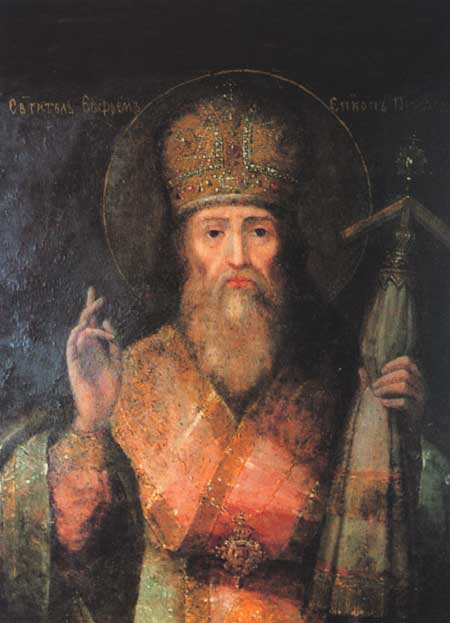
Ephraim of Pereyaslavl
Ephraim of Pereyaslavl was a bishop of Pereyaslavl in the Eastern Orthodox Church, venerated as a saint. He is remembered for his administrative skills before monasticism, his role in implementing the Studite monastic rule in Kiev, and for his extensive building projects in Pereyaslavl, including churches, public buildings, and infrastructure for the poor.
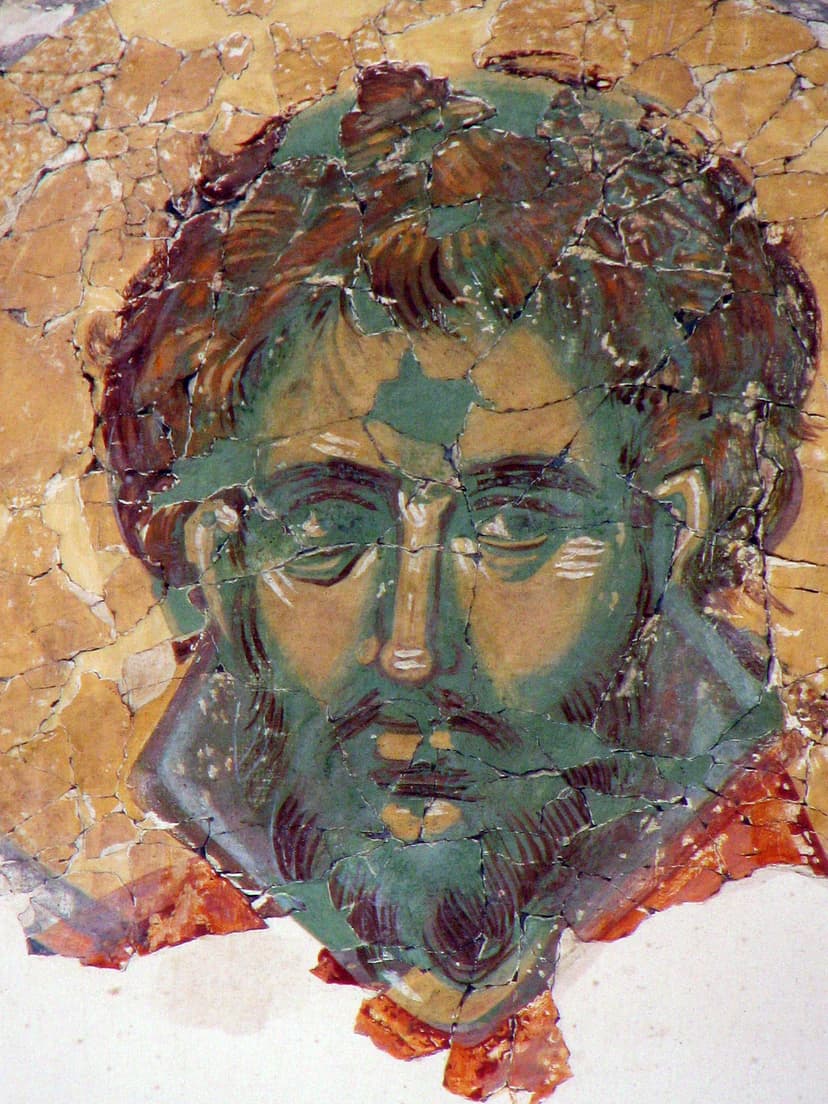
Nicetas of Medikion
Saint Nicetas of Medikion was a 9th-century monk and abbot who became a prominent opponent of Byzantine Iconoclasm. He is remembered for his courageous stand against the heresy of iconoclasm, which led to his imprisonment and exile, and for his ascetic life and reputed wonderworking. His piety and leadership drew many followers to the Medikion Monastery where he served as hegoumenos.