
John of Tella
February 6·6th century·Syria
John of Tella was a 6th-century Syriac Orthodox bishop, theologian, and ascetic, recognized for his pivotal role in preserving the Syriac Orthodox Church during a period of intense persecution in the eastern Byzantine Empire. He is chiefly remembered for his efforts to maintain the non-Chalcedonian hierarchy by organizing the ordination of thousands of clergy and for his theological writings that solidified Miaphysite Christology.
Key Facts
- ›Born near Callinicum (modern-day Raqqa, Syria) in 482 AD.
- ›Ordained bishop of Tella (modern-day Viranşehir, Turkey) around 519 AD.
- ›Organized the ordination of approximately 170,000 priests and deacons to counter Byzantine persecution.
- ›Developed a concept of 'politeia', a network of interconnected clergy, to maintain unity and continuity.
- ›His writings addressed ecclesiastical discipline, Eucharistic theology, and pastoral instruction.
- ›Died in Antioch on February 6, 538 AD, after being captured and mistreated.
John bar Qursos, Yoḥanān d-Tellā, Yoḥanān bar Qursos
Defender of the Orthodox Faith
About John of Tella
John of Tella (482 – February 6, 538 AD), also known as John bar Qursos, was a prominent 6th-century Syriac Orthodox bishop, theologian, and ascetic. He played a crucial role in safeguarding the Miaphysite tradition of the Syriac Orthodox Church amidst severe persecution from the eastern Byzantine Empire and Chalcedonian authorities. John's legacy is deeply intertwined with his efforts to maintain the non-Chalcedonian hierarchy and his theological contributions that fortified the distinct Christology of his church.
Life and Ministry
Born near Callinicum (modern-day Raqqa, Syria), John rejected a secular career for an ascetic life, entering the monastery of Mar Zakkai. He was later ordained bishop of Tella (modern-day Viranşehir, Turkey) around 519 AD. During a period when Emperor Justin I enforced the Council of Chalcedon, John, a staunch Miaphysite, refused to comply, leading to his exile. From exile, he became a central figure in organizing resistance against Chalcedonian imposition. His most significant action was the ordination of an estimated 170,000 priests and deacons throughout the eastern Byzantine provinces, a move designed to ensure the continuity of the non-Chalcedonian hierarchy despite imperial efforts to suppress it. This extensive ordination activity established him as a major leader of the early Miaphysite movement.
John's ministry was marked by a protracted struggle with Ephrem of Antioch, the Chalcedonian patriarch, who sought to integrate Syria into Chalcedonian Christianity. John, in contrast, focused on building a unified community of the faithful across political and cultural divides, a concept he termed 'politeia'. This network aimed to preserve doctrinal purity and uphold Miaphysite Christology against Chalcedonian influence. Despite facing numerous accusations and slander, including charges of treason and rebellion, John remained steadfast in his faith and principles, prioritizing divine law over imperial decrees.
Exile and Death
Following his exile, John continued his pastoral activities and circulation of writings in Persian-controlled territory. His resistance efforts are credited with sparking widespread opposition to Chalcedonian policies in the eastern provinces. Eventually, he was captured in the Sinjar mountains and taken to Antioch, where he was imprisoned and mistreated by Ephrem and his associates. John died in captivity on February 6, 538 AD, at the age of 55.
Theology and Writings
John of Tella's theological work was dedicated to the defense and consolidation of the Miaphysite tradition. He characterized the Council of Chalcedon as a deviation from the apostolic tradition, aligning its followers with Nestorius. His concept of 'politeia' referred to a 'commonwealth' or 'way of life' for the faithful, a structured ecclesiastical system designed to maintain clerical unity and continuity during persecution. This concept drew from Greek philosophical ideas of community and citizenship, as well as early Christian adaptations of the term. His writings, composed mainly in Syriac, addressed ecclesiastical discipline, Eucharistic theology, and pastoral instruction, emphasizing adherence to Miaphysite Christology and rejecting Chalcedonian doctrines.
Legacy
John of Tella is venerated within the Syriac Orthodox Church as a "defender of the orthodox faith" and a "true confessor of the faith." His efforts in preserving the church's hierarchy and his theological writings have had a lasting impact. The model of politeia he established provided a resilient framework for monastic and clerical organization, ensuring the continuation of Syriac Orthodox theology and practice through periods of intense adversity. His commemoration on February 6th marks his significance as one of the most revered figures in early Syriac Christianity.
Source: Wikipedia ↗
Frequently Asked Questions
What was John of Tella's main accomplishment?
John of Tella is best remembered for preserving the Syriac Orthodox Church during severe persecution by organizing the ordination of thousands of priests and deacons. He also developed a concept of 'politeia', a network of clergy working together to maintain the church's hierarchy and doctrine.
Why was John of Tella persecuted?
He was persecuted by Byzantine emperors and Chalcedonian leaders for refusing to accept the Council of Chalcedon and for continuing to ordain non-Chalcedonian clergy. His actions were seen as a challenge to imperial religious policy.
What is John of Tella's 'politeia'?
John of Tella's politeia was a structured network of monks and priests functioning as a unified corporate society of faith. This system was designed to maintain clerical unity and continuity, especially during times of exile and persecution.
What kind of writings did John of Tella produce?
His writings, primarily in Syriac, focused on ecclesiastical discipline, Eucharistic theology, and pastoral instruction. He also authored theological treatises and letters, though many are now lost.
How did John of Tella die?
John of Tella died in Antioch in 538 AD, a year after his capture by Chalcedonian forces with the help of the Persians. He was imprisoned and mistreated by Ephrem of Antioch and his followers until his death.
What is John of Tella venerated for?
He is venerated as a 'defender of the orthodox faith' and a 'true confessor of the faith' for his efforts in safeguarding the creed during imperial suppression. The Syriac Orthodox Church regards him as a highly revered figure.
Related Saints
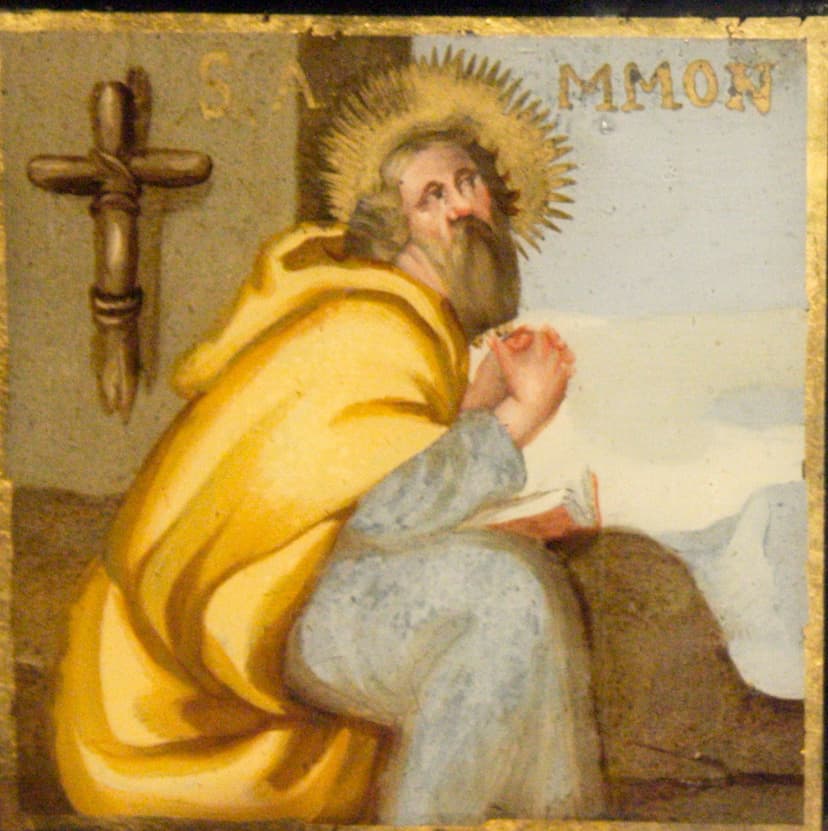
Ammon of Egypt
Ammon of Egypt was a 4th-century Christian ascetic and the founder of one of Egypt's most celebrated monastic communities. He is remembered for his influential role in early monasticism, particularly in the Nitrian Desert, and for his teachings on asceticism. His life and writings inspired many to follow a monastic path.
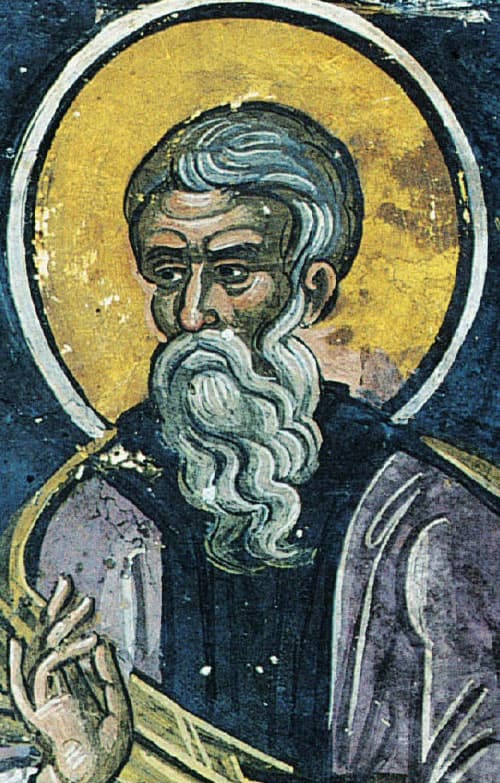
Theodore of Sykeon
Saint Theodore of Sykeon was a Byzantine ascetic, priest, and bishop who lived in the 6th and early 7th centuries. He is remembered for his ascetic life, prophetic visions, and his interactions with Emperor Heraclius. His hagiography is a significant historical source for the period of Emperor Heraclius' reign.
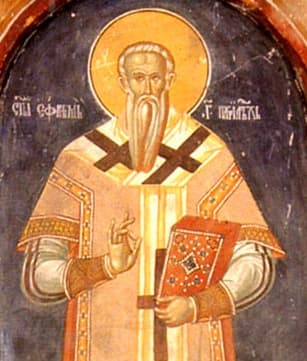
Ephraim of Serbia
Ephraim of Serbia, also known as Elder Jefrem, served twice as the Patriarch of the Serbian Patriarchate of Peć and was a renowned poet. Born into a priestly family of Bulgarian origin, he became a monk and later an ascetic before twice assuming the patriarchal throne, renouncing it each time to return to monastic life. He is remembered for his poetic works and his leadership of the Serbian Church during a turbulent period.