
Jacob of Edessa
June 5·8th century·Syria
Jacob of Edessa was a Syriac Orthodox bishop, scholar, and translator renowned for his multilingualism and significant contributions to biblical revision, canon law, grammar, and liturgy. He played a crucial role in standardizing theological terminology and synthesizing Greek and Syriac traditions, profoundly shaping Syriac Christianity and facilitating the transmission of Hellenistic thought into the Islamic world. He is venerated as one of the most important scholars of the Christian-Aramean tradition.
Key Facts
- ›Jacob of Edessa was born around 640 CE near Aleppo.
- ›He studied at the Monastery of Aphthonia (Qenneshre) and later in Alexandria.
- ›He served as a bishop of Edessa for three to four years, enforcing church canons strictly.
- ›He spent nine years revising the Old Testament Peshitta version at the Great Convent of Tel ʿAde.
- ›Jacob made significant contributions to Syriac grammar, introducing vowel signs adapted from Greek.
- ›He addressed issues related to Islam in his letters and offered guidance on Christian-Muslim relations.
James of Edessa, Yaʿqub Urhāyā
About Jacob of Edessa
Jacob of Edessa (c. 640 – 5 June 708), also known as James of Edessa, was a highly influential Syriac Orthodox bishop, scholar, and translator of late antiquity. He is celebrated for his profound multilingual abilities, particularly in Syriac and Greek, which enabled him to make lasting contributions to biblical revision, canon law, grammar, and liturgy. His work was instrumental in standardizing theological terminology and in synthesizing Greek and Syriac intellectual traditions, thereby shaping the development of Syriac Christianity and facilitating the transmission of Hellenistic thought into the burgeoning Islamic world.
Life and Ministry
Born near Aleppo, Jacob received his early education at the Monastery of Aphthonia (Qenneshre) where he mastered Greek and Syriac. He continued his studies in Alexandria before entering monastic life at Edessa. After being ordained a priest and consecrated metropolitan bishop of Edessa, his strict adherence to church canons led to conflict with his clergy and the Patriarch. Consequently, he resigned and pursued further scholarly work in monastic seclusion.
Jacob spent eleven years teaching Greek and instructing students in Scripture at the Monastery of Eusebona, and later nine years at the Great Convent of Tel ʿAde. During this latter period, he diligently revised the Old Testament Peshitta version, referencing various Greek texts. He played a notable role in a synod convened in 706 and was recalled to the see of Edessa in 708, though he died only four months after his reinstatement.
Scholarly and Literary Contributions
Jacob of Edessa was a prolific writer whose surviving works span theology, biblical studies, canon law, liturgy, philosophy, grammar, and history. His biblical commentaries earned him the title "the Interpreter of the Scriptures" among later scholars. He compiled a significant collection of ecclesiastical canons and made notable contributions to Syriac liturgy, including composing an anaphora and revising the Liturgy of St. James. His philosophical work, the Enchiridion, focused on terminology.
Jacob also authored a Chronicon which served as a continuation of Eusebius's chronicle. His grammatical work was groundbreaking; he introduced five vowel signs adapted from Greek into the West Syriac script, a system still in use today. He demonstrated a deep understanding of the relationship between Syriac and Aramaic, and also showed some knowledge of Hebrew.
Cultural Exchange and Legacy
Jacob of Edessa addressed contemporary issues, including Christian-Muslim relations, and issued early Syriac juristic opinions regarding converts. His translations and scholarly endeavors served as a vital intellectual bridge, facilitating the transfer of Greek philosophy into the Islamic world and indirectly contributing to the reintroduction of classical learning to medieval Europe. He is venerated as a saint in the Oriental Orthodox communion, particularly within the Syriac Orthodox Church, and is recognized as one of the most significant scholars of the Christian-Aramean tradition. His feast day is celebrated on June 5th.
Source: Wikipedia ↗
Frequently Asked Questions
Who was Jacob of Edessa?
Jacob of Edessa was a prominent Syriac Orthodox bishop, scholar, and translator who lived from approximately 640 to 708 CE. He is highly regarded for his extensive writings and contributions to biblical studies, canon law, grammar, and liturgy.
What were Jacob of Edessa's main contributions?
Jacob of Edessa is best known for his revision of the Syriac Peshitta Bible, his compilation of ecclesiastical canons, his liturgical compositions, and his grammatical innovations, including the introduction of vowel signs in the West Syriac script. He also played a key role in standardizing theological terminology and translating Greek thought into Syriac.
What languages did Jacob of Edessa know?
Jacob of Edessa was renowned for his mastery of Classical Syriac and Greek, and possessed some knowledge of Hebrew. His multilingualism was instrumental in his work as a translator and in synthesizing different intellectual traditions.
What was Jacob of Edessa's theological stance?
Jacob of Edessa was a firm adherent to the Miaphysite Christological position, central to the Oriental Orthodox tradition. His writings consistently affirmed the unity of Christ's human and divine natures.
When is Jacob of Edessa's feast day?
Jacob of Edessa is venerated as a saint in the Oriental Orthodox communion, and his feast day is celebrated on June 5th.
What is the significance of Jacob of Edessa's work on the Syriac language?
Jacob of Edessa made significant advancements in Syriac grammar and script, particularly by introducing five vowel signs adapted from Greek into the West Syriac tradition. This innovation remains a distinctive feature of the writing system used by several Syriac churches.
Related Saints
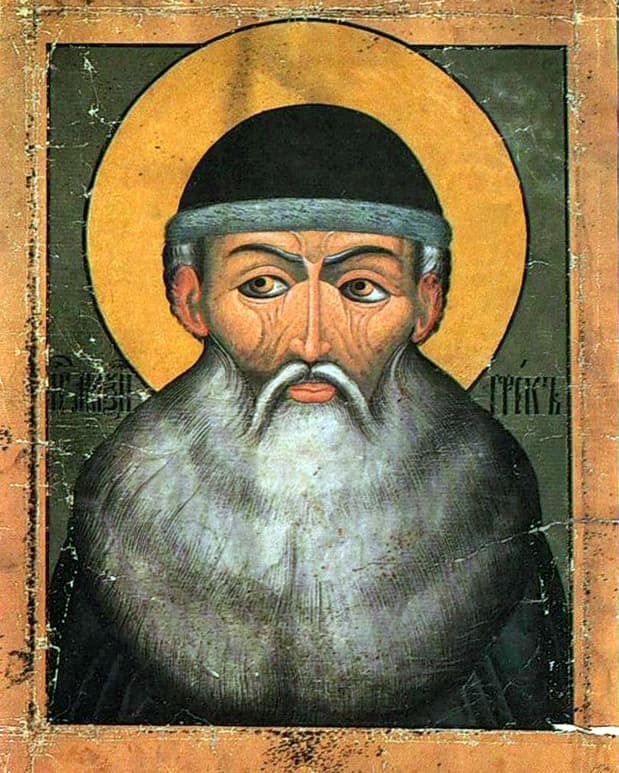
Maximus the Greek
Maximus the Greek was a 15th-century Greek monk, scholar, and translator who became a prominent figure in Russia. He is remembered for his extensive writings and translations, his advocacy for religious reform, and his courageous criticism of the Muscovite authorities, which led to his imprisonment and exile. Canonized as a saint, he is venerated for his intellectual contributions and his steadfast adherence to his Christian ideals.
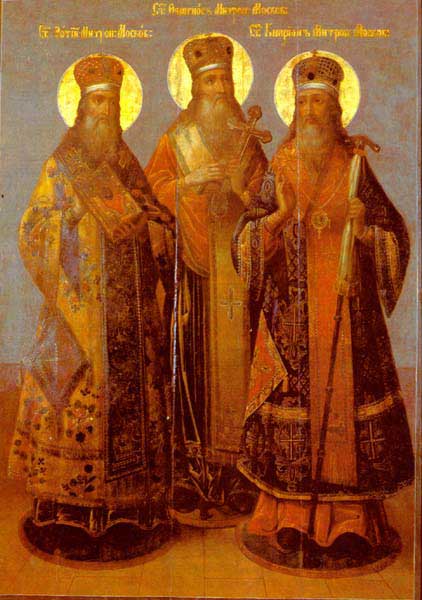
Cyprian of Kiev
Cyprian was a prelate of Bulgarian origin who served as Metropolitan of Kiev and all Rus' in the Ecumenical Patriarchate of Constantinople. He is remembered as a skilled church administrator who worked to unify the Church in the Grand Duchy of Moscow and the Grand Duchy of Lithuania, facing significant opposition. He was also an erudite writer, editor, and translator, overseeing the creation of important historical and ecclesiastical works.
Jerome
Jerome was an early Christian priest, theologian, and historian, best known for his Latin translation of the Bible, the Vulgate. He is recognized as one of the four Great Latin Church Fathers and is revered for his extensive biblical commentaries and his teachings on Christian moral life, particularly for women. His scholarly endeavors and translation work significantly shaped Western Christianity.