
Cyprian of Kiev
September 16·15th century·Ukraine
Cyprian was a prelate of Bulgarian origin who served as Metropolitan of Kiev and all Rus' in the Ecumenical Patriarchate of Constantinople. He is remembered as a skilled church administrator who worked to unify the Church in the Grand Duchy of Moscow and the Grand Duchy of Lithuania, facing significant opposition. He was also an erudite writer, editor, and translator, overseeing the creation of important historical and ecclesiastical works.
Key Facts
- ›He was of Bulgarian origin and a member of the Tsamblak family.
- ›Cyprian was educated in hesychasm and studied at Kilifarevo and Mount Athos.
- ›He was consecrated Metropolitan of Kiev, Rus' and Lithuania in 1375.
- ›He faced opposition from the Grand Prince of Moscow and rival hierarchs.
- ›Cyprian is credited with unifying the church in Moscow and Lithuania.
- ›He was an accomplished writer, editor, and translator of ecclesiastical works.
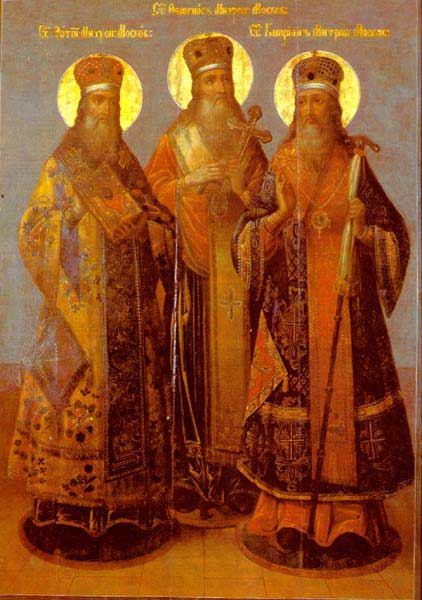
Kiprian
Bishop, Metropolitan, Scholar, Editor, Translator
About Cyprian of Kiev
Cyprian (c. 1336 – 16 September 1406) was a prelate of Bulgarian origin who served as Metropolitan of Kiev and all Rus' within the Ecumenical Patriarchate of Constantinople. His tenure was marked by significant efforts to unify the church across the various principalities of Rus', a task made challenging by political rivalries and opposition from figures like the Grand Prince of Moscow. Despite these obstacles, he is recognized for his administrative acumen and his crucial role in preserving the unity of the church during a turbulent period.
Life and Context
Born into the aristocratic Tsamblak family in Tarnovo, Bulgaria, Cyprian received an education rooted in hesychasm. He studied at the Kilifarevo monastery, where he likely took monastic vows and encountered other prominent religious figures of the era. His intellectual and spiritual development continued with studies in Constantinople and on Mount Athos. The political landscape of Rus' at the time was fractured, with ongoing tensions between the Grand Duchy of Lithuania and the Grand Duchy of Moscow, which complicated the ecclesiastical administration and the authority of the Metropolitan.
Metropolitanate and Unification Efforts
Cyprian was consecrated Metropolitan of Kiev, Rus' and Lithuania in 1375, with the understanding that he would eventually succeed to the full metropolitanate of all Rus'. However, his installation in Moscow was met with resistance from Grand Prince Dmitri Donskoi. Despite facing excommunication and challenges to his authority, Cyprian persevered. In 1389, the Patriarchate of Constantinople officially recognized him as the legitimate Metropolitan of all Rus', and he was accepted in Moscow in 1390. His primary goals during his tenure were to maintain a unified metropolis and to foster peace between Lithuania and Moscow.
Scholarly Contributions
Beyond his administrative duties, Cyprian was a highly educated and productive scholar. He was instrumental in overseeing the copying and creation of several important historical and ecclesiastical texts, including the Troitskaia Chronicle and the Metropolitan Justice. He also revised the Life of Metropolitan Peter and translated various religious works from Greek into Old Church Slavic. His intellectual legacy includes his work on the Book of Degrees, a genealogical record of Russian monarchs.
Veneration and Legacy
Cyprian died on September 16, 1406, and is buried in the Assumption Cathedral in the Moscow Kremlin. He was later canonized by the Russian Orthodox Church in the 15th century. His efforts to maintain church unity and his scholarly contributions have cemented his place as an important figure in the history of Eastern Orthodoxy in Eastern Europe. A geographical feature in Antarctica, St. Kiprian Peak, is named in his honor.
Source: Wikipedia ↗
Frequently Asked Questions
Who was Cyprian of Kiev?
Cyprian was a Bulgarian-born prelate who served as Metropolitan of Kiev and all Rus' for the Ecumenical Patriarchate of Constantinople. He was known for his administrative skills, intellectual pursuits, and efforts to unify the church.
What was Cyprian's role in the church?
Cyprian served as Metropolitan of Kiev, Rus' and Lithuania, and later as Metropolitan of Kiev and all Rus'. He worked to resolve theological and political disputes and maintain the unity of the church across different principalities.
What were Cyprian's main achievements?
His primary achievement was the unification of the church in both the Grand Duchy of Moscow and the Grand Duchy of Lithuania. He was also a prolific writer, editor, and translator of important ecclesiastical and historical works.
Did Cyprian face any opposition?
Yes, Cyprian faced significant opposition from the Grand Prince of Moscow and rival hierarchs who challenged his authority and efforts to establish his metropolitanate in Moscow.
What is Cyprian remembered for as a scholar?
Cyprian was an erudite individual who oversaw the copying and creation of significant works like the Troitskaia Chronicle and rewrote the Life of Metropolitan Peter. He also corrected biblical texts and translated works from Greek.
Related Saints
Jerome
Jerome was an early Christian priest, theologian, and historian, best known for his Latin translation of the Bible, the Vulgate. He is recognized as one of the four Great Latin Church Fathers and is revered for his extensive biblical commentaries and his teachings on Christian moral life, particularly for women. His scholarly endeavors and translation work significantly shaped Western Christianity.
Jacob of Edessa
Jacob of Edessa was a Syriac Orthodox bishop, scholar, and translator renowned for his multilingualism and significant contributions to biblical revision, canon law, grammar, and liturgy. He played a crucial role in standardizing theological terminology and synthesizing Greek and Syriac traditions, profoundly shaping Syriac Christianity and facilitating the transmission of Hellenistic thought into the Islamic world. He is venerated as one of the most important scholars of the Christian-Aramean tradition.
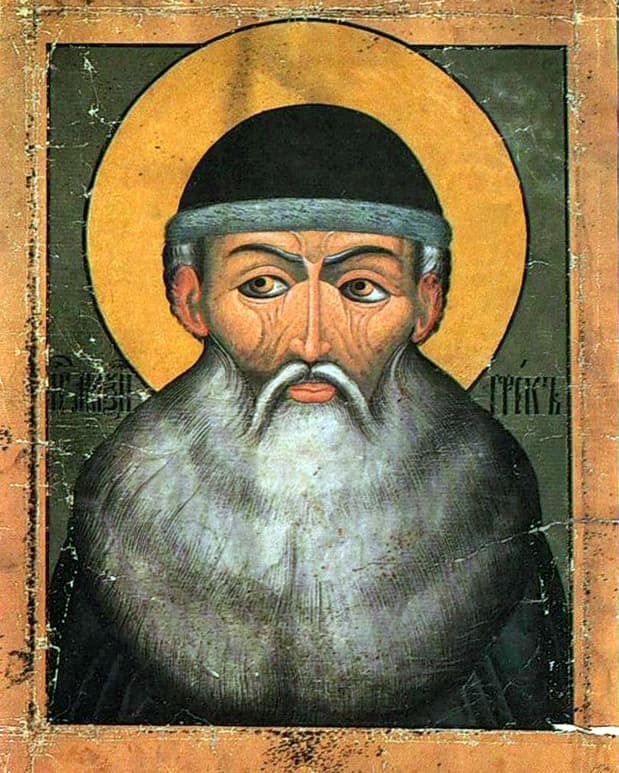
Maximus the Greek
Maximus the Greek was a 15th-century Greek monk, scholar, and translator who became a prominent figure in Russia. He is remembered for his extensive writings and translations, his advocacy for religious reform, and his courageous criticism of the Muscovite authorities, which led to his imprisonment and exile. Canonized as a saint, he is venerated for his intellectual contributions and his steadfast adherence to his Christian ideals.