
Hilda of Whitby
November 17·7th century·England
Hilda of Whitby was a prominent Anglo-Saxon saint and abbess, renowned for her wisdom and administrative skills. She founded the monastery at Whitby, which became the site of the pivotal Synod of Whitby in 664, influencing the direction of Christianity in England. Hilda is remembered as a mother figure to her community and a significant figure in the Christianization of Anglo-Saxon England.
Key Facts
- ›Hilda was born in 614 into the Deiran royal household.
- ›She was baptized at the age of 13 in 627 with King Edwin's court.
- ›Hilda became a nun at age 33, responding to the call of Bishop Aidan.
- ›She served as the second abbess of Hartlepool Abbey before founding Whitby Abbey in 657.
- ›Her monastery at Whitby hosted the Synod of Whitby in 664, which adopted Roman Easter calculations.
- ›Hilda is recognized for her patronage of learning and poetry, notably supporting the poet Cædmon.

Hild
Learning, Culture, Poetry
Pastoral Staff, Abbey Church, Ammonites, Snakes
About Hilda of Whitby
Hilda of Whitby (c. 614 – 17 November 680), also known as Hild, was a pivotal figure in the Christianization of Anglo-Saxon England and a revered saint of the early Church. Her life and work profoundly shaped the religious and cultural landscape of Britain.
Life and Historical Context
Hilda was born into the Deiran royal household in 614. Her early life was marked by political turmoil, including her father's poisoning and King Edwin's rise to power. She was baptized in 627 with King Edwin and his court, an event that occurred during the early stages of the Gregorian mission's efforts to establish Christianity in England. Following King Edwin's death in battle in 633, Hilda accompanied Queen Æthelburh to Kent, where she may have lived in a convent.
At the age of 33, Hilda chose to dedicate her life to God as a nun, answering the call of Bishop Aidan of Lindisfarne. She initially learned the traditions of Celtic monasticism before being appointed the second abbess of Hartlepool Abbey. In 657, Hilda founded her most significant institution, the monastery at Streoneshalh, later known as Whitby Abbey, where she served as abbess until her death.
Major Contributions and Influence
Hilda's monastery at Whitby was a thriving community that adhered strictly to monastic ideals, emphasizing common ownership, peace, and charity. It was also a place of significant intellectual activity, with five men from the community later becoming bishops. The prestige of Whitby is underscored by its selection as the venue for the Synod of Whitby in 664. At this synod, presided over by King Oswiu, the decision was made to adopt Roman practices for calculating Easter, a critical moment in aligning the English Church with continental traditions.
Hilda herself was renowned for her wisdom, administrative skill, and teaching abilities. Kings and princes sought her counsel, and she was known for her concern for ordinary people, famously supporting the poet Cædmon. Bede, the primary source for Hilda's life, describes her as a "mother" due to her outstanding devotion and grace.
Later Life and Legacy
Hilda suffered from a fever for the last seven years of her life but continued her work until her death on November 17, 680, at the age of sixty-six. She established another monastery at Hackness in her final year. Her passing was marked by supernatural accounts, including the witnessing of her soul's ascent to heaven.
Hilda's legacy is enduring. Whitby Abbey, though later destroyed and re-founded as a Benedictine house, remains a significant historical site. She is patron of learning and culture, and numerous educational institutions, churches, and religious communities worldwide bear her name or are dedicated in her honor. Legends of ammonites and sea birds continue to be associated with her, reflecting her deep connection to the region and the traditions that arose around her life.
Source: Wikipedia ↗
Frequently Asked Questions
Who was Hilda of Whitby?
Hilda of Whitby was a highly respected Anglo-Saxon saint and abbess of the early British Church. She is best known as the founder and first abbess of the monastery at Whitby, a significant center of learning and religious life.
What was the Synod of Whitby and Hilda's role in it?
The Synod of Whitby, held in 664 at Hilda's monastery, was a crucial meeting that decided the future direction of Christianity in Northumbria. Hilda hosted the synod and, along with most attendees, accepted the Roman method of calculating Easter, helping to standardize religious practices in England.
Why is Hilda associated with learning and poetry?
Hilda was recognized for her wisdom and was a skilled teacher. She notably supported the humble cowherd Cædmon, recognizing his divine inspiration to compose poetry and encouraging him to develop his gift, thus establishing her patronage of learning and culture.
What legends are associated with Saint Hilda?
Local legends tell of sea birds dipping their wings in her honor and of Hilda turning a plague of snakes into stone, which is said to explain the presence of ammonite fossils found near Whitby. The ammonite genus Hildoceras is named in her honor.
Where is Hilda of Whitby venerated today?
Hilda is venerated in the Catholic Church, the Anglican Communion, and the Eastern Orthodox Church. Her feast day is observed on November 17th in many of these traditions, though variations exist.
Related Saints
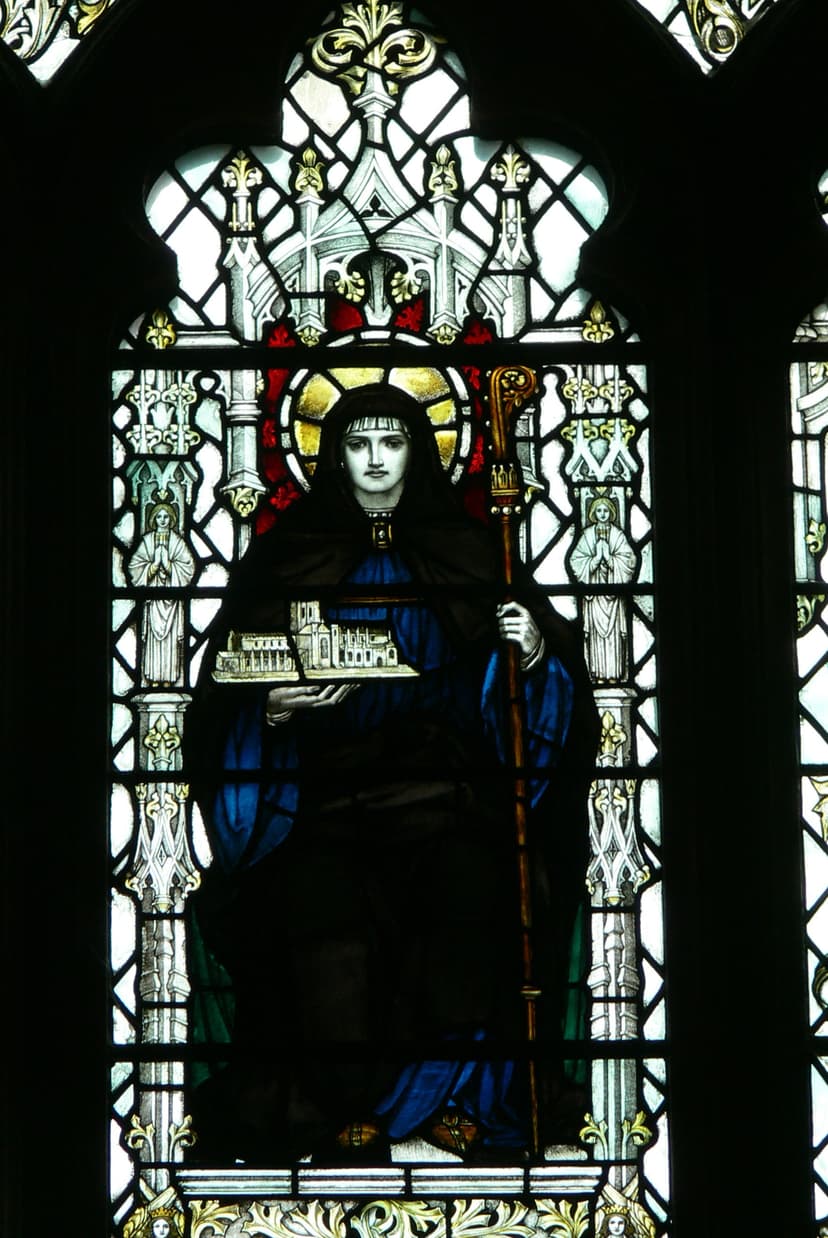
Werburgh
Werburgh was an Anglo-Saxon princess who became the patron saint of Chester. Daughter of King Wulfhere of Mercia, she was a nun for most of her life and eventually became the fourth Abbess of Ely. She is chiefly remembered for her role in convent reform and as the patron saint of Chester, with legends attributing miracles to her.
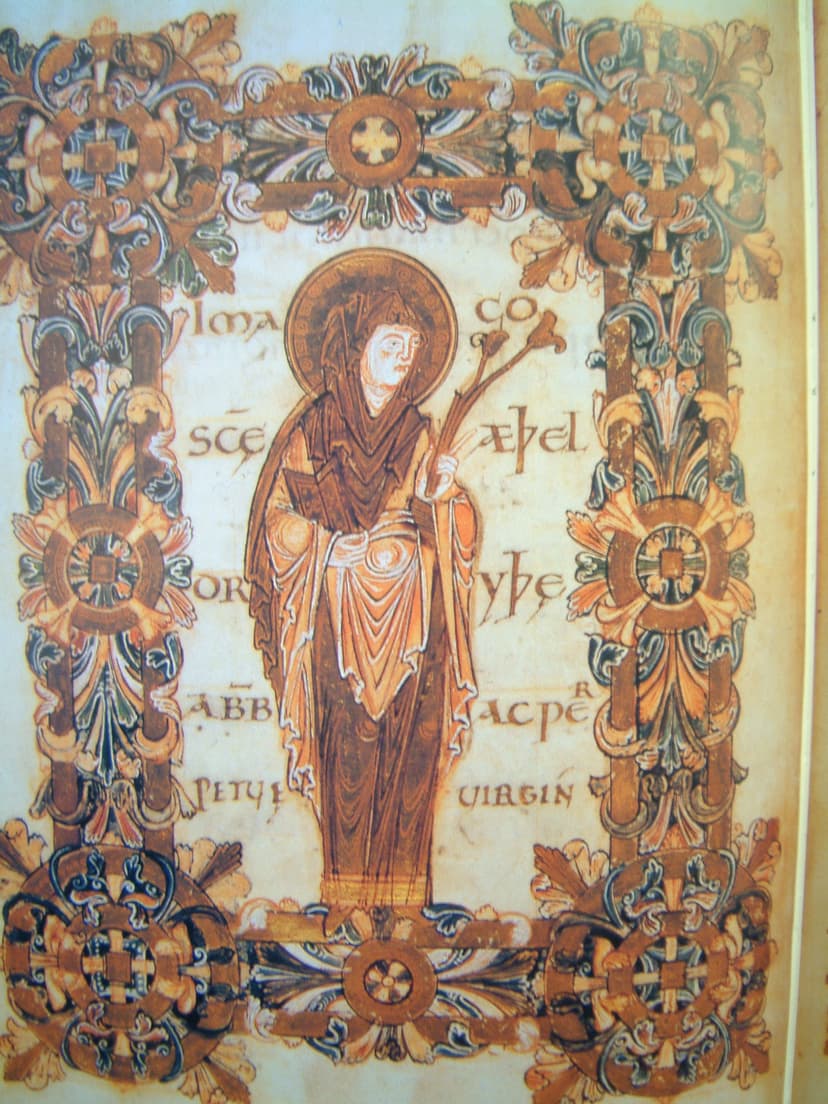
Etheldreda of Ely
Etheldreda of Ely was an East Anglian princess, a queen, and an abbess, renowned as an Anglo-Saxon saint. She is remembered for her piety, her founding of Ely Abbey, and her vow of perpetual virginity despite two marriages. Her uncorrupted body, discovered sixteen years after her death, became a focus of veneration and numerous churches are dedicated to her.
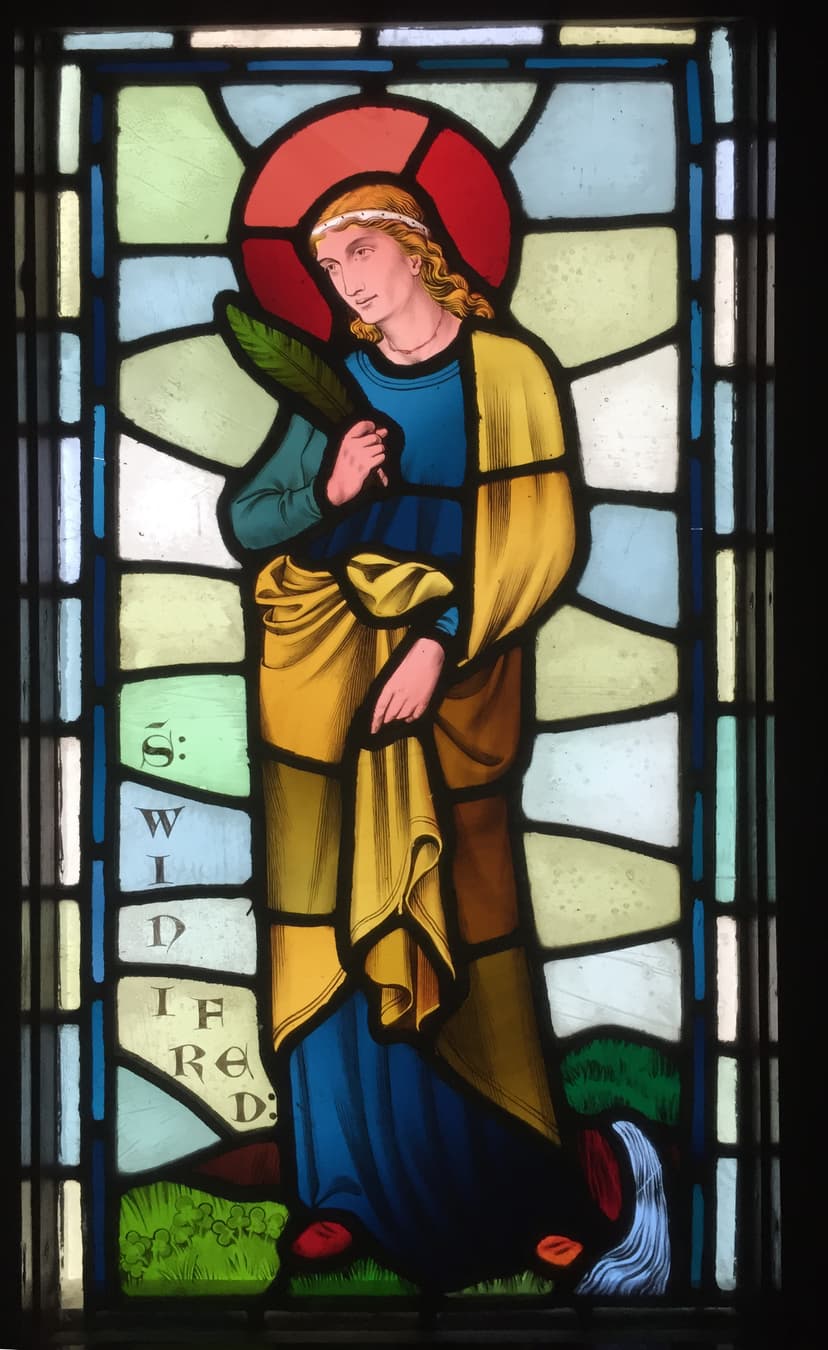
Winifred
Saint Winifred was a 7th-century Welsh virgin martyr, whose legend recounts her decapitation by a suitor and miraculous restoration to life by Saint Beuno, with a healing spring appearing at the site of her beheading. She is chiefly remembered for her legend of martyrdom and the enduring pilgrimage site of St. Winefride's Well in Holywell, Wales, which is considered "the Lourdes of Wales."