
Werburgh
Werburgh was an Anglo-Saxon princess who became the patron saint of Chester. Daughter of King Wulfhere of Mercia, she was a nun for most of her life and eventually became the fourth Abbess of Ely. She is chiefly remembered for her role in convent reform and as the patron saint of Chester, with legends attributing miracles to her.
Key Facts
- ›Werburgh was born around AD 650, the daughter of King Wulfhere of Mercia and his wife Ermenilda.
- ›She was trained by Chad of Lichfield and her mother, and spent most of her life as a nun.
- ›She succeeded her mother, grandmother, and great-aunt as the fourth Abbess of Ely.
- ›Her death occurred on February 3, 700, and her remains were initially buried at Hanbury, Staffordshire.
- ›Following a Viking threat, her relics were moved to Chester and a shrine was established there.
- ›She is venerated as the patron saint of Chester, with a miracle attributed to her preventing a Welsh siege.
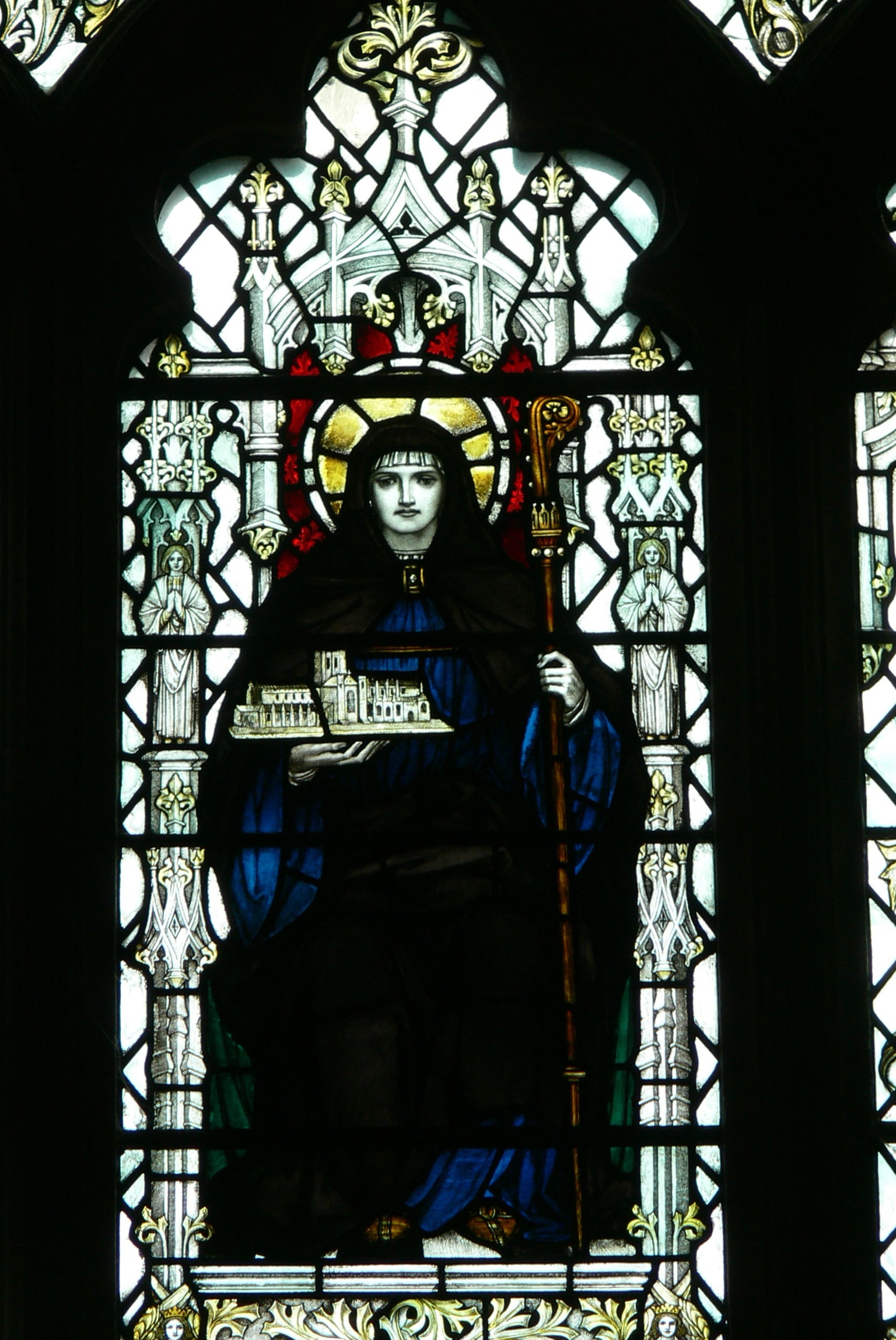
Wærburh, Werburh, Werburga, Vereburga
Chester, Geese
Geese
About Werburgh
Werburgh (c. AD 650 – 3 February 700), also known by variations such as Wærburh and Vereburga, was an Anglo-Saxon princess who rose to prominence as a monastic leader and is now venerated as the patron saint of Chester.
Life and Ministry
Born at Stone in Staffordshire, Werburgh was the daughter of King Wulfhere of Mercia and Ermenilda, who was herself the daughter of the King of Kent. She received her early education at home under the guidance of Chad, who later became Bishop of Lichfield, and her mother. Werburgh eventually entered the religious life, becoming a nun at the Abbey of Ely, an institution founded by her great-aunt Etheldreda. She spent most of her life as a nun and was instrumental in carrying out convent reform throughout England.
Werburgh eventually succeeded her mother, grandmother, and great-aunt in turn, becoming the fourth Abbess of Ely. She died on February 3, 700, and was initially buried at Hanbury in Staffordshire.
Veneration and Legacy
Following Werburgh's death, her brother Coenred, who became king of Mercia, arranged for her remains to be moved to a more prominent location within the church at Hanbury. Upon opening her tomb, her body was discovered to be miraculously intact, an event interpreted as a sign of divine favor. During this period, the renowned story of Werburgh restoring a dead goose to life after it had been eaten emerged in medieval hagiography.
Later, in the late 9th century, the threat of Danish Viking raids necessitated the relocation of Werburgh's relics to the walled city of Chester. A shrine was established there at the Church of St Peter and St Paul, which was eventually re-dedicated to St Werburgh and St Oswald. By 1057, Werburgh was widely regarded as the patron saint and protector of Chester. A notable miracle attributed to her was the unexpected withdrawal of the Welsh king Gruffudd ap Llywelyn from besieging the city.
The shrine at Chester remained a significant site of veneration even after the Norman Conquest. In 1093, Hugh d'Avranches, the second Norman Earl of Chester, commissioned the enlargement and rebuilding of the abbey church, establishing a Benedictine monastery. During the Middle Ages, a badge depicting a gaggle of geese became a symbol for pilgrims who had visited Werburgh's shrine.
With the dissolution of the abbey in 1540, the church became Chester Cathedral. Although an elaborate 14th-century shrine to Werburgh existed, it was dismantled during this period, and her relics were lost. Parts of the original shrine's stonework have since been reassembled and are displayed in the cathedral's Lady Chapel.
Saint Werburgh continues to be venerated today as the patron saint of Chester. Numerous churches across England and some overseas are dedicated to her, and places such as the village of Warburton in Greater Manchester bear her name.
Source: Wikipedia ↗
Frequently Asked Questions
When was Saint Werburgh born?
Saint Werburgh was born around AD 650. She was an Anglo-Saxon princess, the daughter of King Wulfhere of Mercia.
What is Saint Werburgh best remembered for?
She is chiefly remembered for her role in convent reform across England and as the patron saint of the city of Chester. Legends also recount miracles attributed to her, such as restoring a dead goose to life.
Where is Saint Werburgh buried?
Initially, Saint Werburgh was buried at Hanbury in Staffordshire. However, due to threats from Viking raids, her remains were later moved to Chester.
What is the significance of geese in relation to Saint Werburgh?
Geese are a significant symbol associated with Saint Werburgh, often appearing in legends and as a pilgrimage badge. One famous story tells of her restoring a goose to life after it had been eaten, and another attributes the banishment of geese from a village to her.
What happened to Saint Werburgh's shrine?
An elaborate shrine was constructed for Werburgh in the 14th century at the church in Chester that would become Chester Cathedral. However, this shrine was broken up during the Dissolution of the Monasteries in 1540, and her relics were lost. Parts of the shrine's stonework have since been reassembled and are displayed in the cathedral.
Related Saints
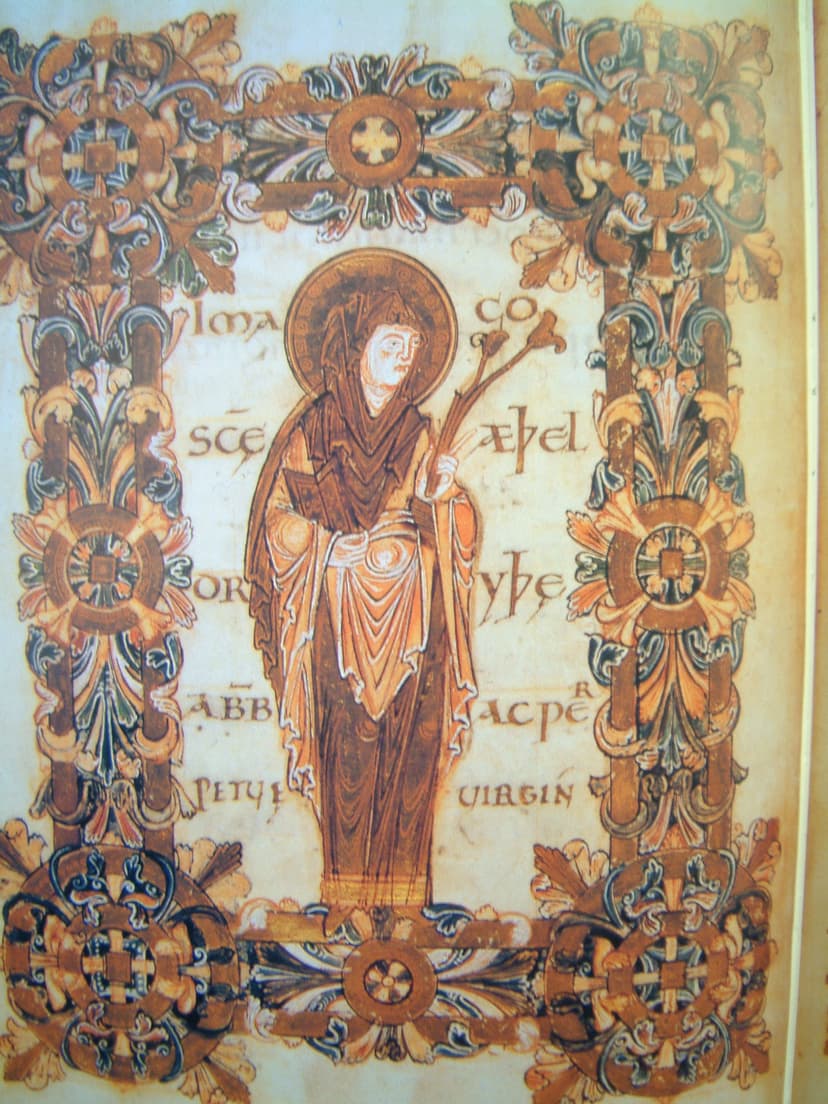
Etheldreda of Ely
Etheldreda of Ely was an East Anglian princess, a queen, and an abbess, renowned as an Anglo-Saxon saint. She is remembered for her piety, her founding of Ely Abbey, and her vow of perpetual virginity despite two marriages. Her uncorrupted body, discovered sixteen years after her death, became a focus of veneration and numerous churches are dedicated to her.

Hilda of Whitby
Hilda of Whitby was a prominent Anglo-Saxon saint and abbess, renowned for her wisdom and administrative skills. She founded the monastery at Whitby, which became the site of the pivotal Synod of Whitby in 664, influencing the direction of Christianity in England. Hilda is remembered as a mother figure to her community and a significant figure in the Christianization of Anglo-Saxon England.
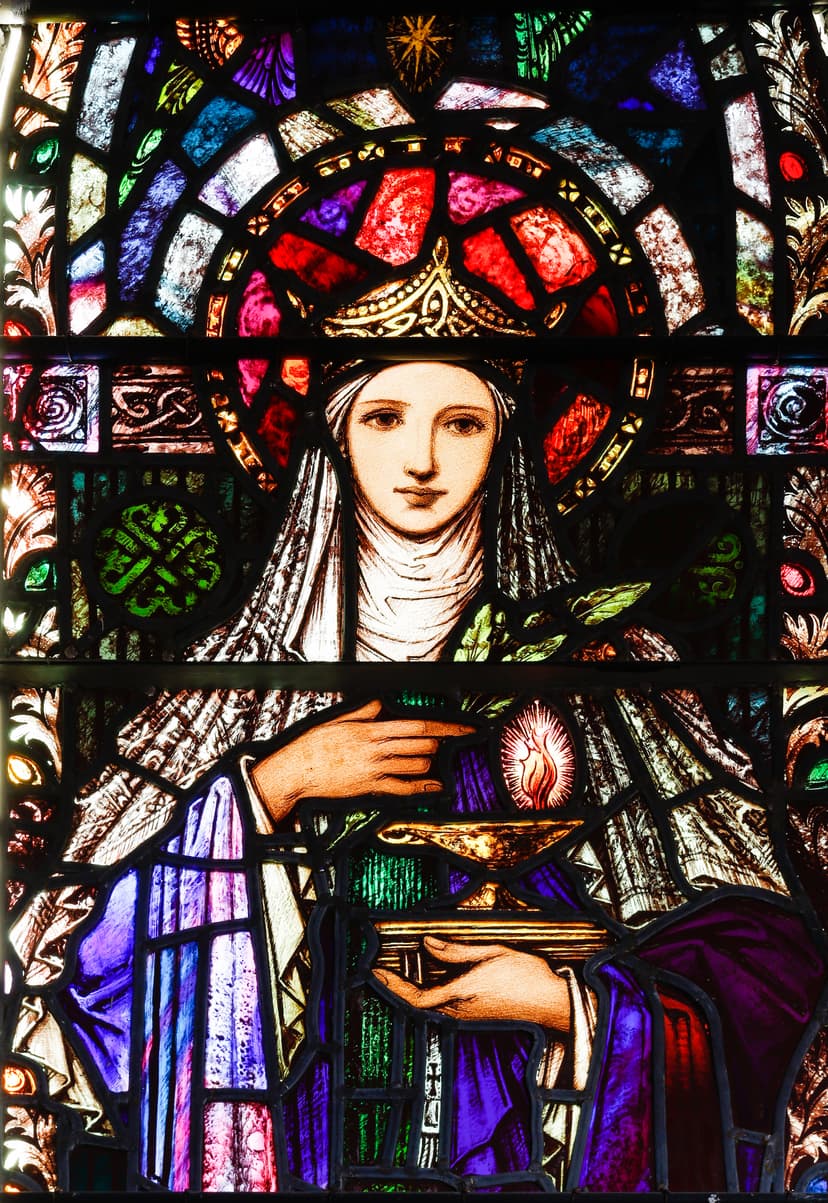
Brigid of Kildare
Brigid of Kildare, also known as Brigid of Ireland, is a revered patroness saint and one of Ireland's three national saints. She is historically recognized as an abbess who founded the significant abbey of Kildare and several other convents. Brigid is celebrated for her numerous miracles and is patroness of many, including poetry, learning, healing, and blacksmithing, with a perpetual fire kept burning in her honor at Kildare for centuries.