
Winifred
November 3·7th century·Wales
Saint Winifred was a 7th-century Welsh virgin martyr, whose legend recounts her decapitation by a suitor and miraculous restoration to life by Saint Beuno, with a healing spring appearing at the site of her beheading. She is chiefly remembered for her legend of martyrdom and the enduring pilgrimage site of St. Winefride's Well in Holywell, Wales, which is considered "the Lourdes of Wales."
Key Facts
- ›Winifred was a Welsh virgin martyr of the 7th century.
- ›According to legend, her suitor Caradog decapitated her when she refused his advances.
- ›A healing spring appeared where her head fell, and Saint Beuno miraculously restored her to life.
- ›She later became a nun and abbess at Gwytherin.
- ›Her cult is attested from the 12th century, with relics moved to Shrewsbury Abbey.
- ›St. Winefride's Well in Holywell, Flintshire, Wales, is a major pilgrimage site.
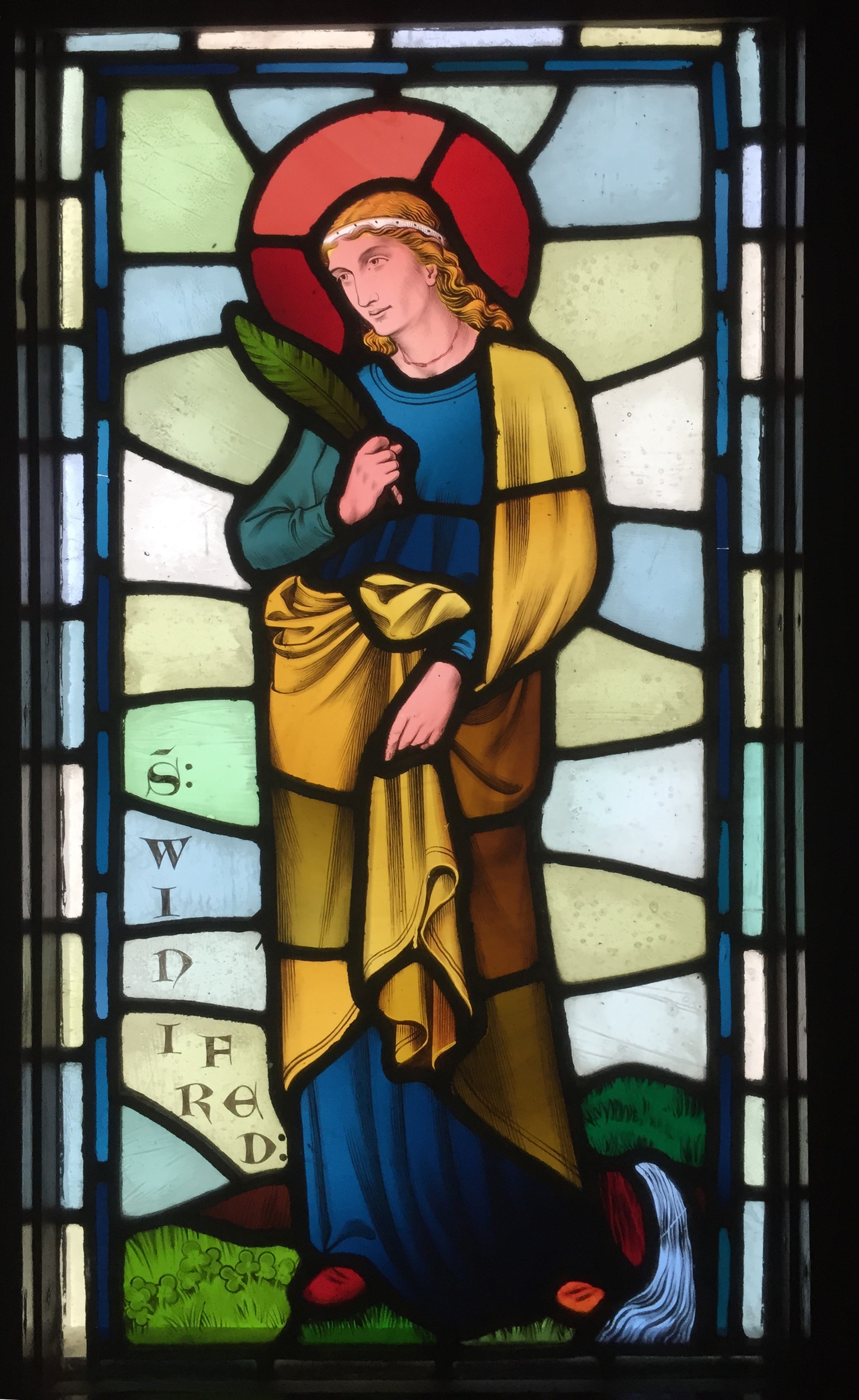
Winefride, Gwenffrewi, Wenefreda, Winifreda
Healing Spring, Reliquary, Crozier
About Winifred
Saint Winifred
Saint Winifred, known also by her Welsh name Gwenffrewi and Latinized forms Wenefreda and Winifreda, is recognized as a 7th-century Welsh virgin martyr. Her life and legend have been a source of veneration and pilgrimage for centuries, particularly in Wales and England.
Life and Legend
The earliest surviving accounts of Winifred's life date to the 12th century. According to hagiographical tradition, she was the daughter of a chieftain and niece of Saint Beuno. The legend recounts that when Winifred decided to become a nun and rejected her suitor Caradog, he became enraged and decapitated her. A miraculous spring, now known as St. Winefride's Well, is said to have appeared at the spot where her head fell. Saint Beuno intervened, restoring Winifred to life by rejoining her head to her body. Caradog was reportedly struck dead by divine chastisement. Following this event, Winifred spent eight years at Holywell before retiring inland to Gwytherin, where she eventually became a nun and abbess.
Historical Context and Veneration
While the earliest written accounts of Winifred's life are from the 12th century, and she is not listed in some early Welsh calendars of saints, evidence of her cult predates these writings. An 8th-century oak reliquary, discovered in 1991, provides significant evidence for her veneration as a saint very soon after her death, possibly making it the earliest surviving testimony to the formal cult of any Welsh saint. Her veneration as a martyr saint gained prominence in the 12th century, with relics being translated to Shrewsbury Abbey, which became a major pilgrimage site. Despite the destruction of the Shrewsbury shrine in the 16th century, the shrine and well at Holywell in Flintshire, Wales, continue to draw pilgrims. In the Roman Martyrology, she is listed under November 2nd as a virgin and outstanding witness, though she is recognized by popular acclaim rather than formal canonization.
Legacy
Saint Winifred's legacy is most powerfully embodied in the enduring pilgrimage site of St. Winefride's Well in Holywell, Wales, often called "the Lourdes of Wales." The story of her martyrdom and miraculous healing has been depicted in various literary works, including medieval poems like Sir Gawain and the Green Knight and fictional narratives, and her image as an abbess is represented in iconography. A bronze statue of her stands in Hudson, New York.
Source: Wikipedia ↗
Frequently Asked Questions
What is the legend of Saint Winifred?
According to legend, Winifred was a Welsh virgin who refused the advances of her suitor, Caradog. Enraged, Caradog decapitated her, at which point a healing spring appeared where her head fell. Saint Beuno then miraculously restored her to life.
Where is Saint Winifred venerated?
Saint Winifred is primarily venerated in Wales and England. Her most famous site of veneration is St. Winefride's Well in Holywell, Flintshire, Wales, which is a major pilgrimage destination.
Is Saint Winifred considered a historical figure?
The historicity of Saint Winifred has been doubted since the 19th century due to the late date of the earliest surviving written accounts. However, the discovery of an 8th-century reliquary provides evidence of her cult shortly after her supposed death, suggesting a historical basis.
What is the significance of St. Winefride's Well?
St. Winefride's Well in Holywell, Wales, is a shrine and pilgrimage site located at the traditional spot of her decapitation and miraculous restoration. It is often referred to as "the Lourdes of Wales" and was granted the status of National Shrine for England and Wales in 2023.
When is Saint Winifred's feast day?
Saint Winifred's feast day is observed on November 3rd in the liturgical calendar of the Roman Catholic Church for England and Wales. In Ireland, her feast day is celebrated on October 30th.
Related Saints
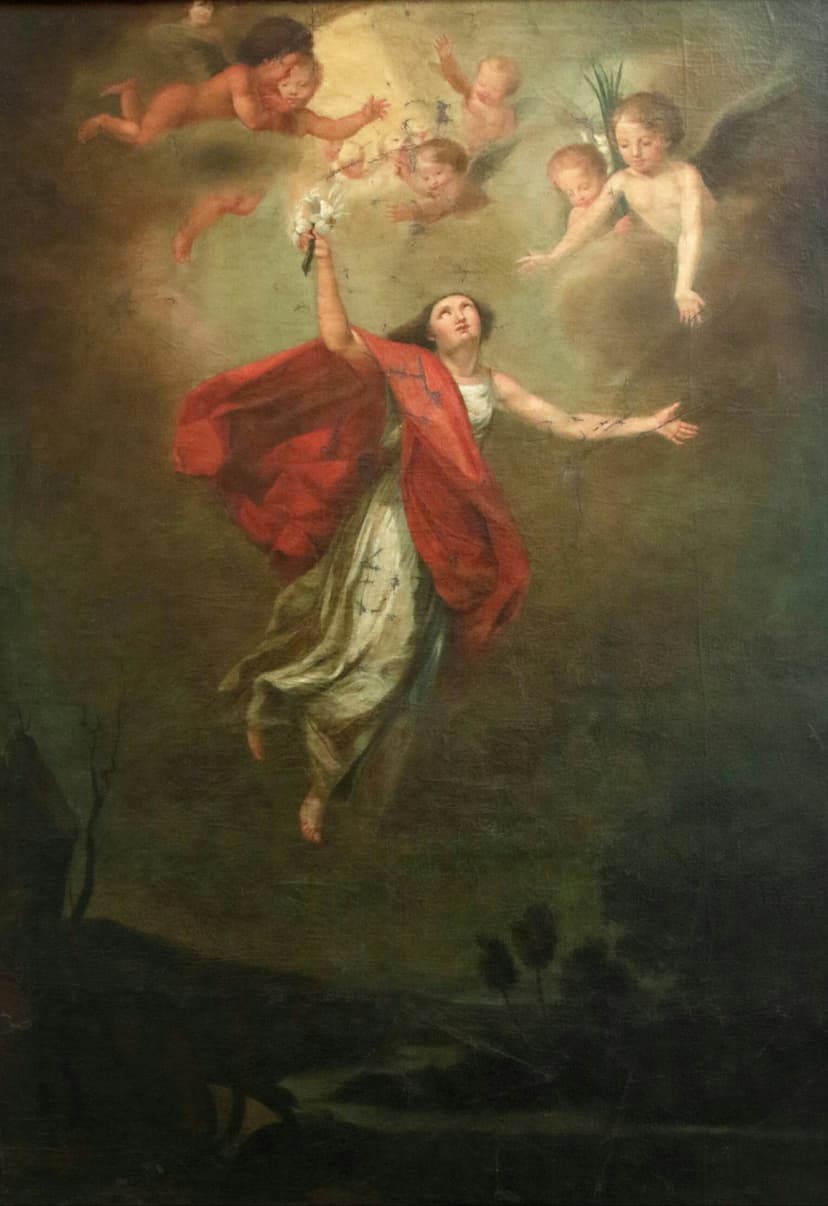
Philomena
Philomena was a Greek virgin martyr whose relics were discovered in the Catacombs of Priscilla in 1802. She is venerated as "The Wonderworker" and is the patron saint of babies, infants, and youth, with widespread devotion stemming from numerous miracles attributed to her intercession.

Pelagius of Córdoba
Pelagius of Córdoba was a Christian boy martyred in Córdoba around 926 AD. He is remembered for his unwavering faith and refusal to convert to Islam or submit to the Caliph's advances, leading to his torture and death. His cult is believed to have provided spiritual energy for the Reconquista.

Venantius of Camerino
Venantius of Camerino was a 15-year-old Christian martyr who died during the persecutions of Decius. He is remembered for his extreme suffering and martyrdom, and is the patron saint of Camerino and Raiano, Italy.