
Gobron
November 17·10th century·Georgia
Gobron was a Christian Georgian military commander who defended the fortress of Q'ueli against the Sajid emir of Azerbaijan in 914. Despite a fierce defense, the fortress fell, and Gobron was captured and beheaded for refusing to convert to Islam. He is venerated as a saint in the Georgian Orthodox Church for his steadfast faith and martyrdom.
Key Facts
- ›Gobron was a Christian Georgian military commander.
- ›He led the defense of the fortress of Q'ueli against the Sajid emir of Azerbaijan.
- ›Gobron was captured after a 28-day siege and beheaded.
- ›He refused inducements to convert to Islam.
- ›He is commemorated by the Georgian Orthodox Church on November 17.
- ›His martyrdom is mentioned in medieval Georgian and Armenian chronicles.
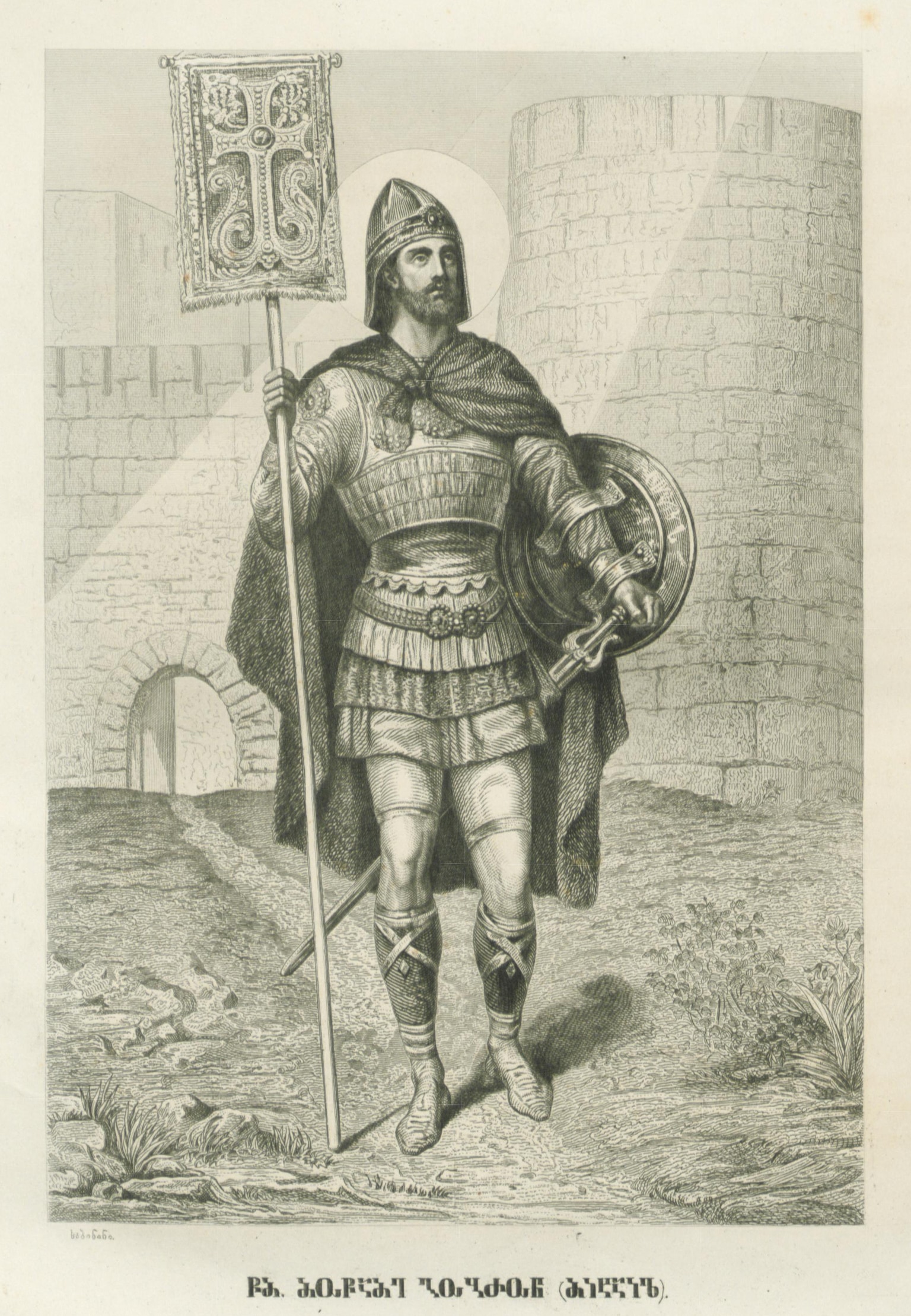
Mikel-Gobron, Michael-Gobron
About Gobron
Gobron, also known as Mikel-Gobron or Michael-Gobron, was a Christian Georgian military commander who lived in the late 9th and early 10th centuries. He is venerated as a saint and martyr in the Georgian Orthodox Church, commemorated on November 17.
Life and Historical Context
The life and martyrdom of Gobron are primarily documented in the "Passion of the Holy Martyr Gobron, who was Abducted from the Castle of Q'ueli," a hagiography composed by Bishop Stephen of T’beti between 914 and 918. This narrative is set against the backdrop of a military expedition by Yusuf Ibn Abi'l-Saj, the Sajid emir of Azerbaijan, in 914. This campaign represented one of the final major efforts by the Abbasid Caliphate to assert control over Georgian territories, which were then fragmented among various rival kingdoms and Muslim-held regions.
According to medieval Georgian accounts, Yusuf ibn Abi'l-Saj invaded Georgia, advancing through lands including Armenia, Kakheti, Kartli, Samtskhe, and Javakheti. After failing to capture the fortress of Tmogvi, the emir laid siege to Q’ueli. The fortress was defended by Georgian Bagratid prince Gurgen of Tao, and its resistance was led by the young commander Gobron, whose original name was Mikel.
Defense of Q'ueli and Martyrdom
Gobron mounted a fierce defense of Q’ueli for 28 days, launching repeated sorties against the besieging forces. Despite his efforts, the fortress was eventually compelled to surrender. Even after Gurgen sent a substantial ransom, the emir refused to release Gobron and 133 other prisoners.
Both historical and hagiographical sources recount Gobron's unwavering refusal to convert to Islam. Despite repeated attempts by the emir to entice him with promises of earthly honor and wealth, Gobron steadfastly declared his Christian faith. When ordered to be executed, he traced the sign of the cross with his own blood and proclaimed his devotion to Jesus Christ. Enraged by his defiance, the emir commanded the massacre of the remaining Georgian captives, leaving their bodies exposed.
Veneration and Legacy
Gobron and the 133 martyrs were later canonized as saints by the Georgian Orthodox Church, with their commemoration fixed on November 17, the date of their martyrdom. His martyrdom is also noted in the 11th-century anonymous Chronicle of Kartli and by the 10th-century Armenian historian John of Draskhanakert. The story of Gobron’s valor and his ultimate martyrdom has been preserved, emphasizing his commitment to his faith and his role as a defender of Georgia.
Source: Wikipedia ↗
Frequently Asked Questions
Who was Gobron?
Gobron was a Christian Georgian military commander known for his defense of the fortress of Q'ueli. He is venerated as a martyr in the Georgian Orthodox Church.
What is Gobron remembered for?
Gobron is chiefly remembered for his steadfast refusal to convert to Islam when captured by the Sajid emir of Azerbaijan. He chose martyrdom over apostasy, inspiring devotion among Georgian Christians.
When did Gobron live and die?
Gobron died on November 17, 914, after leading the defense of Q'ueli. His life and martyrdom occurred in the early 10th century.
What was the 'Passion of the Holy Martyr Gobron'?
This is a hagiography authored by Bishop Stephen of T'beti between 914 and 918. It recounts the life, defense, capture, and martyrdom of Gobron, detailing his refusal to renounce his Christian faith.
What is Gobron's feast day?
Gobron's feast day is commemorated on November 17, the day of his martyrdom. This date equates to November 30 on the Gregorian calendar.
Related Saints
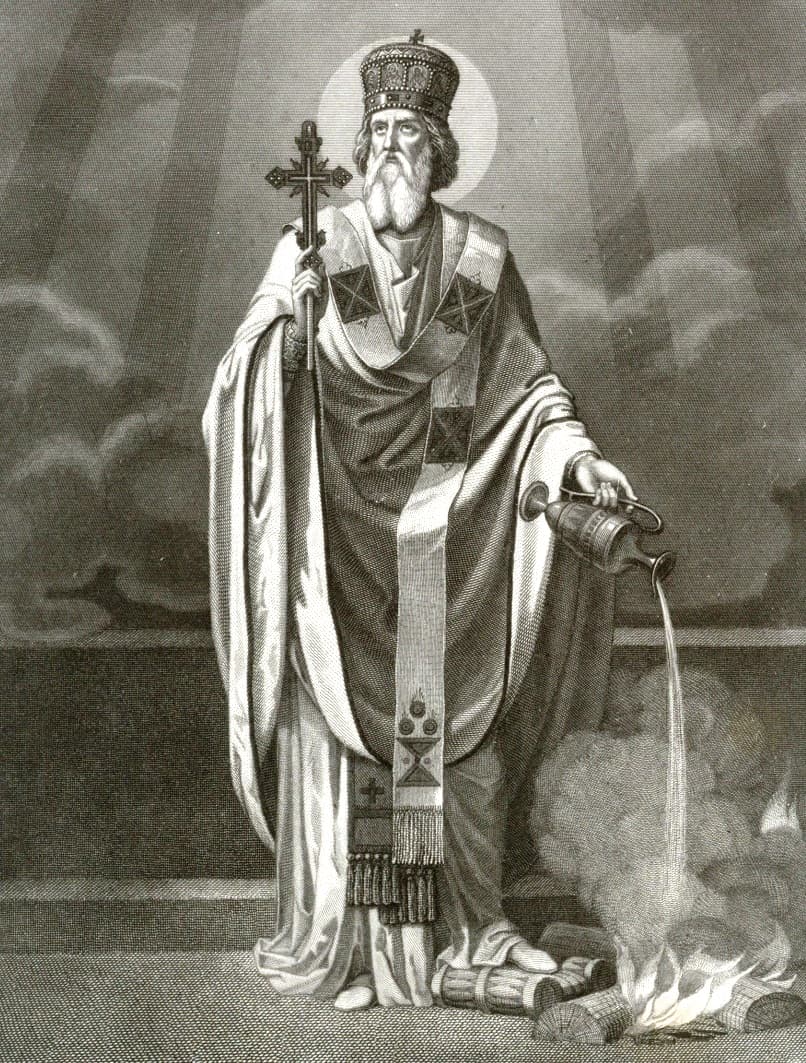
Abibos of Nekresi
Abibos of Nekresi was one of the thirteen Assyrian apostles who brought Christianity to Georgia in the 6th century, serving as the bishop of Nekresi. He is remembered for his missionary work among both Georgians and mountain tribes, and for his martyrdom under Persian Zoroastrian rule. Abibos was stoned to death by Zoroastrian Persians for dousing a sacred flame.
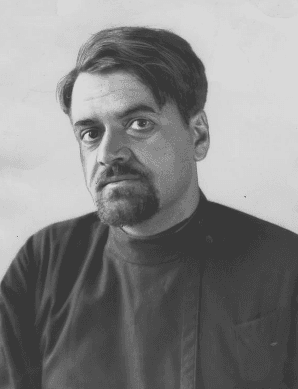
Grigol Peradze
Grigol Peradze was a prominent Georgian ecclesiastic figure, philologist, theologian, historian, and professor of patristics in the interwar period. He is remembered for his scholarly work in patristics and Georgian history, his pastoral care for the Georgian community in Paris, and his martyrdom during World War II. Peradze was canonized as a saint by the Eastern Orthodox Church for his sacrifice and dedication to his faith and fellow prisoners.
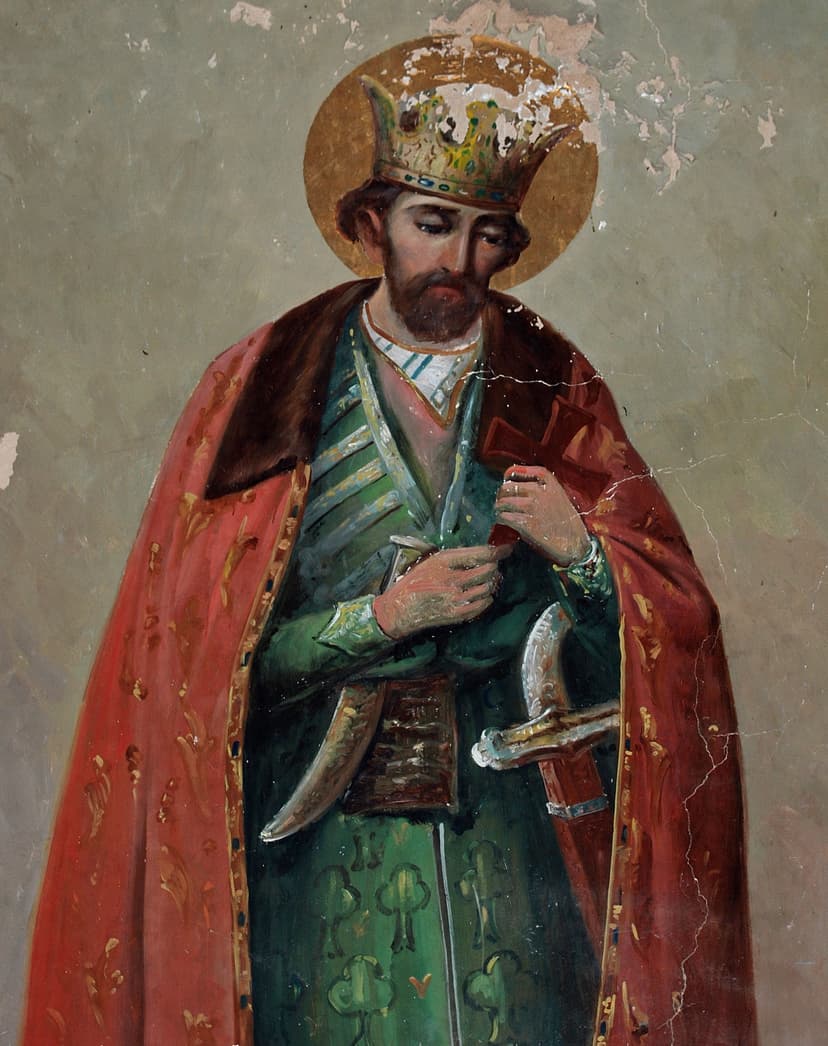
Luarsab II of Kartli
Luarsab II of Kartli was a Georgian king who reigned from 1606 to 1615. He is remembered as a saint and martyr for his refusal to convert to Islam, which led to his execution by the Persian shah. His reign was marked by conflicts with the Ottoman and Persian empires, and his eventual surrender was an attempt to save his kingdom from destruction.