
George of Amastris
February 21·8th century·Byzantine Empire
George of Amastris was a Byzantine monk who reluctantly became bishop of Amastris in the late 8th century. He is remembered for his support of Emperor Nikephoros I and for presiing over the return of relics to Crimea. George is venerated as a saint in the Orthodox liturgy.
Key Facts
- ›George was born in the town of Kromnenon, near Amastris, around the MID-8th century.
- ›He left a career in church administration to become a hermit before joining a monastic community.
- ›He was appointed bishop of Amastris by Patriarch Tarasios around 790.
- ›During his episcopate, he facilitated the return of the remains of John of Gothia to Parthenia, Crimea.
- ›George died between 802 and 807, early in the reign of Emperor Nikephoros I.
- ›His feast day is celebrated on February 21st in the Orthodox liturgy.
About George of Amastris
George of Amastris was a Byzantine monk who lived in the latter half of the 8th century and the early 9th century. He is recognized as a saint in the Orthodox liturgy, with his feast day celebrated on February 21st. George's life story, as preserved in hagiographical accounts, details his reluctant ascent to the episcopate and his veneration for his piety and miraculous intercessions.
Life and Ministry
Born in the town of Kromnenon, near Amastris in Paphlagonia, around the mid-8th century, George hailed from a noble family. Initially pursuing a career in church administration, he later renounced it to embrace a life of asceticism as a hermit on Mt. Agrioserike. His spiritual journey continued as he joined a cenobitic monastic community at Bonyssa. Around 790, the see of Amastris became vacant, and George was appointed bishop by Patriarch Tarasios of Constantinople, a position he reportedly accepted against his will. He was consecrated in Constantinople and served as bishop during a period of Byzantine consolidation. During his episcopate, George played a role in the transfer of the relics of John of Gothia back to Parthenia in Crimea. George died between 802 and 807, during the early reign of Emperor Nikephoros I, whom he notably supported.
Hagiography and Legacy
The primary source of information about George of Amastris is a hagiography dating from the 10th century, though its attribution and precise dating are debated among scholars. This work attributes several miracles to the saint, most notably his role in saving Amastris from a raid by the Rus', an episode that may represent one of the earliest recorded Rus' incursions against Byzantium. Despite his connections to influential figures like Empress Irene and Emperor Nikephoros I, the hagiography is noted for its absence of anti-Iconoclastic rhetoric. The saint's legacy endures through his veneration in the Orthodox Church and the accounts of his miraculous interventions, which have contributed to his standing as a revered spiritual figure.
Source: Wikipedia ↗
Frequently Asked Questions
When was George of Amastris born and when did he die?
George of Amastris was born around the middle of the 8th century in Kromnenon, near Amastris. He died between 802 and 807.
What was George of Amastris' early life like?
George began his career in church administration but left it to become a hermit. He later joined a cenobitic monastic community before being appointed bishop.
How did George of Amastris become bishop?
The Patriarch of Constantinople, Tarasios, appointed George to the see of Amastris around 790, despite the emperor favoring another candidate. George was consecrated as bishop in Constantinople.
What is George of Amastris remembered for during his time as bishop?
As bishop, George presided over the return of the remains of John of Gothia to his native city in Crimea. He was also a notable supporter of Emperor Nikephoros I.
Are there any miracles attributed to George of Amastris?
A hagiography of George credits him with several miracles, including saving the city of Amastris from a raid by the Rus'. The historical accuracy and dating of this account are subjects of scholarly debate.
Related Saints
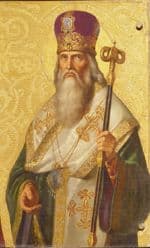
Tarasius of Constantinople
Tarasius of Constantinople served as the Ecumenical Patriarch from 25 December 784 until his death on 25 February 806. He is primarily remembered for his role as acting chairman of the Second Council of Nicaea, which condemned Iconoclasm and formally approved the veneration of icons. Despite facing criticism for his perceived pliability to imperial power, he is revered in Eastern Orthodox Churches for his defense of icons and his efforts for Church unity.
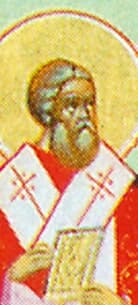
Paul IV of Constantinople
Paul IV of Constantinople, also known as Paul the New, served as Ecumenical Patriarch of Constantinople from 780 to 784. He is remembered for his role in the iconoclast controversy, initially opposing icon veneration but later advocating for an ecumenical council to resolve the issue. He resigned due to age and illness and is venerated as a saint in the Eastern Orthodox Church.
Stephen the Younger
Stephen the Younger was a Byzantine monk and a leading opponent of iconoclasm under Emperor Constantine V. He is remembered as the most prominent iconodule martyr, executed for his beliefs.