
John of Gothia
June 26·8th century·Crimea
John of Gothia was a Crimean Gothic metropolitan bishop of Doros who led a rebellion against Khazar rule in 787. He is remembered for briefly expelling the Khazars from Gothia before being imprisoned and dying in exile. Canonized as an Eastern Orthodox saint, his memorial day is observed on June 26.
Key Facts
- ›He was a Crimean Gothic metropolitan bishop of Doros.
- ›John led a revolt against Khazar domination of Gothia in 787.
- ›He briefly expelled the Khazar garrison and Tudun from Doros.
- ›After the Khazars retook the city, he was imprisoned and later escaped to Amastris.
- ›He died in Amastris in 791.
- ›His remains were brought back to a church on Ayu-Dag mountain in Crimea.
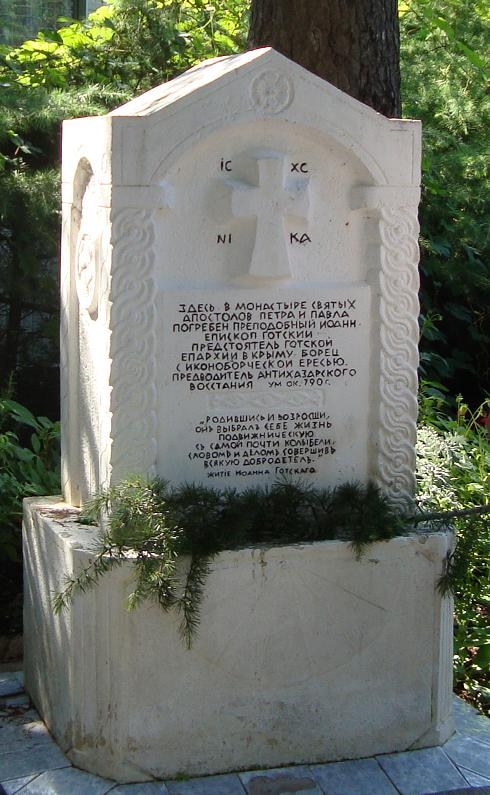
Ioannes episkopos tes Gothias
About John of Gothia
John of Gothia (Greek: ᾿Ιωάννης ἐπίσκοπος τῆς Γοτθίας, Iōánnēs epískopos tēs Gotthiás; died c. 791 AD) was a Crimean Gothic metropolitan bishop of Doros and a notable rebel leader. He is recognized in the Eastern Orthodox Church as a saint for his role in challenging Khazar dominion over Gothia.
Life and Historical Context
Born into a Crimean Gothic family in Partenit, Crimea, John grew up to become a bishop. His early life included a three-year pilgrimage to Jerusalem. He later served as a bishop in Georgia from 758 before returning to his homeland to assume the position of metropolitan bishop of Doros.
In 787, John of Gothia led a significant revolt against the Khazar rulers who controlled Gothia. The rebels successfully expelled the Khazar garrison and their representative, the Tudun, from Doros and secured mountain passes. However, Khazar control was re-established within a year. Following the Khazar recapture of the city, John was imprisoned. He subsequently escaped and found refuge in Amastris, within the Byzantine Empire, where he died in 791.
Legacy and Veneration
John of Gothia was canonized as a saint by the Eastern Orthodox Church. His memorial day is observed on June 26. His remains were returned to Crimea and are associated with a church on Ayu-Dag mountain in Partenit, where a memorial has been erected. His brief but impactful rebellion against foreign domination and his subsequent veneration underscore his significance in the history of Crimea and Eastern Orthodoxy.
Source: Wikipedia ↗
Frequently Asked Questions
Who was John of Gothia?
John of Gothia was a Crimean Gothic bishop of Doros and a leader who rebelled against Khazar rule in 787. He was canonized as an Eastern Orthodox saint.
What was John of Gothia known for?
He is chiefly remembered for leading a revolt that briefly expelled the Khazars from Gothia in 787. He also served as a metropolitan bishop and is venerated for his resistance.
When did John of Gothia live and die?
John of Gothia died around 791 AD. He was active in the late 8th century, leading the revolt in 787.
Where did John of Gothia serve as bishop?
He served as a bishop in Georgia starting in 758, and later returned to Gothia to become the metropolitan bishop of Doros.
What happened after John of Gothia's revolt?
The Khazars retook Doros within a year. John was imprisoned, managed to escape, and sought refuge in Amastris, where he died.
Related Saints
Jacob of Edessa
Jacob of Edessa was a Syriac Orthodox bishop, scholar, and translator renowned for his multilingualism and significant contributions to biblical revision, canon law, grammar, and liturgy. He played a crucial role in standardizing theological terminology and synthesizing Greek and Syriac traditions, profoundly shaping Syriac Christianity and facilitating the transmission of Hellenistic thought into the Islamic world. He is venerated as one of the most important scholars of the Christian-Aramean tradition.
Boniface
Boniface, born Wynfreth, was an English Benedictine monk and a pivotal figure in the eighth-century Anglo-Saxon mission to the Germanic parts of Francia. He is renowned for organizing significant church foundations in Germany and for his role as the "Apostle to the Germans," shaping the Latin Church in Europe through his reform efforts. Martyred in Frisia in 754, his life and work are well-documented through vitae and his extensive correspondence.
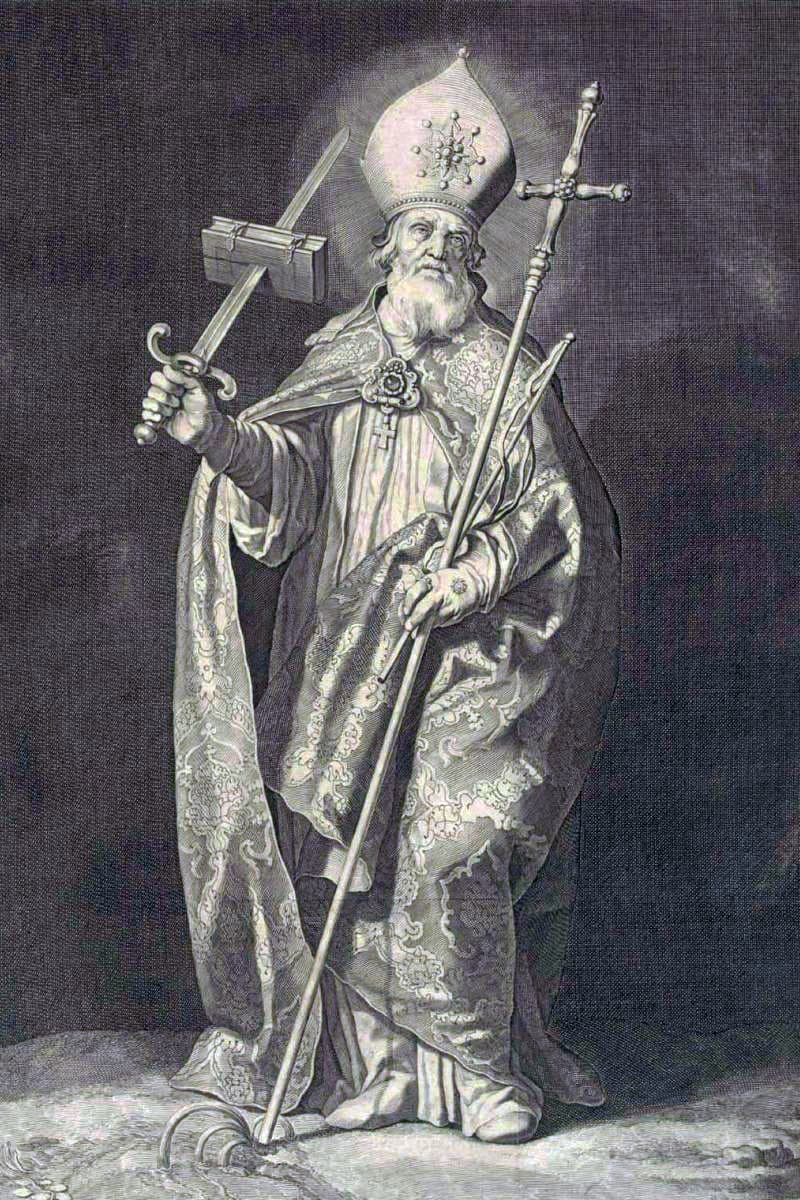
Boniface of Mainz
Boniface, born Wynfreth, was an English Benedictine monk and missionary who led the Anglo-Saxon mission to the Germanic parts of Francia in the eighth century. He is remembered for organizing significant church foundations in Germany, being appointed Archbishop of Mainz, and for his martyrdom in Frisia. He is venerated as the "Apostle to the Germans" and is considered a unifier of Europe.